



Cultural chronicle of Xinjiang: preserving tradition, embracing innovation (4)
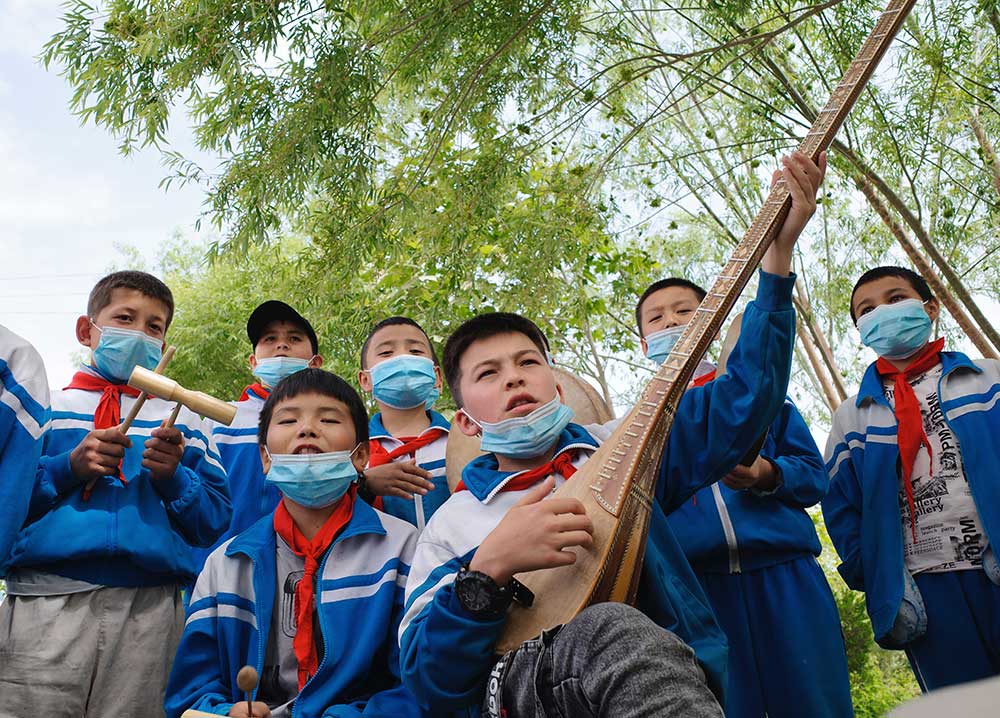
Ibrahim’s biggest wish is to play dombra and sing Uyghur songs outside Xinjiang one day, and to see the ocean. (People’s Daily Online/ Kou Jie)
“When one loves one’s art, no service seems too hard.” 11-year-old Ibrahim MemetEli may know nothing about the American writer O. Henry, but his love for dombra, a traditional musical stringed instrument, has shown the truth behind this famous statement. Here in Awat Central Primary School, Ibrahim and his friends have been learning dombra for years, practicing traditional music everyday.
“I spend many hours a day polishing my skills in singing and playing dombra, but I feel quite happy about it. It makes me feel like I am very special, and I have something that others don’t,” said Ibrahim.
Ibrahim is not the only student who is enthusiastic about traditional culture and has access to it. At his school, which has 2,722 Uyghur students, the kids have a choice of several Uyghur cultural courses, including dancing and paper carving.
"Most students in our school are from remote villages. Though they have a love for traditional art, they have few resources to learn it. Here in our school, all the courses and equipment are free to students. As long as they have an interest, they are welcomed," said Zhao Yuguang, a teacher at the school.
In addition to traditional music, Ibrahim’s other hobby is studying languages. According to local regulations, most courses at Uyghur schools are taught in both Uyghur and Mandarin, while students are also required to study English as their foreign language.
“I am not very good at speaking Mandarin and English, but I think I should study harder to master them. It is my dream to play dombra in big cities outside Xinjiang. If I can’t speak those languages fluently, how can people understand the beauty of my music?” said Ibrahim.
“The Uyghur language is the children’s cultural root, Mandarin represents their identity as Chinese, while English makes them international citizens. By learning three languages, our children have triple identities,” said Zhao, adding that multilingualism and multiculturalism have made his students more culturally tolerant and open-minded.
“I have never been anywhere outside Xinjiang. It is my dream to see the vast ocean, and I really hope I can bring my dombra with me, making friends with people around the world, learning their culture and introducing mine to them. It would be so cool,” said Ibrahim.
 |
Photos

Related Stories
- Xinjiang's Alataw Pass reports growing China-Europe freight train trips in H1
- Chinese Embassy expresses firm opposition against French publication over report distorting Xinjiang issue: source
- Turpan in China’s Xinjiang boasts sweetest grapes and finest wine
- World's longest desert-crossing expressway in full operation
- China's Xinjiang promotes use of electricity, improves environment
Copyright © 2021 People's Daily Online. All Rights Reserved.
