



Cultural chronicle of Xinjiang: preserving tradition, embracing innovation (2)
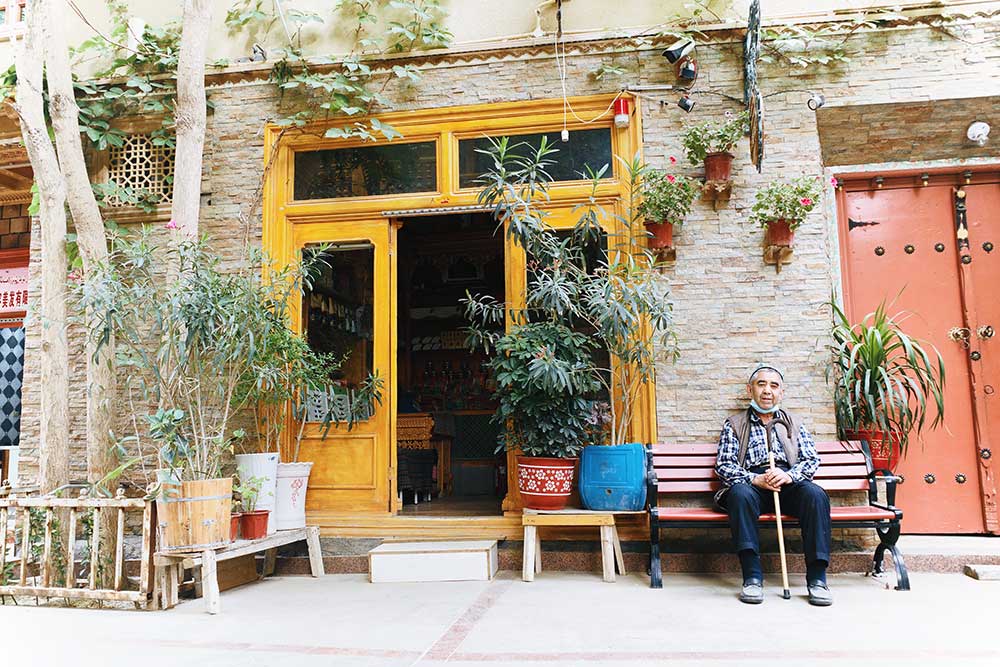
Memtimin Ghopur’s ancestral house in Hotan is 200 years old. (People’s Daily Online/ Kou Jie)
The first flush of dawn has fallen over Memtimin Ghopur’s 200-year-old ancestral house, and with the gilded coral light comes the enchanted glamour that belongs to a distinguished family that has been practicing traditional Uyghur medicine for eight generations. On the first floor of this ancient mansion, a dimly-lit clinic is filled with all kinds of exotic flora and rare herbs, painting a vivid picture of the daily life of 68-year-old Memtimin.
Living in Tuancheng, a famous neighborhood that features traditional Uyghur-style residences in Hotan, Memtimin’s three-floor home is truly a sight to behold. The mansion’s orange and golden brick walls are decorated with ebony windows with floral carvings and a rainbow-colored windmill, while the small clinic, where incense and herbs send off a hypnotic fragrance, is the best representation of traditional Uyghur culture.
Every morning at 6 o’clock, Memtimin opens his clinic and waits for patients to come. He still remembers that when he was little, the clinic was always crowded with patients visiting his grandfather, the best Uyghur doctor in the neighborhood. His business today is nothing compared to what it once was. Over the entire morning, only two curious tourists came by his clinic, leaving Memtimin quite deflated.
“As a practitioner of traditional Uyghur medicine for my whole life, I have to admit that traditional medicine is losing its appeal to the public. More and more patients now turn to modern medicine and advanced technologies, and our tradition is facing grave danger,” said Memtimin.
After being passed down through eight generations, traditional Uyghur medicine seems to be losing its significance in Memtimin’s family. Of his three children, only the eldest son took up Memtimin’s mantle and became an Uyghur doctor. Memtimin fears that his descendants may eventually give up practicing traditional Uyghur medicine, which he believes also carries Uyghur culture and his family history.
"As long as there are patients who need my help, I will make every effort to help them. But the thought of losing our traditional culture has been haunting me constantly. Can our culture survive in the future? Do our kids still cherish traditional culture?" Memtimin asked ponderously, rubbing his hands together with an anxious air.
 |  |
Photos
Related Stories
- Xinjiang's Alataw Pass reports growing China-Europe freight train trips in H1
- Chinese Embassy expresses firm opposition against French publication over report distorting Xinjiang issue: source
- Turpan in China’s Xinjiang boasts sweetest grapes and finest wine
- World's longest desert-crossing expressway in full operation
- China's Xinjiang promotes use of electricity, improves environment
Copyright © 2021 People's Daily Online. All Rights Reserved.
