


Medical workers transport a patient outside a hospital in New York, the United States, Dec. 8, 2020. (Xinhua/Wang Ying)
The United States remains the worst-hit nation, with 296,656 COVID-19 deaths, accounting for more than 18 percent of the global death toll.
NEW YORK, Dec. 12 (Xinhua) -- Global COVID-19 deaths reached 1.6 million on Saturday, according to the Center for Systems Science and Engineering (CSSE) at Johns Hopkins University.
The global death toll rose to 1,600,807, with a total of more than 71.4 million cases worldwide as of 1:26 p.m. (1826 GMT), the CSSE data showed.
The United States remains the worst-hit nation, with 15,939,022 cases and 296,656 deaths, accounting for more than 18 percent of the global death toll.

People wearing face masks are seen at a market in Srinagar, the summer capital of Indian-controlled Kashmir, Nov. 26, 2020. (Xinhua/Javed Dar)
Brazil recorded 180,437 deaths, just shy of the U.S. death toll. India has the world's third largest fatalities of 142,628 and the second largest caseload of more than 9.8 million.
Countries with over 50,000 fatalities also include Mexico, Britain, Italy, France and Iran.
Global COVID-19 deaths reached the grim milestone of 1 million on Sept. 28, and have since then increased at a quicker pace than before.
An updated model forecast by the Institute for Health Metrics and Evaluation at the University of Washington projected a total of 502,256 COVID-19 deaths in the United States by April 1, 2021, based on current projection scenario.

 Award-winning photos show poverty reduction achievements in NE China's Jilin province
 People dance to greet advent of New Year in Ameiqituo Town, Guizhou
 Fire brigade in Shanghai holds group wedding
 Tourists enjoy ice sculptures in Datan Town, north China
 Sunset scenery of Dayan Pagoda in Xi'an
 Tourists have fun at scenic spot in Nanlong Town, NW China
 Harbin attracts tourists by making best use of ice in winter
 In pics: FIS Alpine Ski Women's World Cup Slalom
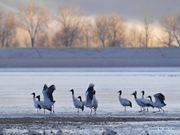 Black-necked cranes rest at reservoir in Lhunzhub County, Lhasa
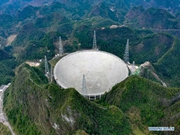 China's FAST telescope will be available to foreign scientists in April