

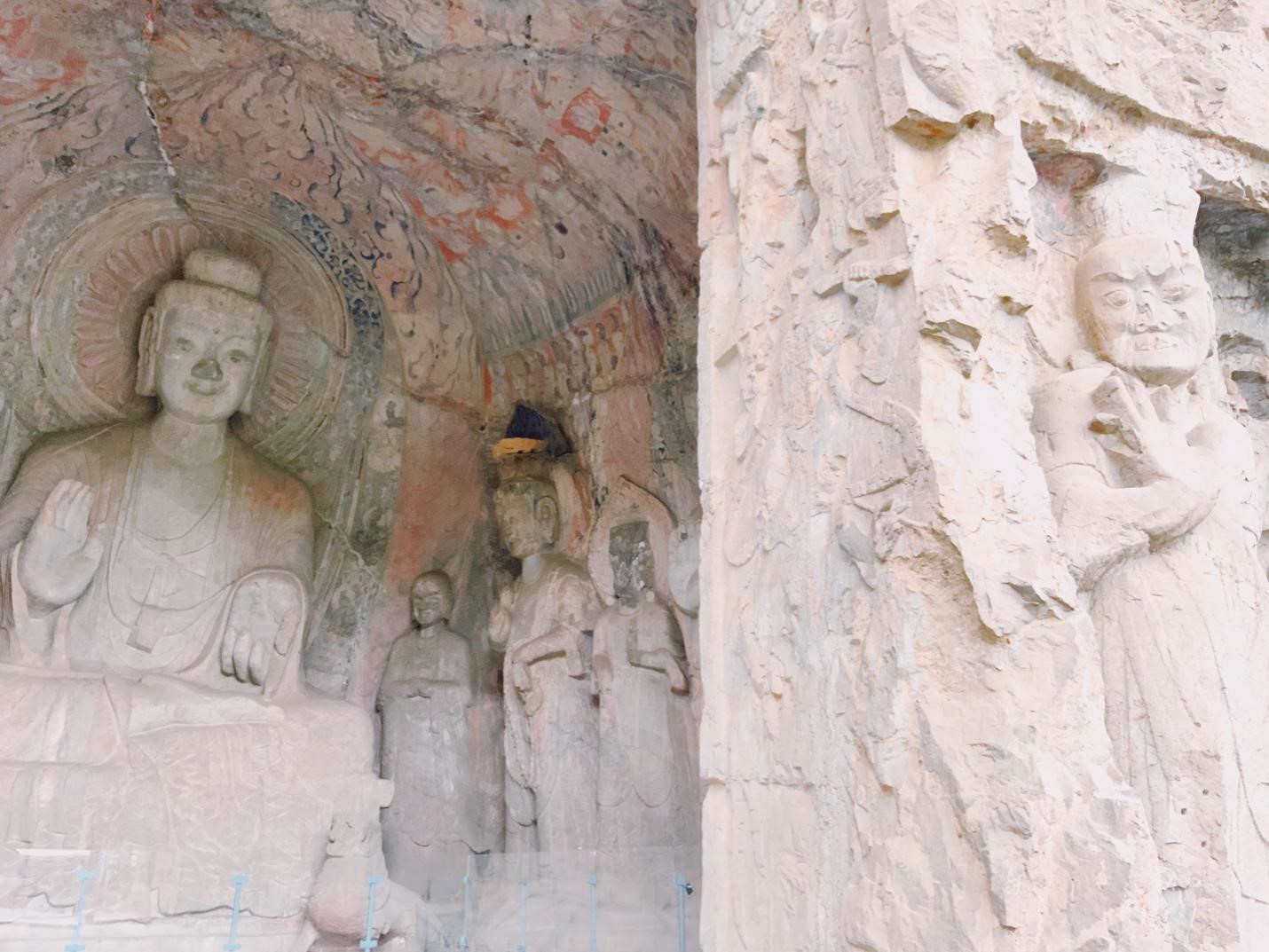
The Middle Binyang Cave was built by Emperor Xuanwu to commemorate his father Xiaowen, and also his mother. It is said that 800,000 workers created it between 500 to 523. (People’s Daily Online/Kou Jie)
Though nature has eroded some of the statues over the centuries, it is human interference and vandalism that have damaged many of the caves. During the Chinese People’s War of Resistance against Japanese Aggression, the Japanese looted the site and took many of the statues back to Japan, many of which remain in Japanese museums today. Merchants from Western countries also cooperated with local criminals to cut many statues from their caves and smuggled them abroad. After the founding of the People’s Republic of China, the government started to issue laws and arranged for experts to protect the cultural relic, and restore it to its former glory.
In 2000, this magnificent cultural relic was included in the UNESCO World Heritage List as “an outstanding manifestation of human artistic creativity,” for its perfection of an art form, and for its encapsulation of the cultural sophistication of Tang Dynasty.
 |  |

 Award-winning photos show poverty reduction achievements in NE China's Jilin province
 People dance to greet advent of New Year in Ameiqituo Town, Guizhou
 Fire brigade in Shanghai holds group wedding
 Tourists enjoy ice sculptures in Datan Town, north China
 Sunset scenery of Dayan Pagoda in Xi'an
 Tourists have fun at scenic spot in Nanlong Town, NW China
 Harbin attracts tourists by making best use of ice in winter
 In pics: FIS Alpine Ski Women's World Cup Slalom
 Black-necked cranes rest at reservoir in Lhunzhub County, Lhasa
 China's FAST telescope will be available to foreign scientists in April