
 |
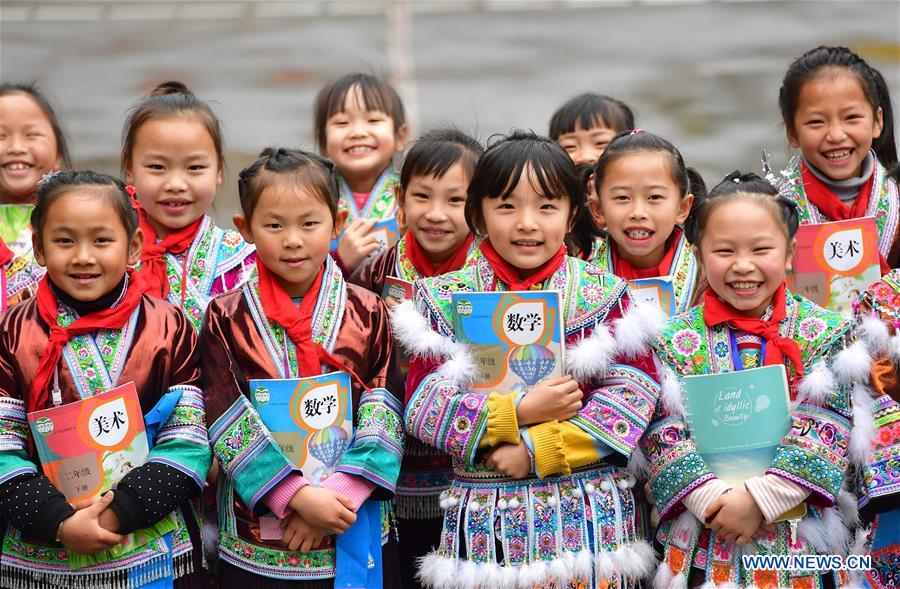
| Students pose for a photo at a primary school in Gandong Township of Rongshui Miao Autonomous County, south China’s Guangxi Zhuang Autonomous Region, March 14, 2019. Guangxi, one of the major battlefields in China’s poverty alleviation campaign, has been making painstaking efforts to improve education for poverty-stricken children, as schooling is believed to be the best way to empower the youngsters to lift their families out of poverty. The region has taken various measures in this regard, including granting students stipends, improving school facilities and nutritional conditions of rural students, and helping more students from rural and impoverished areas have access to higher education. As many households from inhospitable areas have moved into relocation sites built for poverty alleviation in the county seats, relocated children can study in schools in and near resettlements, instead of trekking hours back and forth in mountains for schooling. The faculty is a key to education. The regional government has called in capable teachers to help schools in rural areas, and has been committed to guaranteeing payment to teachers and filling vacancies of teachers in rural areas through special programs. Reducing poverty must begin with reducing ignorance. Therefore, giving rural children a good education is an important task in poverty relief, and also a crucial means to stop poverty being passed on through generations. (Xinhua/Huang Xiaobang) |

 Award-winning photos show poverty reduction achievements in NE China's Jilin province
 People dance to greet advent of New Year in Ameiqituo Town, Guizhou
 Fire brigade in Shanghai holds group wedding
 Tourists enjoy ice sculptures in Datan Town, north China
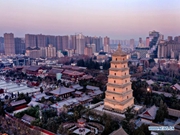 Sunset scenery of Dayan Pagoda in Xi'an
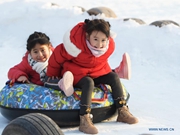 Tourists have fun at scenic spot in Nanlong Town, NW China
 Harbin attracts tourists by making best use of ice in winter
 In pics: FIS Alpine Ski Women's World Cup Slalom
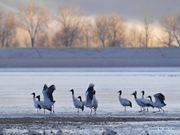 Black-necked cranes rest at reservoir in Lhunzhub County, Lhasa
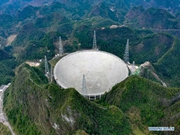 China's FAST telescope will be available to foreign scientists in April