


A blue-and-white plum vase made in Jingdezhen in the Ming Dynasty.[Photo provided to China Daily]
The earliest evidence of people making ceramic was found in the ruins of the Shang Dynasty (c. 16th century-11th century BC) in China, says Hu Jiang, director of the Shanghai History Museum.
In 1004, Emperor Zhenzong of the Song Dynasty (960-1279) named the town Jingde-named after the moniker given to the era of his reign-in recognition of the town's achievements in the production of high-quality porcelain.
Since then "fires have burned in the kilns of Jingdezhen for more than 1,000 years, which built its reputation as the world's capital of porcelain", Hu says.
Porcelain from Jingdezhen was exported via Guangzhou, the largest trading port in China for centuries.
 |  |

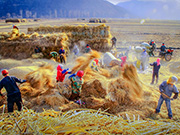 Award-winning photos show poverty reduction achievements in NE China's Jilin province
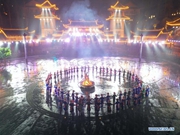 People dance to greet advent of New Year in Ameiqituo Town, Guizhou
 Fire brigade in Shanghai holds group wedding
 Tourists enjoy ice sculptures in Datan Town, north China
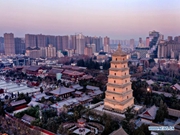 Sunset scenery of Dayan Pagoda in Xi'an
 Tourists have fun at scenic spot in Nanlong Town, NW China
 Harbin attracts tourists by making best use of ice in winter
 In pics: FIS Alpine Ski Women's World Cup Slalom
 Black-necked cranes rest at reservoir in Lhunzhub County, Lhasa
 China's FAST telescope will be available to foreign scientists in April