To beautify the banks along the Yangtze River—which used to be full of barren ports overrun with weeds, an ecology-oriented development strategy to accelerate industrial transformation and strengthen ecological protection has been promoted in east China’s Jiangxi Province since 2015.
Ruichang City, as the estuary through which the Yangtze River flows into the province, is a paramount part of Jiangxi’s efforts to renovate the banks along the Yangtze River.
A host of industries lacking environmental protection awareness were made to rectify or integrate in order to improve their environmental protection efforts. Special management measures were implemented, and unqualified enterprises will be continuously removed to reduce pollution.
Within the 20-kilometer bank in the Ruichang section of the Yangtze River, some 24 ports have been removed to remove illegal sand-mining operations. This action alone has saved over two kilometers of riverbank.
Furthermore, a protector was appointed for each kilometer along the Yangtze River’s Pengze County section in Jiangxi, who is responsible for weed cleanup, safeguarding forest areas, and environmental pollution supervision.
Over the years, the province has shut down 61 illegal wharves and rectified another 46. Meanwhile, the work of rebuilding key industries, such as paper making and electroplating, has been basically completed. Moreover, more than 50,000 square kilometers of livestock-forbidden areas has been designated to reduce potential dangers to the ecology.
(Wang Tianhao contributed to the story)
 |

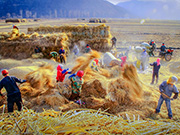 Award-winning photos show poverty reduction achievements in NE China's Jilin province
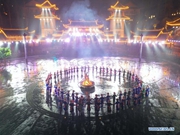 People dance to greet advent of New Year in Ameiqituo Town, Guizhou
 Fire brigade in Shanghai holds group wedding
 Tourists enjoy ice sculptures in Datan Town, north China
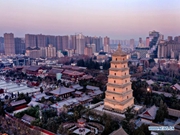 Sunset scenery of Dayan Pagoda in Xi'an
 Tourists have fun at scenic spot in Nanlong Town, NW China
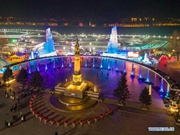 Harbin attracts tourists by making best use of ice in winter
 In pics: FIS Alpine Ski Women's World Cup Slalom
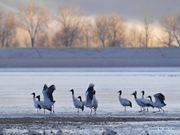 Black-necked cranes rest at reservoir in Lhunzhub County, Lhasa
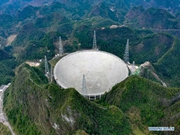 China's FAST telescope will be available to foreign scientists in April