



Distinctive industries thrive in China's northernmost village
Distinctive industries are thriving in Beiji village, Mohe city, northeast China's Heilongjiang Province, the northernmost village in the country.
The Mohe Forest Farm, with over 30,000 hectares of forest, serves as a green belt marking the nation's northernmost ecological frontier. It functions as a natural treasury integrating water conservation, grain production, economic resources, and carbon sequestration.
Since the complete cessation of commercial logging in the Greater Khingan Mountains, the forest farm has undergone a profound transformation. Sun Zhicheng, deputy head of the forest farm, said former loggers have become specialists in forest management, fire prevention and control, and pest control. "In recent years, we've been exploring ways to develop the forest farm's resources in a sustainable manner," he said.
When asked whether the cessation of commercial logging had affected incomes, Zhao Hailiang, another deputy head of the forest farm, said the farm sold 80,000 cups of specialty tea drinks in 2025, earning over 40,000 yuan (about $5,756.72).
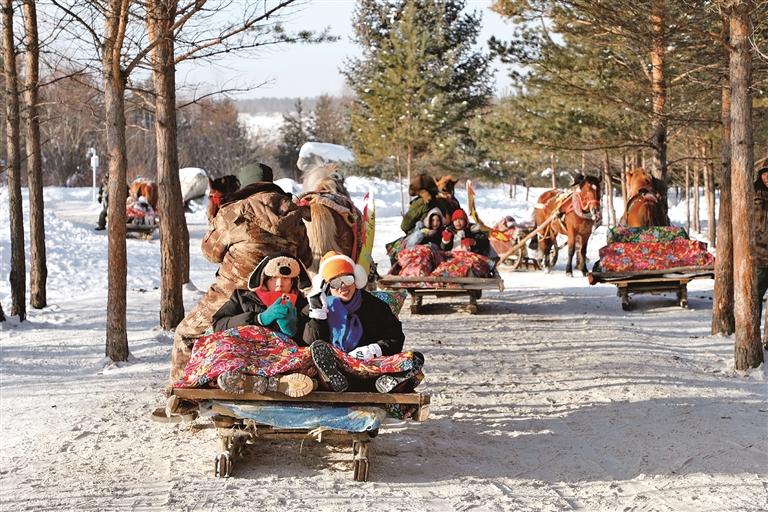
Tourists experience a horse-drawn sleigh ride in Beiji village, Mohe city, northeast China's Heilongjiang Province. (Guangming Daily/Liu Yuhang)
"Free-range chickens, lingzhi mushrooms, and wood ear mushrooms have increased employees' annual per capita income by several thousand yuan. Our specialty product stores and reindeer park also attract a steady stream of visitors," Zhao added.
"Just 50 boxes of Italian bees produced over 500 kilograms of honey, boosting workers' income while strengthening enthusiasm for ecological industries. In 2025, we completed a standardized beekeeping base with 120 hives," Zhao said.
Gao Wei, Party branch secretary of Beiji village, said that as growing numbers of tourists wanted to ride a horse-drawn sled, the village established a horse-drawn sledding association. "Now, horses can bring in over 50,000 yuan in a single winter by taking tourists on rides."
Shi Ruijuan, owner of a B&B, returned to the village over a decade ago after working elsewhere and turned her family home into a B&B. Her business has expanded considerably—a new branch opened in 2025, increasing capacity from the original three rooms to 28.
As the village's popularity for aurora viewing and ice-and-snow tourism continues to soar, it boasts over 300 distinctive hotels and B&Bs, receiving more than 2.72 million tourist visits in 2025.
Guo Haotian, born and raised in Beiji village, runs a B&B that looks like a traditional wooden log cabin from the outside. Yet inside, guests find modern amenities and cozy warmth.
"The contrast is intentional—the exterior preserves the traditional style and sense of history, while the interior features contemporary design incorporating distinctive aesthetics in the Greater Khingan Mountains, creating a unique experience for visitors," Guo explained.
His approach reflects the words of Di Fangquan, deputy head of Beiji town, who noted that Beiji village's tourism development isn't just about scale—but also about diversified offerings and improved business practices.
Over the past years, tourism growth presented challenges for the village. "We got running water over 20 years ago, when we never imagined our village would develop like this. Back then, one water heater per household sufficed. Now, with so many tourists, water and electricity systems require upgrading," Gao said.
In 2025, the village overhauled its water, electricity, and heating infrastructure. "This winter, we achieved village-wide centralized heating, greatly improving residents' quality of life as well as visitors' experience and satisfaction," Gao added.
Today, visitors to Beiji village can immerse themselves in the bustling Mokou wharf and old street, enjoy the Greater Khingan Mountains' seasonal landscapes and brilliant auroras at the aurora dome theater, and visit the Oroqen Ethnic Museum, which displays indigenous hunting tools, fur products, and recreated hunting scenes.
Shi's family started a "side business" in 2025, winning the bid for operating rights to a pond at the village's northern edge and partnering with 14 households.
"We'll run an ice-and-snow park in winter and offer fishing with a waterside restaurant in summer. Things will only keep getting better for our village," Shi said with a beaming smile.
Photos
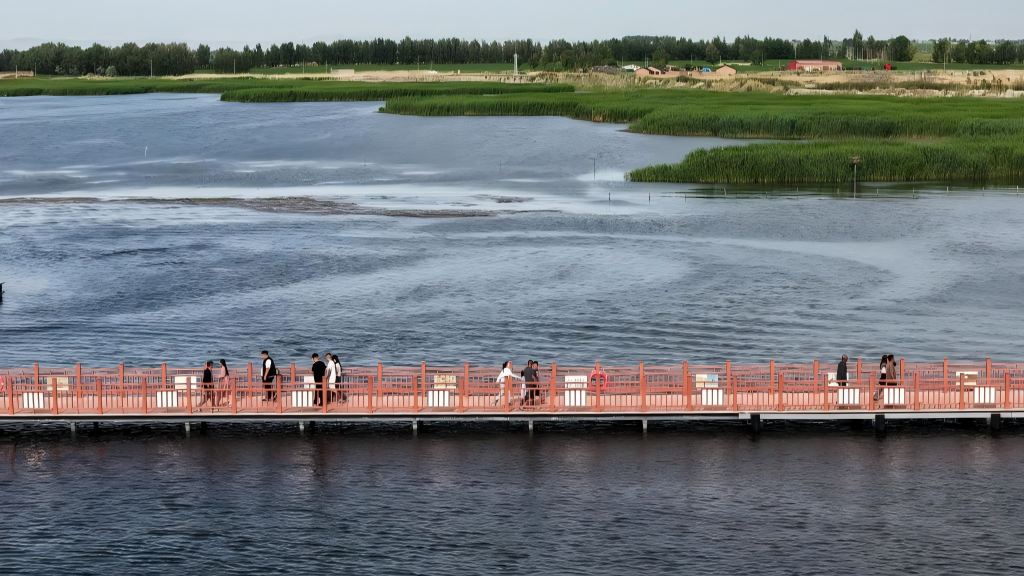
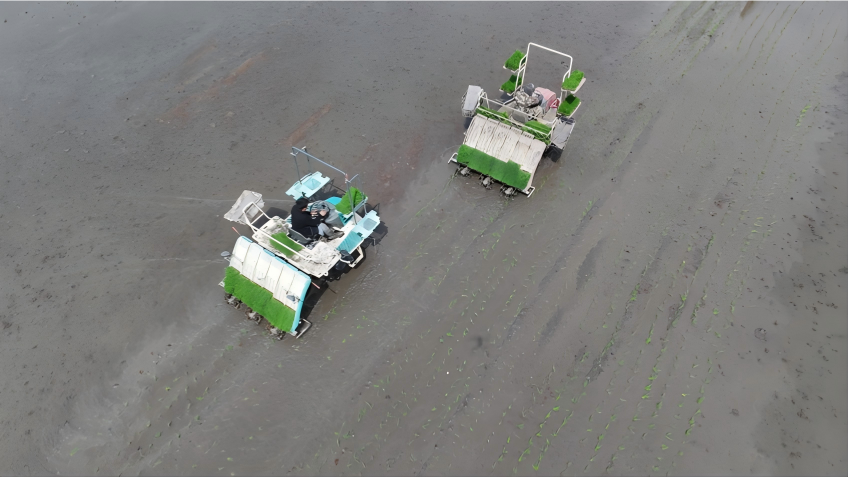
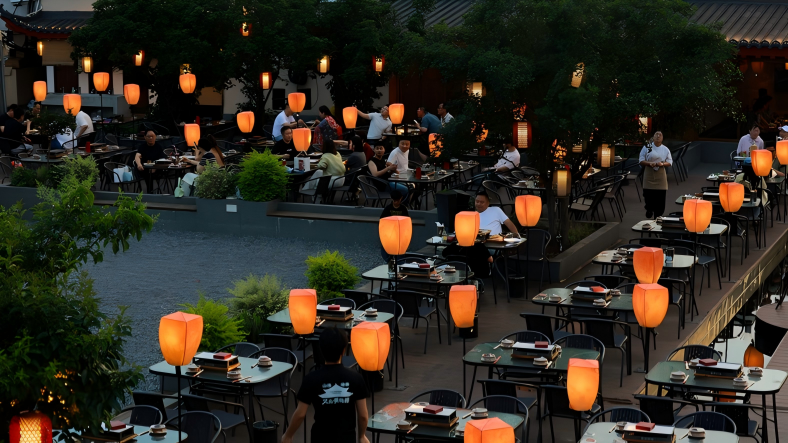
Related Stories
- Starry sky, aurora observed in NE China's Heilongjiang
- Rime scenery of Qixingshan forest park in Shuangyashan, Heilongjiang
- In pics: winter fishing festival in Jiejinkou Hezhe Ethnic Township, China's Heilongjiang
- In pics: Siberian tigers in China's Heilongjiang
- Aurora observed from NE China's Heilongjiang
- Aurora seen in Beiji Village of Mohe, NE China
- Camping carnival turns up winter rural tourism heat in NE China
- 2026 Xingkai Lake winter fishing festival kicks off in China's Heilongjiang
- Distinctive snowman-themed landscapes attract locals and tourists in Heilongjiang
- Morning markets across Heilongjiang bustle in subzero temperatures
Copyright © 2026 People's Daily Online. All Rights Reserved.
