



Zero-tariff policy brings more African products to Chinese market
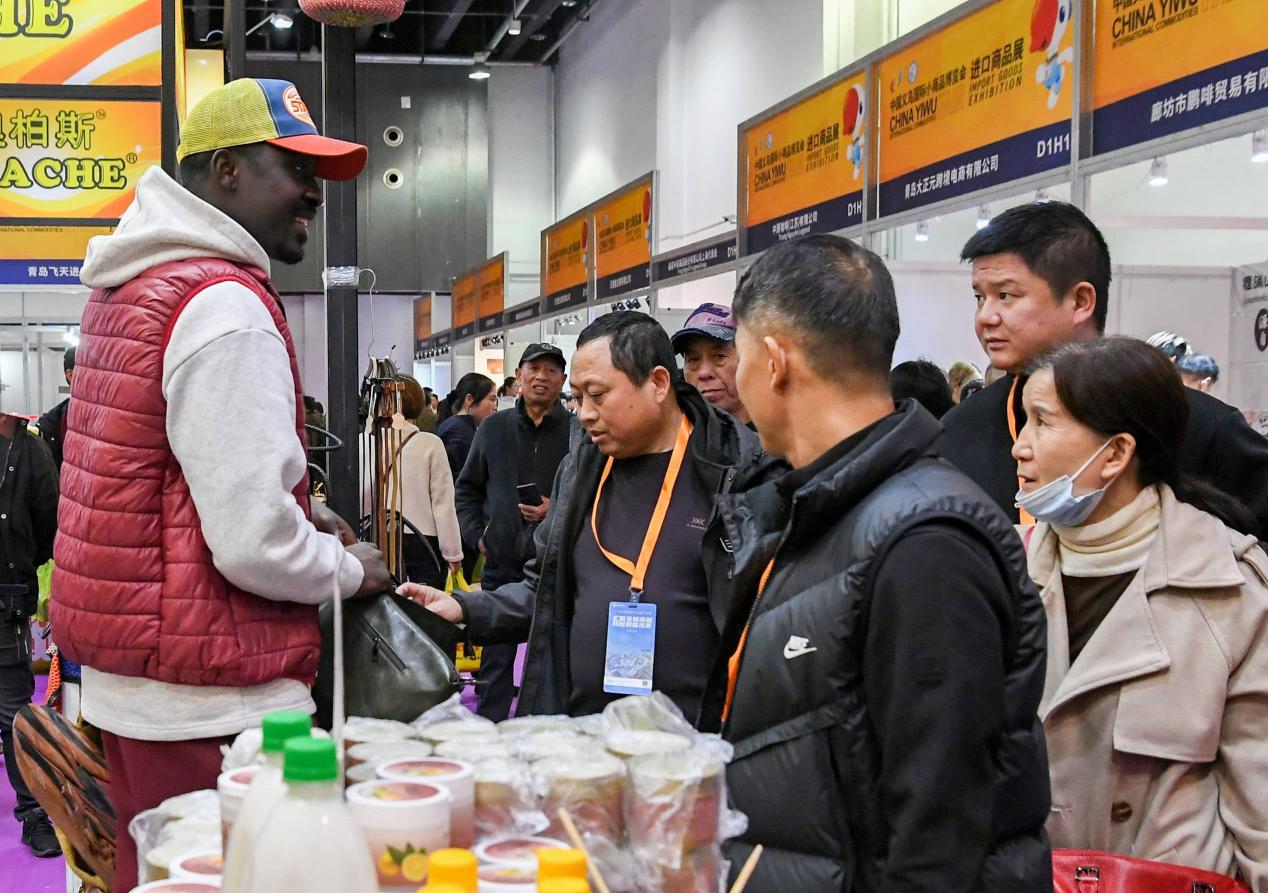
People visit the booth of Senegal at the 2025 China Yiwu International Commodities Fair at the Yiwu International Expo Center in east China's Zhejiang province, Nov. 13, 2025. (Photo/Shi Kuanbing)
To expand unilateral opening to the least developed countries (LDCs) and achieve common development, China has granted zero-tariff treatment for 100 percent tariff lines to all the LCDs it has diplomatic relations with since Dec. 1, 2024. For products subject to tariff quota administration, goods within the quota will enjoy zero tariffs, while tariff rates on goods exceeding the quota will remain unchanged.
Over the past year, China-Africa mutually beneficial cooperation has advanced steadily, injecting renewed vitality into bilateral trade.
In recent years, Ethiopia's coffee exports to China have grown at an annual rate of 27 percent. The zero-tariff policy has allowed the rich aroma of coffee from its birthplace to flow into the vast Chinese market. China has become Ethiopia's fourth-largest coffee export destination. In fiscal year 2024/2025, Ethiopia exported more than 34,000 tons of coffee to China, generating over $218 million in revenue.
"The zero-tariff policy makes our coffee highly competitive in the Chinese market," said Israel Degefa, CEO of Kerchanshe, Ethiopia's largest coffee producer and exporter. He noted that since December 2024, the company's coffee exports to China have surged. The zero-tariff policy has enhanced the price competitiveness of Ethiopian coffee, helping local coffee farmers and industry workers increase their incomes. "We plan to further scale up production to meet rising demand from the Chinese market," he told People's Daily.
To Tefera Derbew Yimam, Ethiopian Ambassador to China, coffee "symbolizes solid cooperation and lasting friendship." He said China's zero-tariff policy helps African countries strengthen local production capacity, enhance export capabilities, and improve returns on their export products.
"From Mozambique's golden sesame pods in the fields to fragrant sesame oil produced in workshops in Chengdu, China, the cross-border supply chain is becoming increasingly mature and efficient," said Ye Chunming, general manager of Chengdu Yimin Investment Group based in Chengdu, southwest China's Sichuan province.
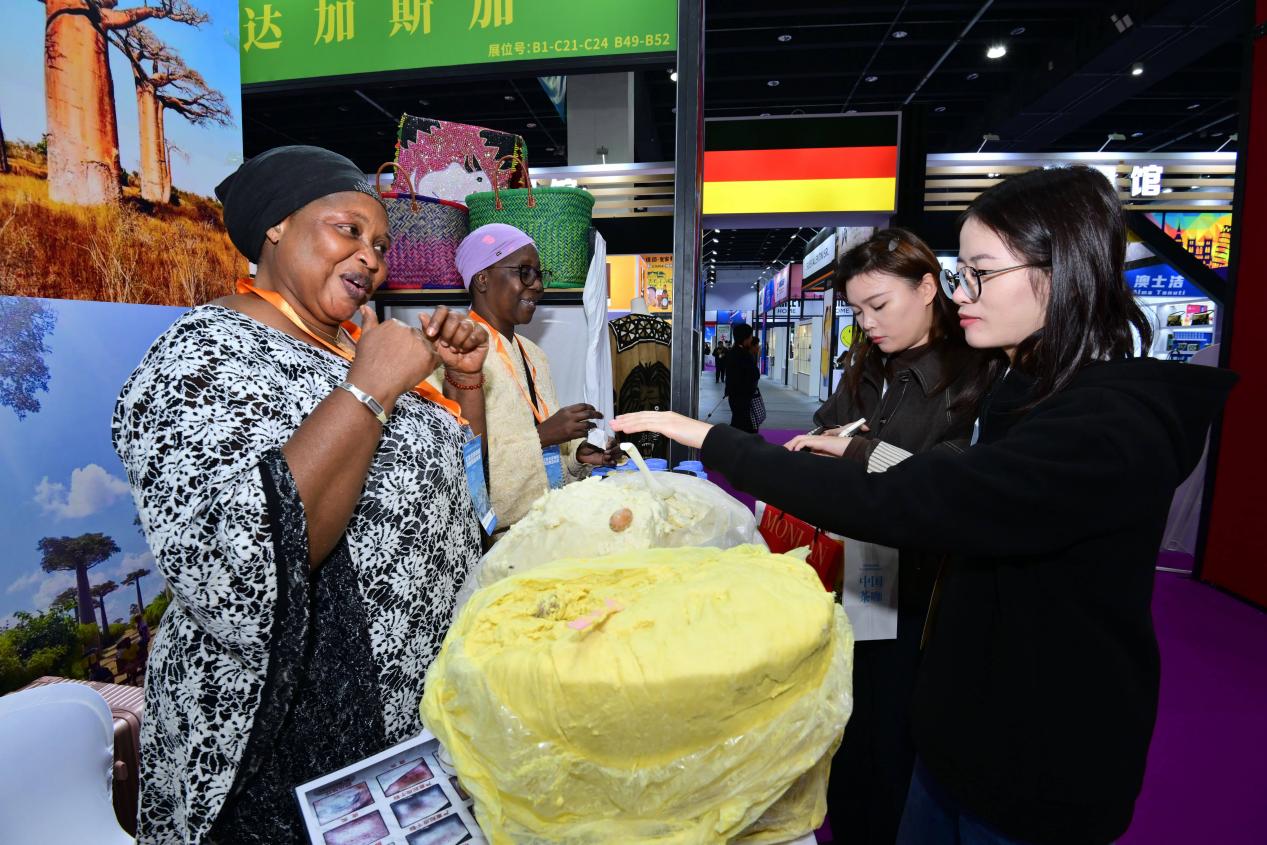
Natural skin care products are showcased at the 2025 China Yiwu International Commodities Fair, Nov. 13, 2025. (Photo/Lyu Bin)
Sesame, Africa's top agricultural export to China, is entering the Chinese market more smoothly through direct overseas sourcing. Mozambique's favorable climate produces high-quality sesame.
"We source directly at the origin, so we can control quality from the planting stage," Ye explained. In addition to Mozambique, the company also directly sourced 1,120 tons of white sesame from Niger this year. The first batch of 246 tons arrived at Qingdao Port in east China's Shandong province in May, with the remainder arriving successively in June, further expanding its direct procurement network.
"These sesame seeds are plump and bright, with an oil content of over 50 percent. The sesame oil pressed from them has a rich, appetizing aroma," said the procurement manager of a pastry manufacturer, praising the product's quality.
"We will continue to expand our presence in the African market and further streamline direct sourcing channels," Ye added. More and more enterprises are taking concrete steps to build efficient cross-border corridors for China-Africa agricultural products and deepen mutual trust and industrial cooperation in agricultural trade.
In a workshop of Triangle Tyre Co., Ltd. in Weihai, Shandong province, smart production lines run at full speed. Rubber materials imported from Africa are carefully processed into high-performance tires with uniform tread patterns.
The company exports its products to more than 180 countries and regions across Europe, Southeast Asia, and Latin America, and consumes tens of thousands of tons of rubber raw materials annually. When sourcing raw materials, the company increasingly looks to African countries.
"Since the zero-tariff policy took effect, the tariff rate on natural rubber smoked sheets imported from Liberia has been reduced from 20 percent to zero. The first batch alone received tariff reductions amounting to around 300,000 yuan ($55,002)," said Du Xiaoping, manager in charge of inspection and verification at Triangle Tyre's finance department. Liberia's natural rubber is certified under ISCC PLUS, a sustainable certification scheme for bio-based, renewable and circular raw materials, and serves as a key raw material for high-end tires, offering superior wear resistance and flexibility.
China's largest rubber-importing port is located in Qingdao, surrounded by a number of major tire manufacturers. According to Qingdao customs, in the first 10 months of this year, Shandong imported goods worth 87.645 billion yuan from Africa, up 50.3 percent year on year. Among these, imports of natural and synthetic rubber reached 2.6 billion yuan, marking a 50.7 percent increase.
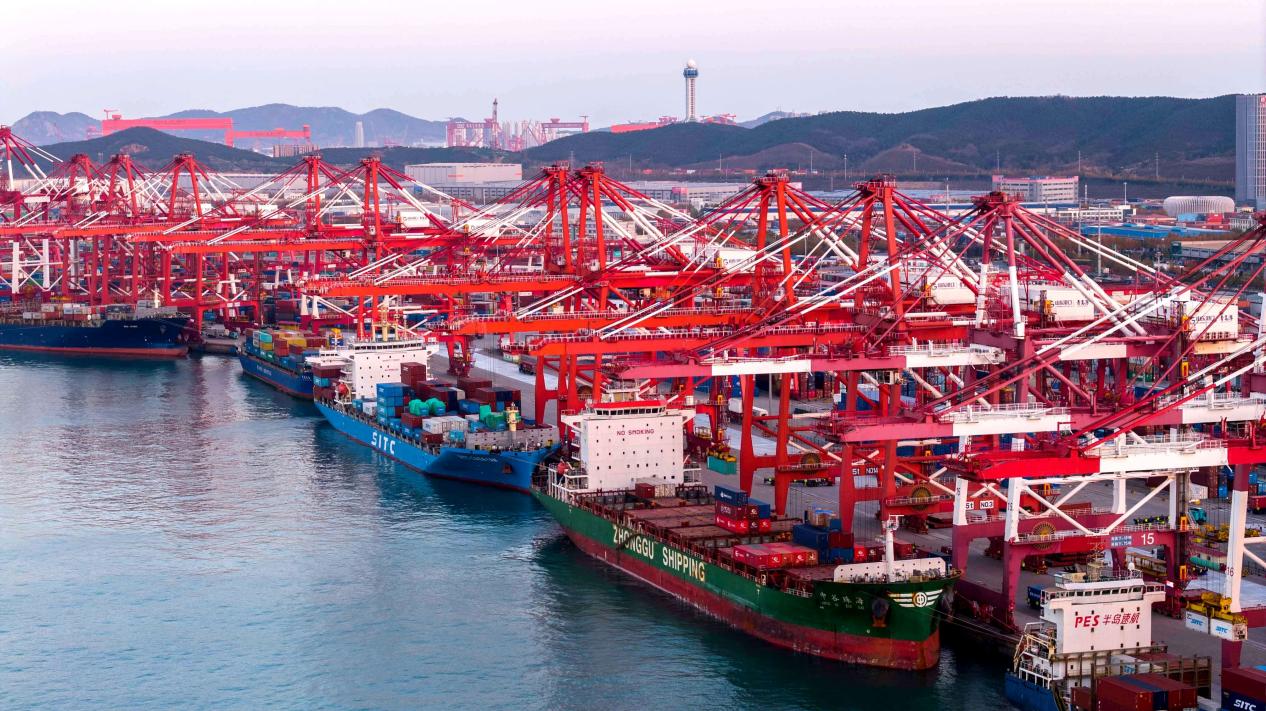
Photo taken on Dec. 1, 2025 shows a busy scene at the Qianwan container terminal of Qingdao Port in east China's Shandong province. (Photo/Han Jiajun)
Focusing on LDCs with active trade such as Mali, Niger, and Zambia, Qingdao customs has simplified documentation requirements, taking into account the fact that many of these countries' goods must be transshipped through third-country ports.
Ports in Shandong have also expanded shipping routes, offering more efficient and convenient channels. At Qingdao Port, nine Africa-bound routes connect directly to 17 ports in 11 African countries, including Kenya, Tanzania, Nigeria, and Benin. At Yantai Port, China-Africa liner services reach Guinea, Tanzania, South Africa, Namibia and other countries and regions, with annual throughput expected to exceed five million tons.
Photos



Related Stories
- China-Africa cooperation reports, achievements shine at Global South Media and Think Tank Forum
- Across China: East China city heralds new chapter in China-Africa cooperation
- Africa crosses milestone in solar power
- Global hunger falls in 2024, but setbacks in Africa, West Asia: UN Report
- South African minister eyes sci-tech cooperation with China
- Interview: Tanzanian scholar says CAETE showcases Africa-China cooperation outcomes, shared development future
- Chinese FM to attend FOCAC ministerial meeting of coordinators, 4th China-Africa Economic and Trade Expo
- Chinese envoy calls on int'l community to help advance CAR election preparations
- China, Africa will jointly advance implementation of 10 partnership action plans: FM
- Yearender: An awakened Africa joins hands with Global South to advance modernization
Copyright © 2026 People's Daily Online. All Rights Reserved.
