A tripod, which was used to wash writing brushes, from the Southern Song to Yuan dynasties (1127-1368).[Photo by Jiang Dong/China Daily]
For example, during underwater archaeological research off the coast of South Korea in 1975, 18,000 Chinese porcelain items were discovered at a single shipwreck-10,000 of which were made in Longquan. The ship sank in 1323 on a voyage from Ningbo in Zhejiang province to Fukuoka in Japan.
When products from the Longquan Kilns were first introduced to France, they amazed the nobility there. However, since there was no word for this new type of ceramic, they named it after Celadon, a character in the popular opera L'Astree, who wore clothes of the same exquisite color, Geng explains.
"Celadon" soon entered Western vocabularies as a term for jade-green glazed porcelain ware.
Booming outward trade not only brought huge wealth to China, but also built up a trade network that linked the Chinese economy with the rest of the world, says Chen Shuihua, director of the Zhejiang Provincial Museum and the co-curator of the exhibition.
 |  |

 Award-winning photos show poverty reduction achievements in NE China's Jilin province
 People dance to greet advent of New Year in Ameiqituo Town, Guizhou
 Fire brigade in Shanghai holds group wedding
 Tourists enjoy ice sculptures in Datan Town, north China
 Sunset scenery of Dayan Pagoda in Xi'an
 Tourists have fun at scenic spot in Nanlong Town, NW China
 Harbin attracts tourists by making best use of ice in winter
 In pics: FIS Alpine Ski Women's World Cup Slalom
 Black-necked cranes rest at reservoir in Lhunzhub County, Lhasa
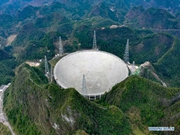 China's FAST telescope will be available to foreign scientists in April