


China's longest strop ropeway will be in full operation in the beginning of April in Guangzhou, capital of Guangdong province. [Photo provided to chinadaily.com.cn]
China's longest strop ropeway will be in full operation starting this April in Guangzhou, capital of Guangdong province, according to a statement released by Baiyun Mountain Scenic Spot, the ropeway operator, on Thursday.
With a total length of 1,500 meters, the facility has been designed for a maximum speed of 120 kilometers per hour and is expected to be a major attraction for the city's tourism industry.
It will take riders around two minutes to travel across the valley, while taking road transportation on the same route is estimated to take upwards of an hour.
The ropeway, which has a drop of more than 200 meters, offers six different lines tailored to visitors with varied weights and looking for diversified speeds. In general it covers Moxingling, the highest peak of the mountain, as well as Huangpodong Reservoir at the foot of the mountain.
A safety braking system is placed at the destination to guarantee visitors enjoy the vertigo-inducing adventure without causing any physical damage.
Operators of the facility hope the new installation will bring visitors to the spot from both home and abroad.
Previously the longest strop ropeway in service in China was at the Huaguoshan mountain scenic spot in Lianyungang, East China's Jiangsu province. That 788-meter-long ropeway has a drop of 136 meters.
 |

 Award-winning photos show poverty reduction achievements in NE China's Jilin province
 People dance to greet advent of New Year in Ameiqituo Town, Guizhou
 Fire brigade in Shanghai holds group wedding
 Tourists enjoy ice sculptures in Datan Town, north China
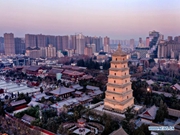 Sunset scenery of Dayan Pagoda in Xi'an
 Tourists have fun at scenic spot in Nanlong Town, NW China
 Harbin attracts tourists by making best use of ice in winter
 In pics: FIS Alpine Ski Women's World Cup Slalom
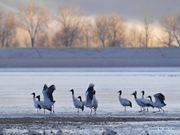 Black-necked cranes rest at reservoir in Lhunzhub County, Lhasa
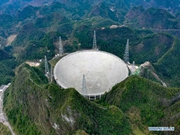 China's FAST telescope will be available to foreign scientists in April