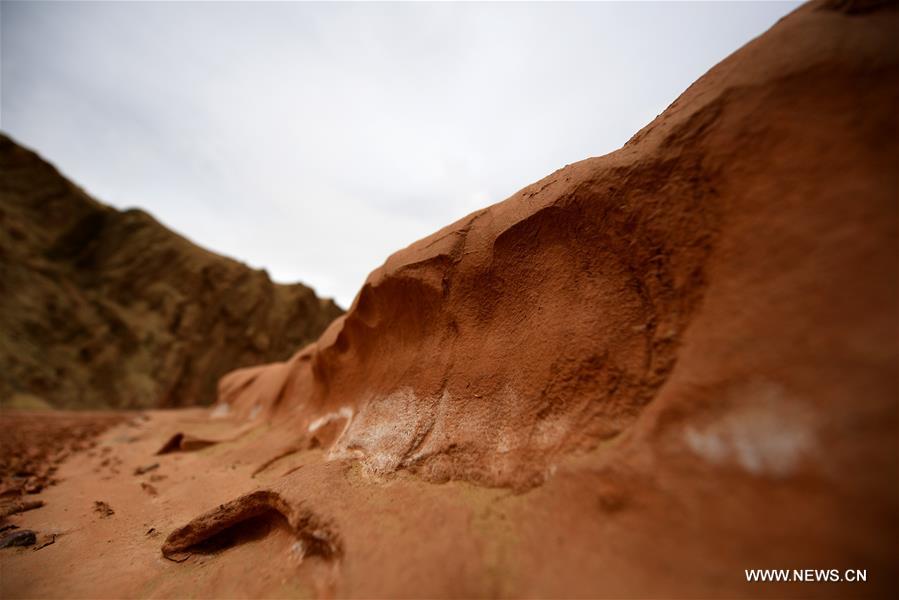

Photo taken on Sept. 2, 2017 shows China's future Mars simulation base in Hongya (Red Cliff) region of Haixi Mongolian and Tibetan Autonomous Prefecture in northwest China's Qinghai Province. About 400 million yuan (61 million U.S. dollars) are expected to invest in the Mars scientific research base and eco-tourism site. The red rock area in Qaidam basin in western Qinghai has been called the most "Martian" place on Earth, with its natural features, landscape and climate all similar to those on the red planet. The base is expected to consist of a "Mars community" and a "Mars campsite." The campsite will have a number of experimental module-like accommodations. It will be built as a one-stop base for experiential learning in aerospace, astronomy, geography and new energy. (Xinhua/Wang Bo)
 |  |

 Award-winning photos show poverty reduction achievements in NE China's Jilin province
 People dance to greet advent of New Year in Ameiqituo Town, Guizhou
 Fire brigade in Shanghai holds group wedding
 Tourists enjoy ice sculptures in Datan Town, north China
 Sunset scenery of Dayan Pagoda in Xi'an
 Tourists have fun at scenic spot in Nanlong Town, NW China
 Harbin attracts tourists by making best use of ice in winter
 In pics: FIS Alpine Ski Women's World Cup Slalom
 Black-necked cranes rest at reservoir in Lhunzhub County, Lhasa
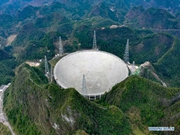 China's FAST telescope will be available to foreign scientists in April