



Pragmatic governance that puts people first
In recent years, extreme heatwaves have repeatedly swept across many regions, triggering debates over a daily necessity: air conditioning. While temperatures soar, some societies remain trapped in arguments over environmental regulations, high electricity prices, and rigid building restrictions. But in China, air‑conditioning popularization has never been a controversial issue.
This striking difference is a vivid reflection of a fundamental governance philosophy: serving the people wholeheartedly and solving real problems through practical action.
Decades ago, air conditioners were a luxury for few Chinese families. Today, thanks to steady economic development and people‑centred policy promotion, air conditioning has become a standard household facility across urban and rural China. The government has actively supported the upgrading of household appliances, optimized power grid construction to ensure stable electricity supply during summer peaks, and subsidized energy‑efficient cooling equipment for low‑income families and rural households. This targeted governance ensures that every citizen, regardless of region or income, can escape extreme heat and enjoy basic living comfort.
But air conditioning is only a small window into a much broader governance picture. China's development has always adhered to a pragmatic, people‑first logic, striking a perfect balance between improving people's immediate well‑being and pursuing long‑term ecological sustainability. Instead of empty talks and extreme binary oppositions, China is committed to solving real problems for the people, balancing present livelihood demands and future developmental interests, and proving itself as a doer rather than a talker.
Beyond daily comfort, China's people‑centred development has achieved historic feats in poverty alleviation, medical care, education and infrastructure. Since reform and opening up began in 1978, the country has lifted 770 million rural people out of poverty, including almost 100 million from 2012 to 2020 through targeted programs, eradicating absolute poverty nationwide—a miracle in global poverty reduction.
Rural areas have achieved full access to hardened roads, safe drinking water, broadband networks and modern power supply systems. Public medical and education resources continue to sink to grassroots communities, effectively reducing the living burden of ordinary people. During extreme weather, local governments always take the initiative to issue warnings, open free shelters for outdoor workers and vulnerable groups, and prioritize protecting people's lives and health. These tangible, down‑to‑earth measures fully interpret the core purpose of serving the people.
Importantly, this people‑first approach does not come at the expense of ecology. China adheres to coordinated development, seeking win‑win results for both people's lives and the environment. The country has delivered remarkable ecological achievements through decades of persistent efforts. It has the world's largest forest coverage growth rate, with tens of millions of acres of desert and barren mountains transformed into green vegetation every year. Strict environmental protection laws have been implemented to rectify high‑pollution and high‑energy‑consuming enterprises, gradually optimizing the industrial structure. At the same time, China leads the world in new energy development, with installed capacities of wind and solar power ranking first globally, effectively cutting carbon emissions while ensuring stable energy supply for daily life and industrial production.
For China, serving the people is the fundamental and unchanging core of its governance. It is problem‑oriented and people‑oriented. It never uses long‑term ecological goals as an excuse to ignore people's immediate difficulties, nor pursues short‑term comfort at the cost of future sustainability. All policies and practices start from the interests of the broadest population.
China's pragmatic, people‑first governance model provides a valuable reference for the world. It proves that good governance is never empty talk or rigid dogma, but down‑to‑earth efforts to solve people's problems, and create sustainable happiness for all.
Every country faces its own constraints and trade‑offs, and there is no one‑size‑fits‑all solution. Yet China remains open to sharing experiences and learning from others, because a more comfortable, fairer, and sustainable world benefits everyone.
The author is a commentator on international affairs, writing regularly for Xinhua News, Global Times, China Daily, CGTN etc. He can be reached at xinping604@gmail.com.
Photos
 Ecological beauty of Mitika wetland in SW China's Xizang
 Immersive experiences increasingly popular amid China's summer travel boom
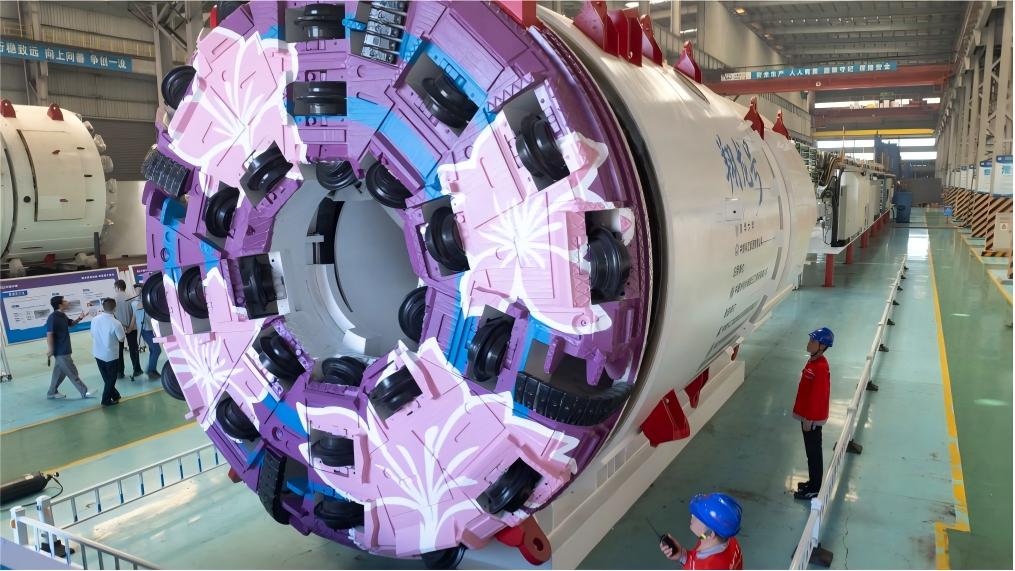 China's first boring and blasting machine rolls off production line in Wuhan, China's Hubei
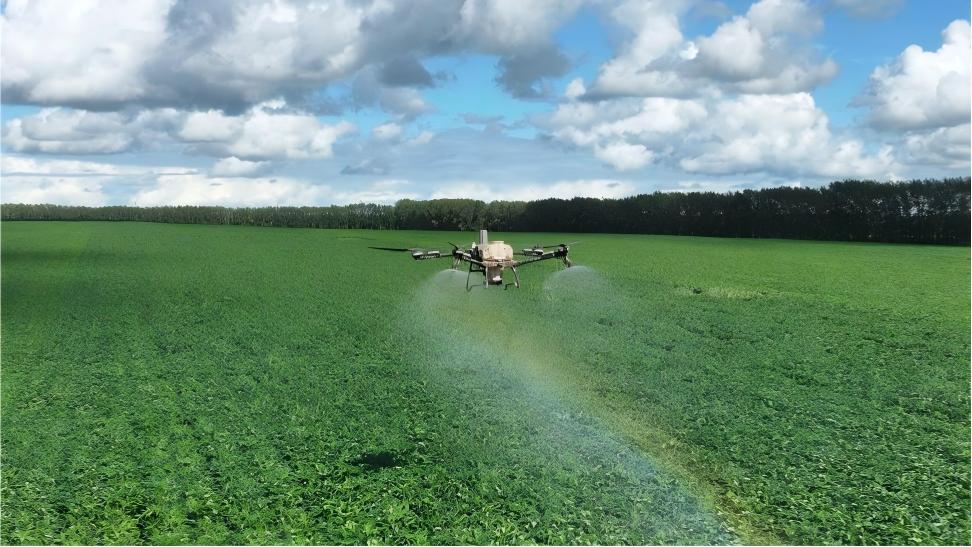 Aerial crop protection operations launched in fields of NE China's Heilongjiang
Related Stories
- Beijing forum highlights theoretical innovation, major practices of China's governance in new era
- Online mass work conference held in SW China's Yunnan
- People's Daily Online releases data analysis report on Message Board for Leaders during 14th Five-Year Plan period
- Discipline defining feature of good governance
- Interview: Global Governance Initiative key to building equitable int'l order -- South African expert
- Bamboo slips reveal governance ideology of ancient China
- Hotline service a "Chinese solution" for Beijing's urban governance
- Interview: China-proposed initiatives key to global governance, says Rwandan expert
- 'Milk tea gathering' makes solving issues more efficient in NW China's Xinjiang
- Interview: China, IPU have collaborated extensively -- IPU president
Copyright © 2026 People's Daily Online. All Rights Reserved.
