



Chinese tea brands go global: a new chapter for China's service sector
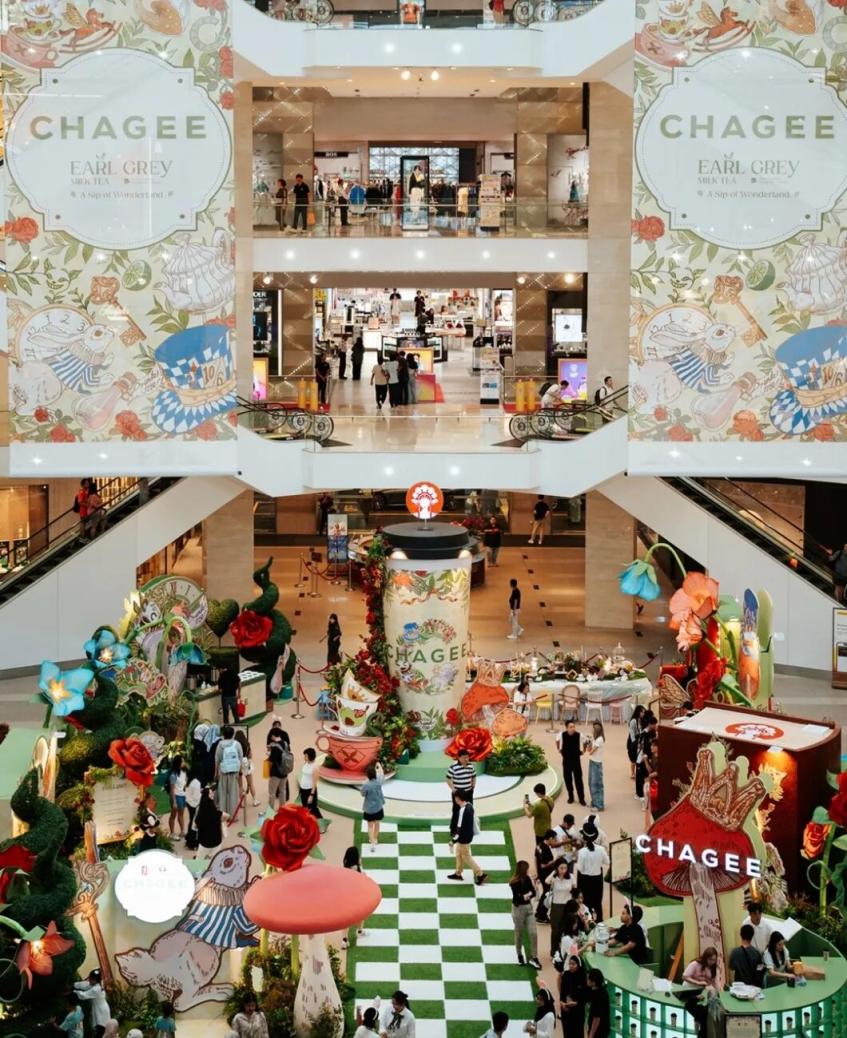
Photo shows a Chagee store in Malaysia. (Photo courtesy of Chagee)
Recently, Chagee, a fast-growing brand known for its modern take on traditional Chinese tea, opened three stores in South Korea at once, triggering a wave of consumer enthusiasm.
In Sao Paulo, Brazil, long lines formed outside the first store of Chinese tea beverage brand Mixue Ice Cream & Tea (Mixue) even before opening hours. Mixue's mascot, Snow King, dressed in a No. 10 football jersey, interacted warmly with customers. Today, an impressive 95 percent of its customers in the city are local residents.
By the end of 2025, Mixue had operated around 4,500 stores overseas. Meanwhile, Heytea, a Chinese beverage brand that calls itself the "pioneer of new Chinese style tea," has entered markets including the United States, the United Kingdom, Australia, and Canada, with the number of its overseas outlets increasing nearly sixfold over the past year.
From exporting raw tea as a conventional commodity to rolling out standardized services, localized operations and authentic Chinese cultural experiences overseas, Chinese beverage brands featuring traditional tea are expanding globally.
This global expansion reflects much deeper changes in how China connects with the world. It also signals a remarkable transformation of China's image, temperament and charm in the eyes of the globe.
For a long time, the world's understanding of China was shaped primarily by the global success of "Made in China." Over past decades, China's international presence was closely associated with tangible products such as garments, household appliances, and machinery.
The focus was on products rather than experiences, hardware rather than culture. What the world saw was an industrious and highly capable manufacturing powerhouse. Yet opportunities to gain deeper insight into Chinese lifestyles, cultural traditions, and the character of its people were relatively limited.
Trade in goods built strong connections, but could not fully convey a multidimensional, vibrant, and relatable image of China.
Service consumption represents the most down-to-earth and approachable form of cultural communication. The in-depth value of service globalization lies in offering the world a new perspective to understand China. Rooted in inherent cultural heritage, a new generation of Chinese brands is succeeding internationally through consistent service, refined operational expertise and unique cultural features.
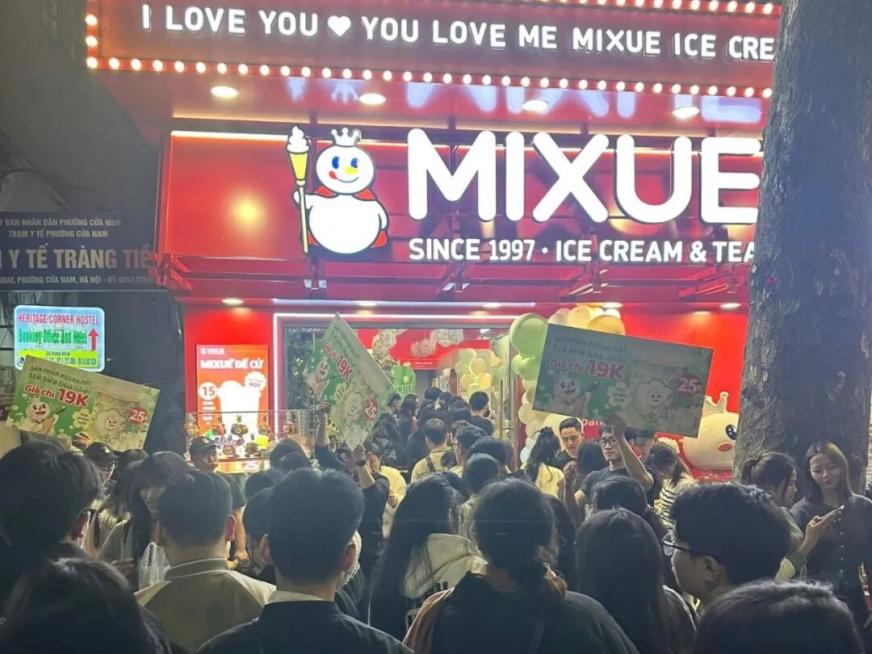
Photo shows a Mixue store in Vietnam. (Photo courtesy of Mixue)
Mixue has adopted a business model that combines global standards with local customization. Supported by a mature franchise operation system and a comprehensive supply chain, the company ensures consistent product and service quality while creatively integrating its Snow King mascot into local cultural settings.
In this way, Chinese-style tea beverages naturally become part of everyday life for local consumers. In Indonesia, for example, many children learn their first Chinese phrase through Mixue's well-known advertising jingle: " I love you, you love me, Mixue Ice Cream & Tea."
Meanwhile, Heytea leans into youth trends and urban style. Drawing on the cultural backgrounds, consumption habits, and lifestyles of different cities, it continually innovates in product offerings, packaging design, and store experiences.
Every cup of modern Chinese tea carries thousands of years of tea culture. Presented in a youthful, fashionable, and everyday form, it is becoming part of the lives of young people around the world.
From the global rise for Chinese aesthetics to the soaring popularity of traditional Chinese tea drinks, the world witnesses a vibrant China that blends profound heritage with modern trends, openness with inclusiveness, and pragmatism with romance. China as an equal partner, is drawn to its cultural appeal, and is eager to visit and connect.
These tea drink brands offer a glimpse into the appeal of Chinese culture. Looking ahead, as more Chinese service brands expand globally, lifestyles, cultural values, and development concepts nurtured on Chinese soil will continue to reach wider audiences around the world. China, in turn, will engage with other countries with greater openness, inclusiveness, confidence, and vitality, advancing through mutual exchange and shared progress.
Photos

Related Stories
- Chinese tea culture event held in Minsk
- Anji's low-carbon tea industry gains international recognition
- China-Laos tea culture exchange activities held in Laos
- China's Guangxi emerges as global hub for tea industry amid tech upgrade
- Feature: Myanmar, China brew friendship through tea on International Tea Day
- Celebration marking International Tea Day held at UN headquarters in New York
- Chinese tea culture event held in Uzbekistan
- Chinese tea culture event held in Indonesia
- 8th China Int'l Tea Expo kicks off in Hangzhou
- Chinese tea cultural event held in Budapest, Hungary
Copyright © 2026 People's Daily Online. All Rights Reserved.
