



China's low-altitude economy takes flight
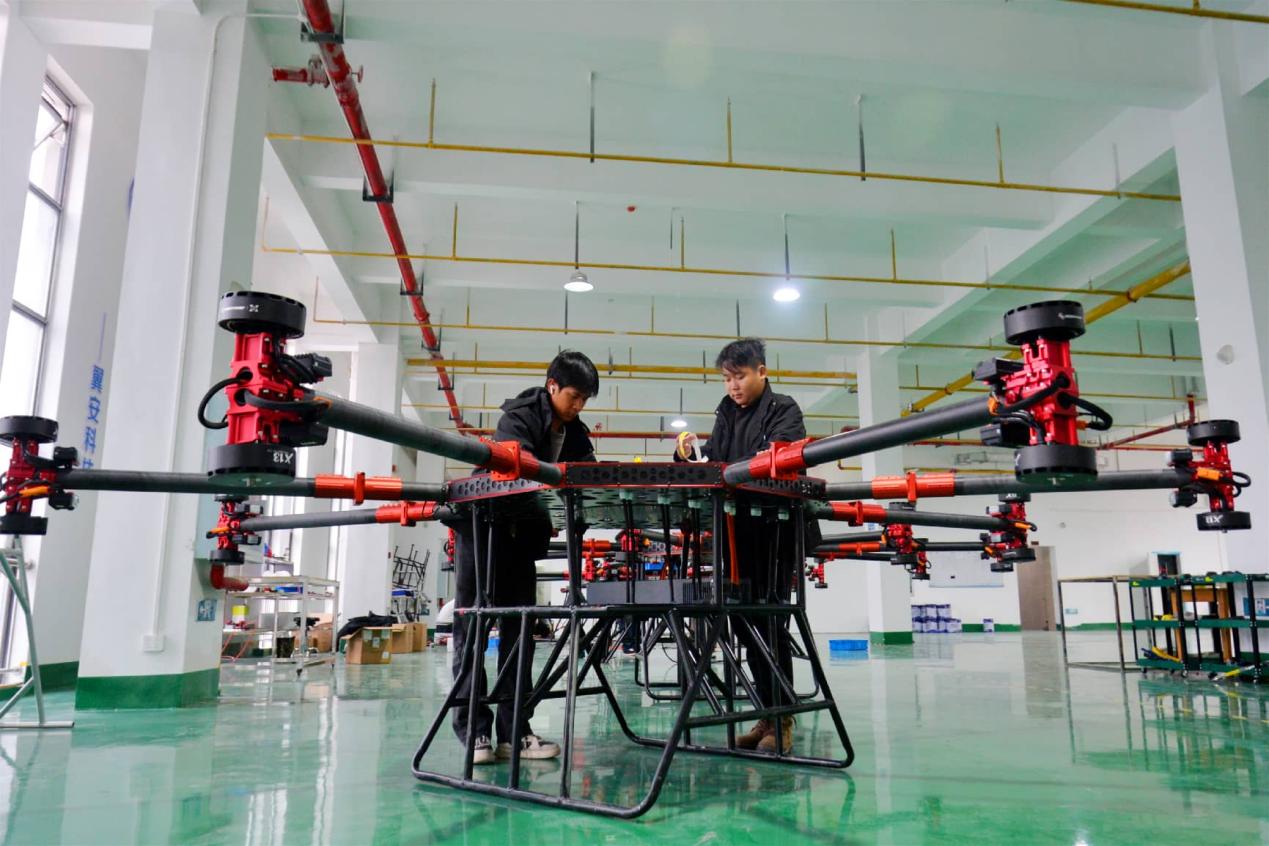
A heavy-duty logistics drone is assembled in a workshop of a tech firm in Yichang, central China's Hubei province. (Photo/Zhang Guorong)
A recent milestone in China's aviation sector saw the successful maiden flight of an electric vertical take-off and landing (eVTOL) aircraft. Resembling an electric vehicle equipped with wings, this innovative craft can carry two passengers at speeds up to 150 km/h below 3,000 meters. Notably, the detachable wings allow it to drive over 300 kilometers on the road.
This achievement reflects the strong momentum of China's low-altitude economy, which is rapidly becoming a key driver of the nation's new quality productive forces. Advancements in airspace management, core equipment breakthroughs, and developing infrastructure networks position the sector to transition from pilot flights to scenario-based validation by 2026.
Across China, diverse application scenarios are rapidly emerging. In major agricultural provinces such as Shandong, Henan and Sichuan, drones are widely used for crop protection, playing an important role in coordinated pest and disease control.
In challenging environments like Yunnan and Xizang autonomous region, drones are essential for high-altitude power grid maintenance, serving as the primary tool for line inspections. Consumer applications are also growing; during 2026 Spring Festival holiday, Chongqing staged seven drone light shows, with drone performances becoming a new driver of consumer spending.
Local governments nationwide are actively exploring demand-driven, locally adapted low-altitude applications. Agricultural and forestry operations, along with inspection services, are among the most mature use cases. By 2025, more than 300,000 agricultural drones were operating in China, covering 460 million mu (30.66 million hectares) of farmland.
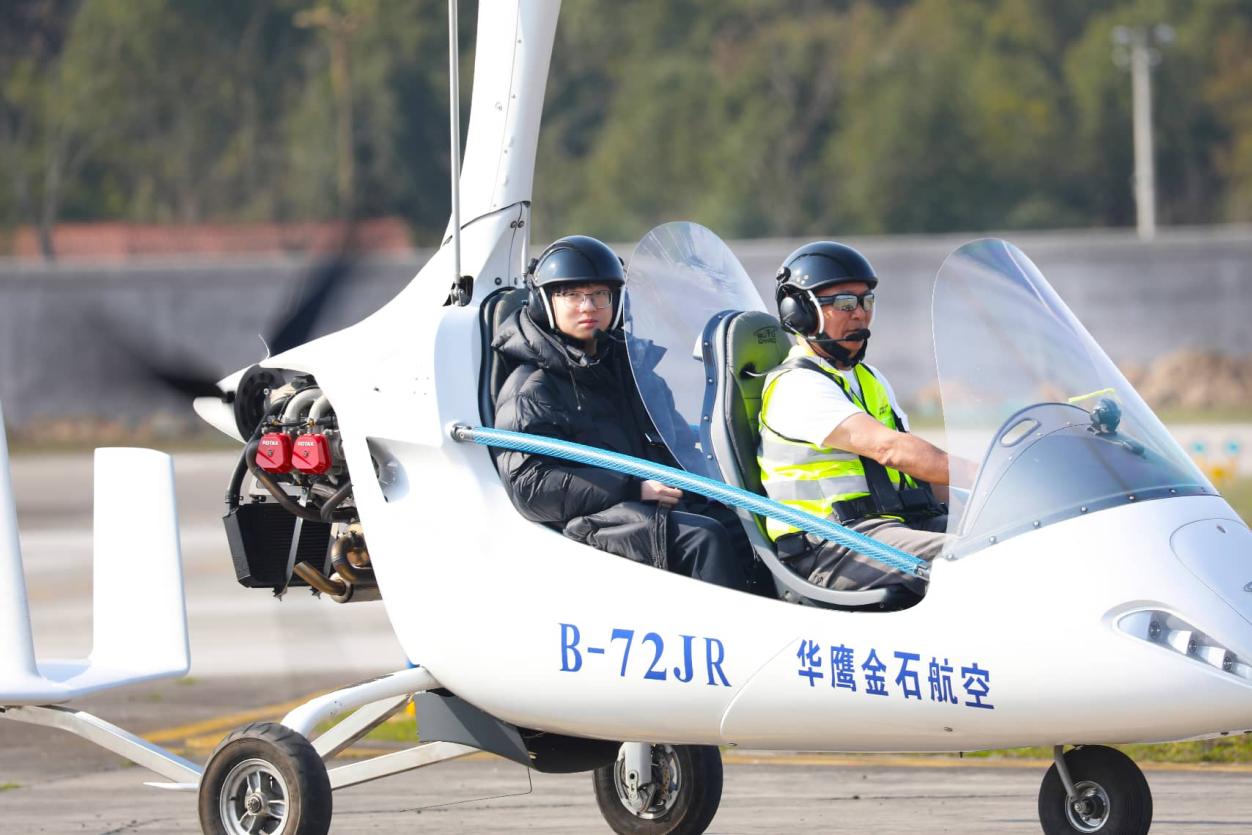
A tourist is on a sightseeing helicopter in southwest China's Chongqing municipality. (Photo/Liu Hui)
According to Li Chao, deputy director of the Policy Research Office of the National Development and Reform Commission, drones are now widely used for crop protection, fertilization and cargo lifting, significantly improving agricultural productivity. Meanwhile, drone-based power line inspections have exceeded 4 million kilometers, enhancing grid safety.
"Compared with manual work, crop-protection drones greatly shorten operation time and improve efficiency," said Cheng Zhongyi, a senior technical solutions engineer at DJI Agriculture.
"Spraying pesticides on a 150-mu orchard used to take four workers over three days. With a drone, the same task can be completed in just one day -- crucial for responding to sudden pest outbreaks," he noted.
For power inspection, drones equipped with LiDAR technology can automatically generate high-precision 3D models, far surpassing visual inspection. They can safely approach high-voltage environments and detect heat anomalies invisible to the naked eye. Even at night, drones can carry out inspections. Work that once took a traditional inspection team a week can now be completed in a single day.
China has recently launched its first large-scale drone operation in offshore oilfields. The project, officially deployed in the Beibu Gulf, south China's Guangxi Zhuang autonomous region, covering 41 offshore platforms and two onshore terminals. This marks the full-scale industrial application of low-altitude economy technologies in offshore oilfields, establishing a multi-scenario drone operation system.
This progress relies on the mature application of multiple drone models, including the TD550 heavy-lift unmanned helicopter.
"Offshore logistics has long faced challenges, especially in rough sea conditions where traditional transport methods are limited," said Tian Gangyin, chief designer of the TD550. "The TD550 can withstand winds up to Force 8 and carry more than 200 kilograms per trip."
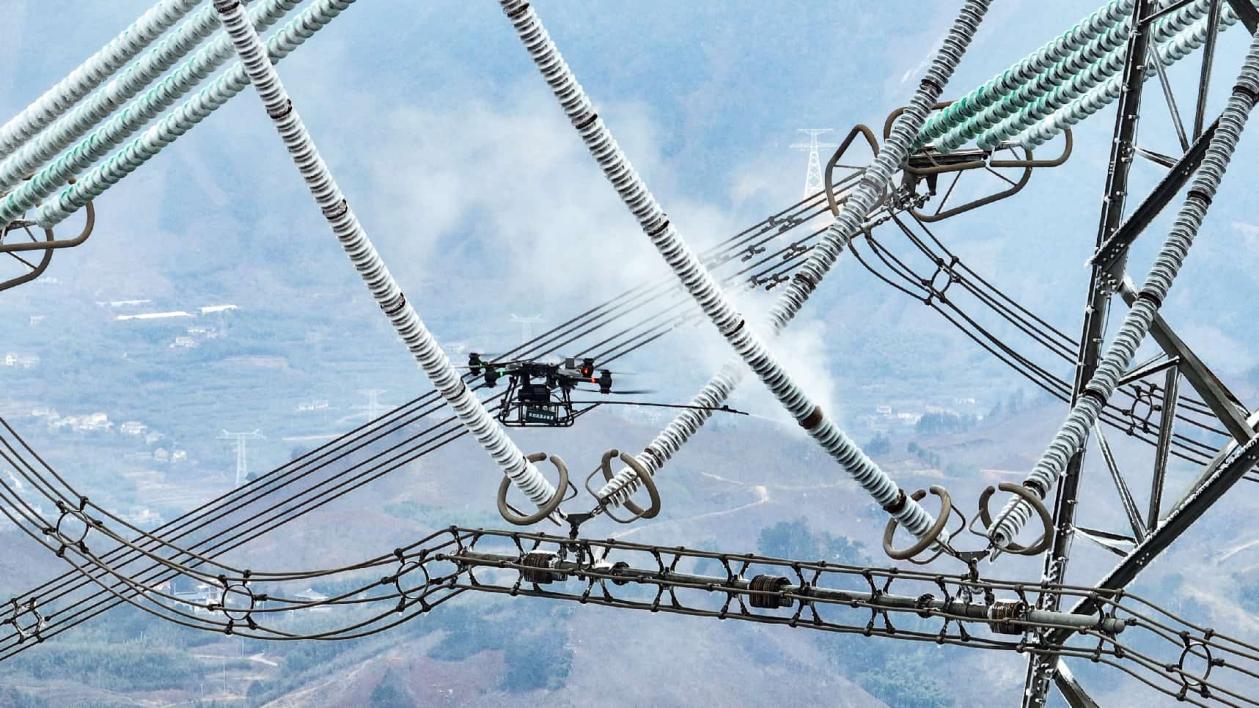
State Grid Hangzhou Power Supply Company sends a drone to an ultra-high-voltage transmission line in Heling village, Lin'an, Hangzhou, east China's Zhejiang province for de-icing, Feb. 1, 2026. (Photo/Hu Jianqiang)
He noted that drones can replace part of the work done by ships and helicopters, improving efficiency by over 30 percent, each year saving nearly 15 million yuan ($2.18 million) in vessel leasing and fuel costs, and reducing carbon emissions by 25,000 tons.
At present, China's low-altitude economy is advancing through multiple technological pathways, including fixed-wing and rotary-wing aircraft, manned and unmanned systems, as well as conventional and new-energy power systems, meeting the needs of diverse application scenarios.
During the 14th Five-Year Plan period (2021-2025), more than 70 domestically developed general aviation aircraft obtained airworthiness certification, while 18 civilian drones received approval. Nearly 30 ton-class drones and around 70 types of eVTOL aircraft are currently under development. As of December 30, 2025, 1,081 enterprises had registered in the sector, with 3,623 product types on record totaling over 5.29 million units.
An industry expert noted that China has established a complete industrial chain for the low-altitude economy, with a mature full-spectrum drone ecosystem and a leading share in the global market. Technologies such as new energy, intelligent manufacturing and artificial intelligence have provided strong support, driving rapid market expansion.
Looking ahead, a major challenge for the sector is transitioning low-altitude applications from industrial use to mass consumer adoption.
"While many demonstration zones have emerged across the country, most focus on single functions such as logistics or inspection. This is still some distance from the integrated, all-factor ecosystem I envision," said Wu Ximing, chief technical expert at the Aviation Industry Corporation of China.
He noted that the low-altitude economy should be more deeply integrated with urban transportation, emergency response and social governance, becoming a seamless part of everyday life.
Photos



Related Stories
- China deploys large-scale drone operations in offshore oilfields
- Drone-assisted snow, ice clearing takes off in China
- Drone and fireworks show staged in Macao to celebrate Spring Festival
- Revolutionizing river life: drone delivery brings convenience to Yangtze crews
- China's large drone completes pioneering plateau logistics flight
- Ship crews on China's Yangtze River can now order food delivered by drones
- 82-year-old woman in E China becomes drone pilot
- Chinese hydrogen-powered drone sets longest distance flight record
- Chinese aviation tests new heavy-lift drones, taps cargo UAV potential
- China's "Jiutian" large drone takes first flight, aims for versatile civil roles
Copyright © 2026 People's Daily Online. All Rights Reserved.
