



'Food banks' mirror China's new approaches to food conservation
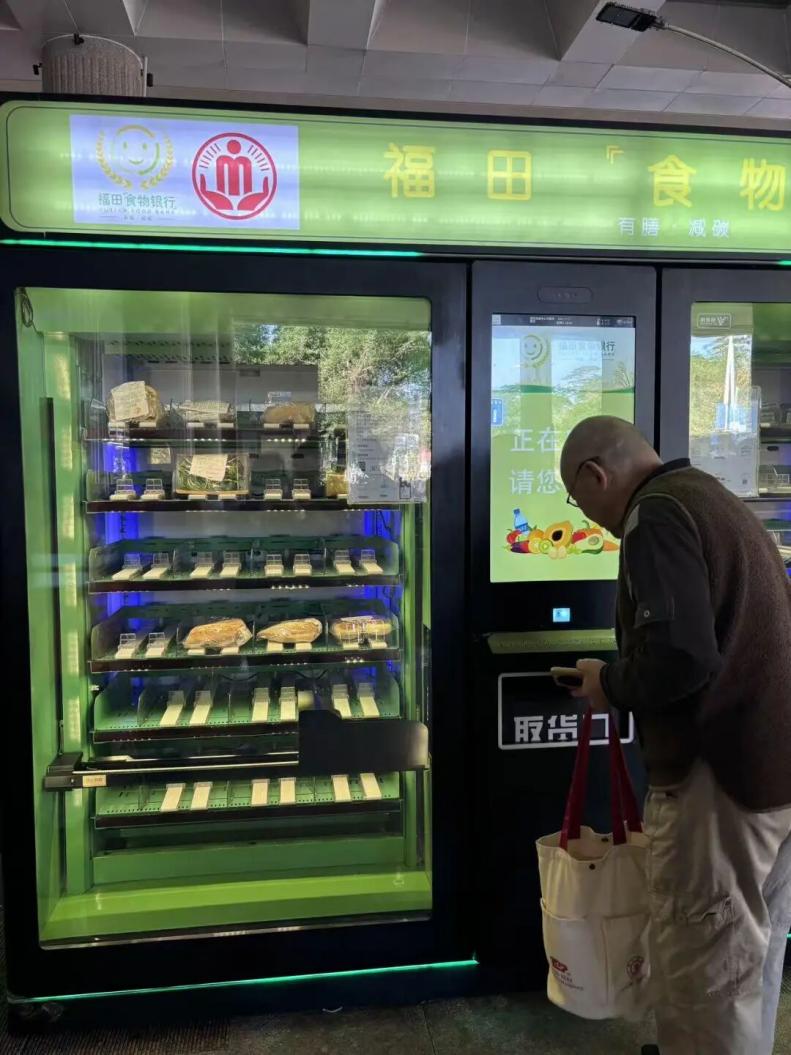
A man withdraws food from a smart cabinet of a "food bank" in Futian district, Shenzhen, south China's Guangdong province.
As evening fell over Jilong Yicun village in Shenzhen's Futian district, south China's Guangdong province, a green smart cabinet stood out in the night.
Following a quick mobile verification, its door clicked open to reveal a free food package.
This is China's much-discussed "food bank" initiative. Over three years, nearly 500,000 portions of near-expired or surplus food have been redirected here, benefiting approximately half a million recipients.
The 24-hour food banks introduced in Shenzhen and other cities channel soon-to-expire food to those in need — offering complimentary provisions to vulnerable groups and residents while combating food waste.
Why has this model garnered significant attention? Its innovation lies in addressing a persistent challenge: preventing near-expired and surpluses from becoming waste.
Through a collaborative framework of government coordination, business engagement, and social organizations operation -- with public engagement in co-creation and benefit-sharing -- Futian district has formed stable partnerships with nearly 100 enterprises, including Freshippo, Ole' Supermarket, and Yonghui Superstores. This initiative has helped save approximately 202 tons of food and cut carbon emissions by around 404 tons.
Yet this represents only an initial step. Food waste runs through the entire supply chain. According to estimates by relevant institutions, China loses and wastes around 460 billion kilograms of food every year.
From harvesting and storage to transportation, processing, and consumption, losses occur at every stage. This underscores the need to firmly embrace the idea that reducing loss and waste is equivalent to increasing output, and to promote conservation and loss reduction across the entire chain.
How can these persistent issues be effectively tackled? The "food bank" initiative offers a forward-looking approach.
At its heart lies a simple yet powerful idea: to prevent near-expiry and surplus food—often considered "hard to sell yet too good to waste"—from ending up as trash, and instead channel it to meaningful use. By intervening at the post-consumption stage, the model builds a bridge between circular resource use and compassionate community support.
At the same time, it complements upstream efforts: scientific grain storage at the production stage, appropriate processing in manufacturing, and consumption-side initiatives like the "Clean Your Plate" campaign. This integrated approach facilitates resource cascading and efficient use throughout the system.
Food conservation has never been a new topic. Thrift is a traditional virtue of the Chinese nation. "Who knows that of our meal in the dish, every grain comes after hard toil?" This line in a Tang Dynasty (618-907) poem has been passed down for over 1,000 years and remains one of the most effective lessons in saving food.
Similar models operate globally. Singapore runs the national "Clean Plate Campaign;" Germany promotes food-saving apps for smarter household ingredient management; and Chile's "Zero Food Waste Outdoor Market" project encourages donating near-expired items while composting inedible waste.
Today, China's approaches to food conservation are growing more diverse and dynamic. Among young people, initiatives such as "surprise leftover boxes," pay-by-weight canteens, and dedicated near-expiry food sections in supermarkets are gaining traction. Food saving is evolving beyond mere awareness into tangible, participatory action.
Ultimately, food conservation rests on individual choices. For households, buying only what is needed and preparing sensible portions are simple yet effortless practices. For catering businesses, promoting smaller servings and participating in near-expiry food donation not only fulfills social responsibility but also cuts operational waste.
A single smart cabinet weaves together the collaborative efforts of the government, businesses, social organizations, and the public — reflecting, in its own way, the warmth and civility of a city.
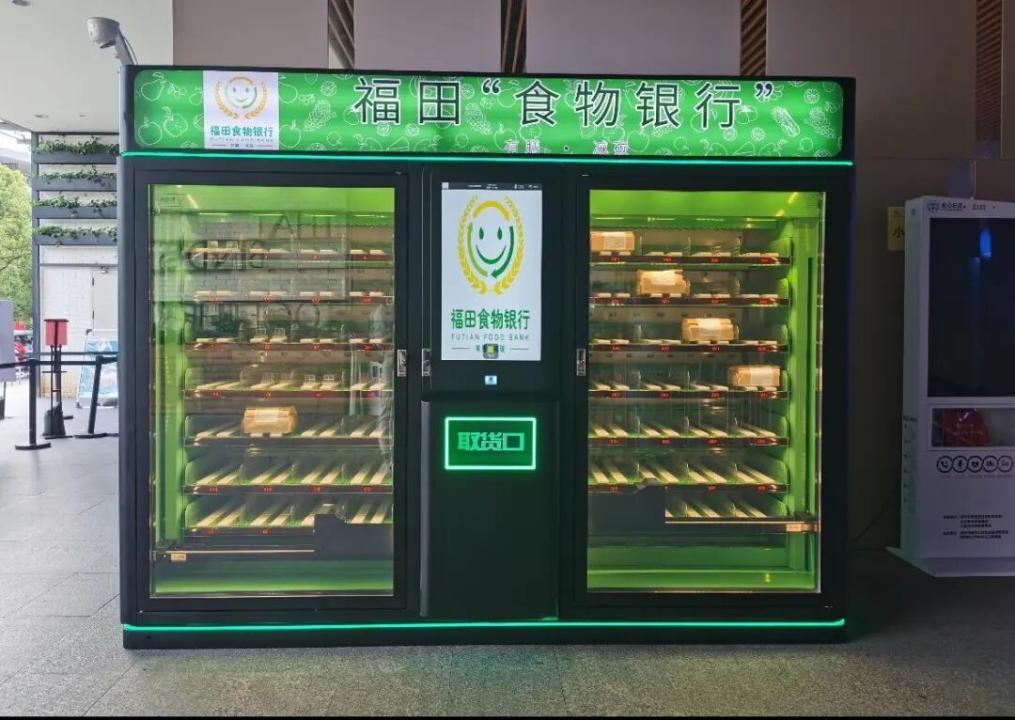
Photo shows a smart cabinet of a "food bank."
(Photos from Southern Metropolis Daily)
Photos




Related Stories
- Chinese flavors win hearts worldwide
- Authentic chili sauce resonates with diverse appetites
- China's 'vegetable basket' project a guarantee for abundance at the people's dinner tables amid global uncertainty
- Trending in China | Pearl noodles: a smooth comfort food
- New Year gathering essentials | How easy is grocery shopping in China?
- Trending in China | Tanghulu
- Kenyan chefs inspired by Chinese cuisine amid blossoming cultural ties
- Chinese cuisine forum held in Kenya amid growing China-Africa cultural ties
- Culinary competition in Kenya showcases deepening China-Kenya cultural exchanges
- In Pics: Ginseng transformed at creative feast in NE China's Jilin
Copyright © 2026 People's Daily Online. All Rights Reserved.
