



Three '30-million' milestones in auto sector highlight China's economic potential
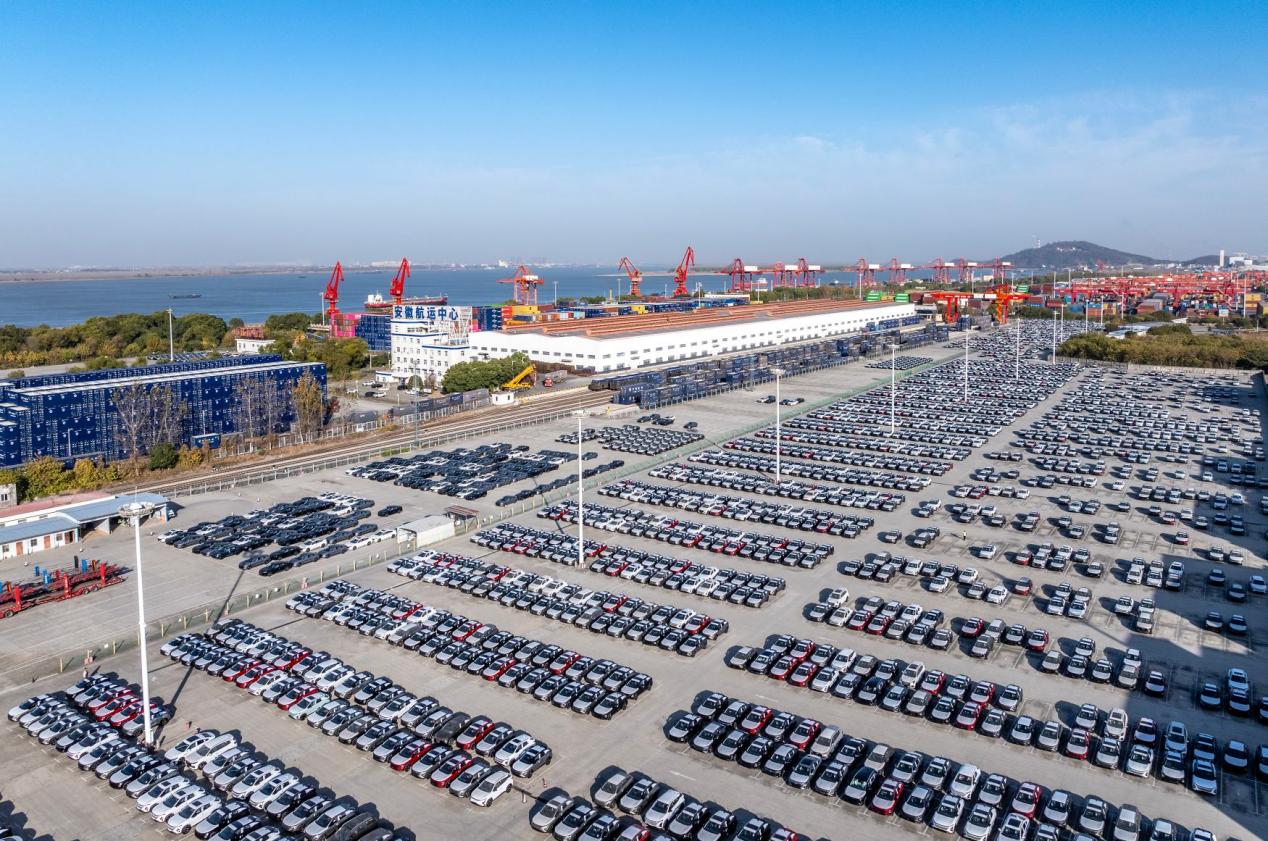
Vehicles are about to be shipped overseas at a terminal of the Zhujiaqiao port area of Wuhu Port in east China's Anhui province. (Photo/Tao Haijin)
Recent milestones in China's automotive industry, marked by three significant "30-million" achievements, have garnered widespread attention and offer valuable insights into the nation's economic potential.
In late October 2025, Chinese-German joint venture FAW-Volkswagen celebrated the production of its 30 millionth car in China. Over the course of 34 years of operation, FAW-Volkswagen has demonstrated resilience by not only adopting advanced technologies but also prioritizing independent innovation. This commitment has led to a transition to high-end, intelligent manufacturing, highlighting the immense potential of China's open, mutually beneficial market.
On December 10, 2025, Chinese Changan Automobile Group Co., Ltd. saw its 30 millionth vehicle roll off the production line. It took the company 30 years to produce its first 10-million vehicles, another seven years to reach 20 million, and just over four years to reach the 30-millionth milestone. This progress reflects the success of ongoing efforts to enhance product quality, efficiency, and innovation within the Chinese automotive industry.
On December 11, 2025, according to data from the China Association of Automobile Manufacturers, in the first 11 months of 2025, China's auto output and sales have both exceeded 31 million units. This marks a pivotal moment for China, which has become the world's largest exporter of complete vehicles, with new energy vehicles accounting for more than half of new car sales. The rapid acceleration of the automobile industry underscores the country's competitive advantages, particularly its vast domestic market and comprehensive industrial ecosystem.
Transforming traditional and emerging sectors
The transition from traditional internal combustion engine vehicles to new energy vehicles, combined with advancements in electrification and intelligent mobility, has driven remarkable growth in the automotive sector. Companies like Changan Automobile, BYD, and Leapmotor have made significant strides in new energy vehicle technology, with Changan Automobile having established over 200 laboratories, fostering innovation and strengthening industrial independence. The integration of the innovation chain with the industrial chain continues to forge new market advantages, positioning China's automotive sector for sustained growth.
Beyond the automotive industry, China is witnessing the rise of the low-altitude economy, the application of artificial intelligence, and advancements in pharmaceuticals, all of which contribute to the expanding scope of economic potential.
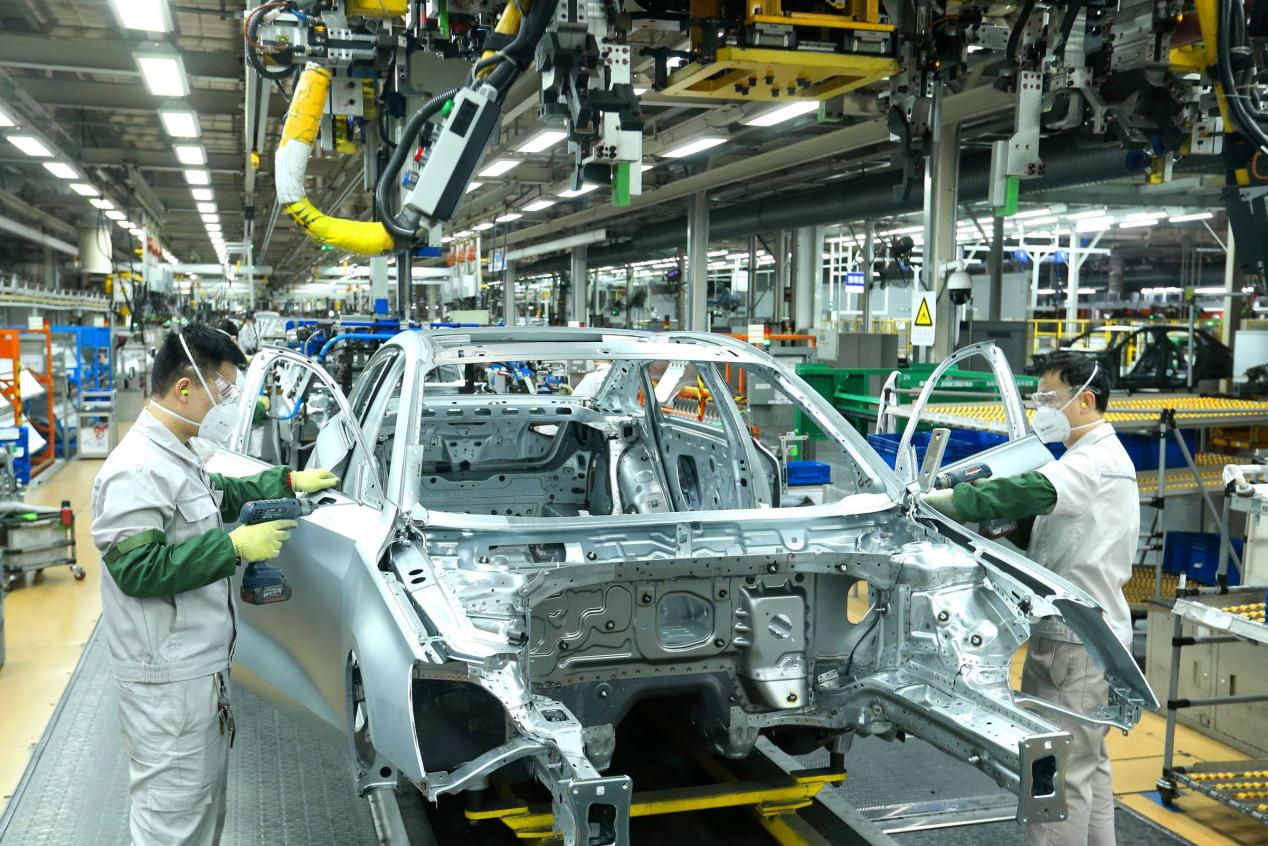
Car frames are welded in a workshop of Chinese-German joint venture FAW-Volkswagen in Qingdao, east China's Shandong province. (Photo/Liang Xiaopeng)
In the first 11 months of 2025, sales revenues in high-tech industries nationwide increased 14.7 percent year on year, signaling the economy's continued transformation and the flourishing of new sectors.
By capitalizing on the opportunities presented by a new round of technological revolution and industrial transformation, and coordinating the upgrading of traditional industries, the expansion of emerging industries, and the development of future industries, China is developing new quality productive forces in line with local conditions, unlocking boundless possibilities for its economy.
Urban-rural integration and regional development
A key area of economic growth is the integration of urban and rural development. Over the past five years, sales of new energy vehicles in rural areas have reached approximately 15 million units, while the distribution of goods to villages has soared, with more than 10 billion parcels handled by China Post in the past three years. These figures reflect the significant potential for industrial growth, consumption upgrading, and infrastructure development in lower-tier and rural markets.
Imbalances and inadequacies represent both developmental challenges and untapped potential. By advancing the high-quality development of county-level economies and strengthening coordinated growth among key city clusters, China is promoting urban-rural integration and regional connectivity, thereby expanding market opportunities and driving new sources of economic growth.
Investment in people and infrastructure
Investment in both physical infrastructure and human capital is a crucial element of China's growth strategy. The country's ice-and-snow economy, valued at around 1 trillion yuan ($142.03 billion), exemplifies the successful application of such investment. Moreover, the implementation of continuing education programs for migrant workers is equipping industrial workers with the skills necessary for modern economic demands.
By prioritizing people's expectations, addressing their needs, and promoting their development, China is leveraging the multiplier effect created by the close combination of investments in physical assets and human capital. Improving the quality and efficiency of human capital boosts total factor productivity, stimulates demand, unleashes significant consumption potential, and generates a win-win outcome for both economic growth and improved livelihoods.
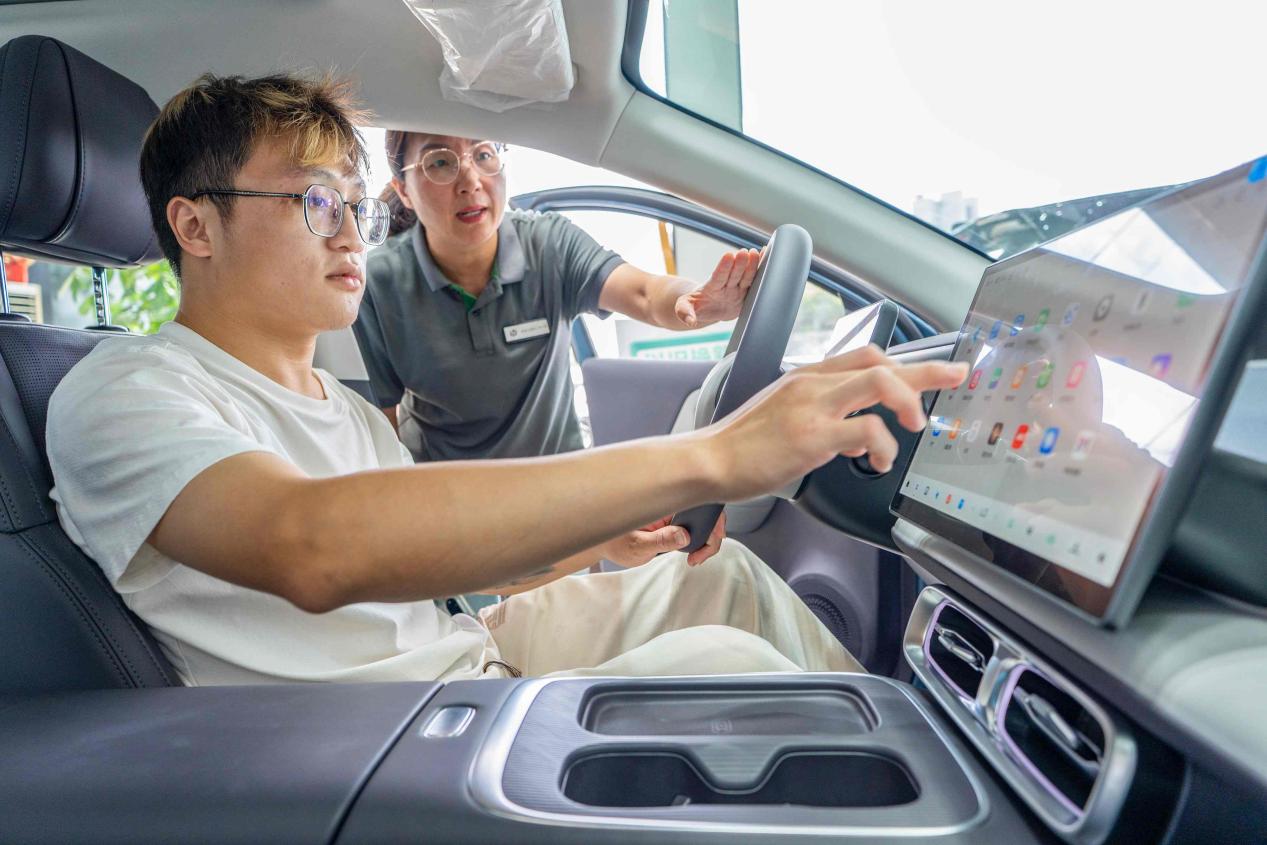
A man experiences vehicle features at an automobile dealership in Hai'an, east China's Jiangsu province. (Photo/Zhai Huiyong)
Policy support and reform-driven innovation
Turning economic potential into sustainable growth requires policy support and continuous reform-driven innovation. The Central Economic Work Conference noted that there are still long-standing and new challenges in China's economic development, and the impact of changes in the external environment has deepened while risks and hidden dangers persist in some key areas. These issues, arising in the course of development and transformation, can be resolved through efforts.
The automobile sector serves as an illustrative example. Intense "rat-race" competition once led to a significant decline in profit margins, with the industry's overall profit dipping to 3.9 percent in the first quarter of 2025, below the average for manufacturing. However, the timely intervention of the "visible hand" has offered much-needed guidance, helping the industry gradually recover and return to a healthier trajectory. China introduced targeted campaigns to address online disruptions in the automotive sector and implemented regulations to curb destructive price wars. As a result, profits in the automobile industry increased by 4.4 percent year on year in the first 10 months of 2025.
In March 2025, The Washington Post published an article titled "How China pulled ahead to become the world leader in electric vehicles" on its website, attributing the success of Chinese electric vehicles to industrial planning. The effective application of value-driven policies and strategic guidance by institutions plays a crucial role in unlocking economic potential.
China is advancing reform and the rule of law as "dual engines" by issuing guidelines for building a unified national market, promulgating regulations for fair competition, and implementing laws to promote the private economy. These efforts continue to foster a stable, fair, transparent, and predictable business environment, enabling market vitality to thrive.
By aligning with broader development trends and strengthening confidence, China is focusing on effective governance to transform its vast economic potential into dynamic momentum for high-quality development.
Photos



Related Stories
- China renews auto trade-in subsidy program for 2026
- Chinese auto brands expand presence in Namibia amid rising demand: report
- Automotive industry's future lies in cooperation with China: report
- Feature: Chinese automakers stand out at Thailand's motor expo
- Chinese carmaker Geely launches new hybrid car in Israel
- China's auto output, sales both exceed 31 mln units in Jan-Nov
- Small town specializing in auto parts rides NEV wave
- 21st Changsha Int'l Automobile Expo held in C China's Hunan
- Chinese auto maker Changan reaches 30-millionth vehicle milestone
- Tesla Shanghai factory hits 4-mln car output mark
Copyright © 2026 People's Daily Online. All Rights Reserved.
