

Maria van Kerkhove (R), technical lead for the WHO's Health Emergencies Program, attends a daily briefing in Geneva, Switzerland, on March 2, 2020. The World Health Organization (WHO) has been communicating and working closely with Chinese scientists and public health professionals, whose evidence-based approach to contain COVID-19 is something the world needs to learn from, Maria van Kerkhove said here Monday. (Xinhua/Chen Junxia)
GENEVA, March 2 (Xinhua) -- The World Health Organization (WHO) has been communicating and working closely with Chinese scientists and public health professionals, whose evidence-based approach to contain COVID-19 is something the world needs to learn from, a senior WHO expert said here Monday.
Answering a question from Xinhua, Maria van Kerkhove, technical lead for the WHO's Health Emergencies Program, noted at a daily briefing that a number of clinical trials are underway in China, including molecular diagnostics and serologic acids.
"We are looking forward to continuing to collaborate with Chinese scientists and public health professionals across all of the different disciplines," Kerkhove said, stressing it is crucial to better understand epidemiology and transmission, severity and treatment regarding COVID-19.
In her view, China's efforts in building an evidence base of COVID-19 could benefit the world, because just like feed loop, every evidence gathered as part of the response to COVID-19 is fed back into the response, so that optimization of approaches moves on.

 Award-winning photos show poverty reduction achievements in NE China's Jilin province
 People dance to greet advent of New Year in Ameiqituo Town, Guizhou
 Fire brigade in Shanghai holds group wedding
 Tourists enjoy ice sculptures in Datan Town, north China
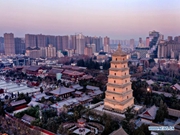 Sunset scenery of Dayan Pagoda in Xi'an
 Tourists have fun at scenic spot in Nanlong Town, NW China
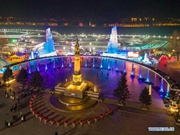 Harbin attracts tourists by making best use of ice in winter
 In pics: FIS Alpine Ski Women's World Cup Slalom
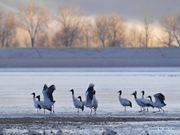 Black-necked cranes rest at reservoir in Lhunzhub County, Lhasa
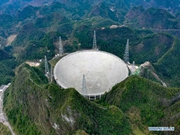 China's FAST telescope will be available to foreign scientists in April