

Haiyan, a Chinese underwater glider, has set a new endurance record after working for 141 days and sailing 3,619.6 km in the South China Sea, said the developer.
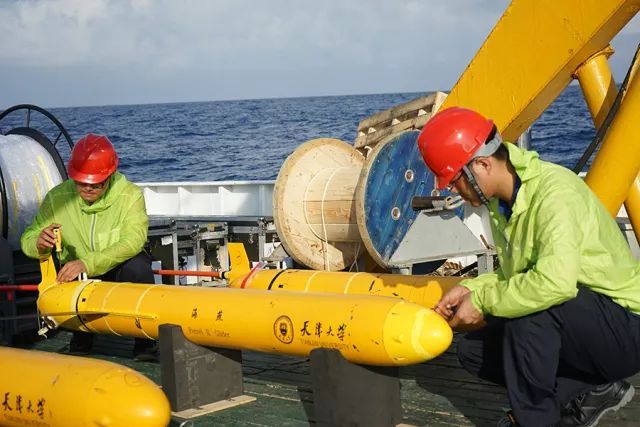
Chinese underwater glider “Haiyan” earlier set a record of continuously sailing 2,272.4 km over 119 days in the South China Sea in April. [File Photo: The Paper.cn]
Codenamed Haiyan, which means storm petrel in Chinese, the long-distance glider completed the test in November, renewing its former record of continuously sailing 2,272.4 km over 119 days in the northern part of the South China Sea in the first half of the year, said the program team from the Tianjin University on Wednesday.

Chinese underwater glider “Haiyan” earlier set a record of continuously sailing 2,272.4 km over 119 days in the South China Sea in April. [File Photo: The Paper.cn]
In April, another type of the Haiyan series for deep diving set a world dive record by diving 8,213 meters in the Mariana Trench, the world's deepest known trench.
The unmanned gliders can survey marine conditions, such as temperature, salinity and currents, in large bodies of water over a long period of time.
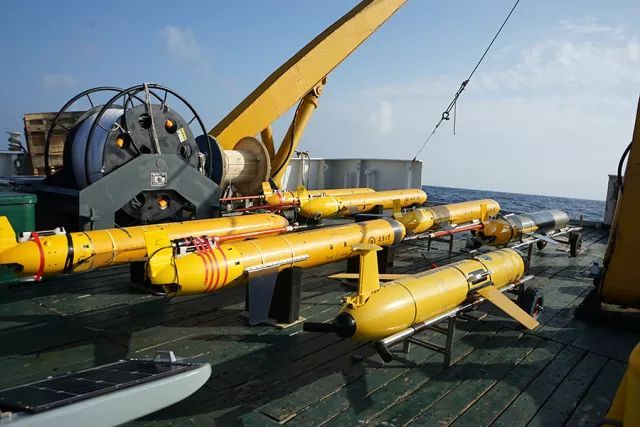
Chinese underwater glider “Haiyan” earlier set a record of continuously sailing 2,272.4 km over 119 days in the South China Sea in April. [File Photo: The Paper.cn]
The Pilot National Laboratory for Marine Science and Technology (Qingdao) has planned to develop a series of the Haiyan gliders working at different depths ranging from 200 meters to 10,000 meters underwater.

 Award-winning photos show poverty reduction achievements in NE China's Jilin province
 People dance to greet advent of New Year in Ameiqituo Town, Guizhou
 Fire brigade in Shanghai holds group wedding
 Tourists enjoy ice sculptures in Datan Town, north China
 Sunset scenery of Dayan Pagoda in Xi'an
 Tourists have fun at scenic spot in Nanlong Town, NW China
 Harbin attracts tourists by making best use of ice in winter
 In pics: FIS Alpine Ski Women's World Cup Slalom
 Black-necked cranes rest at reservoir in Lhunzhub County, Lhasa
 China's FAST telescope will be available to foreign scientists in April