
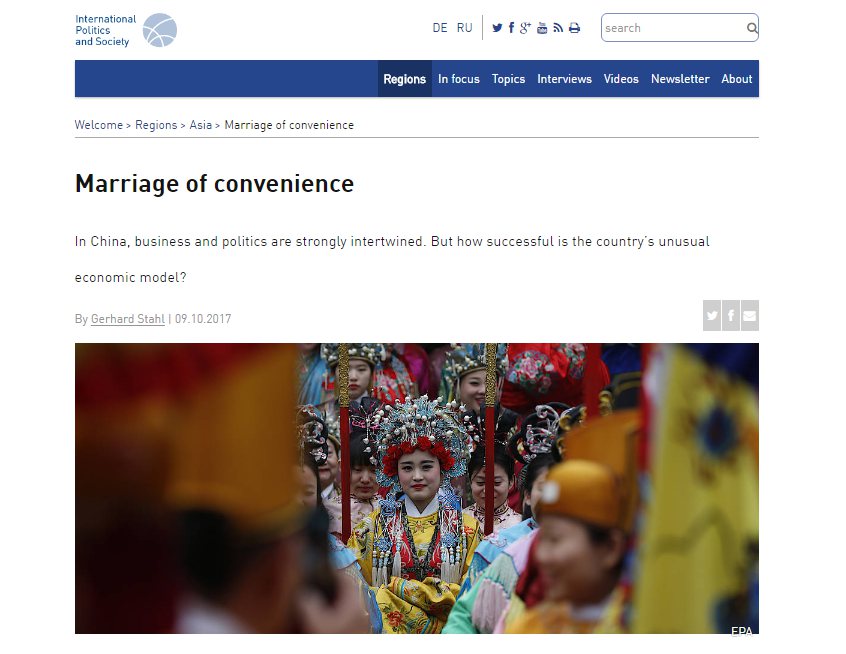
Screenshot of the article published by Germany’s International Politics and Society.
A recent German commentary called on the country and the whole of Europe to learn from the Chinese economic model, saying that China’s success can be attributed to both its political and economic system.
The following is an abstract of the article, published in online journal International Politics and Society:
We are living through a period of historic global upheaval. After the Second World War, economic and political structures emerged that afforded dominant status to Western industrialised nations, especially the US, but these structures are now undergoing a fundamental transformation.
At the same time, formerly developing countries, especially in Asia, have been successfully integrated into the globalised economy,while Western industrial nations are getting anxious, fearing a loss of status in the world order.
In the case of China, following its reforms after the seventies, it has become the poster child of economic development. In just three decades, it went from being poor and isolated to the world's second-largest economy.
To understand its accomplishments properly, we need to take a closer look at its political and economic system. China sees itself as a socialist market economy ‘with Chinese characteristics’. It joined the World Trade Organisation in December 2001 and in the subsequent 15 years of transition, and carried out reforms aimed at turning it into a liberal market economy.
The Chinese government continues to exert considerable influence over economic and social development, especially through its five-year plans that give political and economic guidance to business, and to national and regional authorities. But, this does not make China a planned economy.
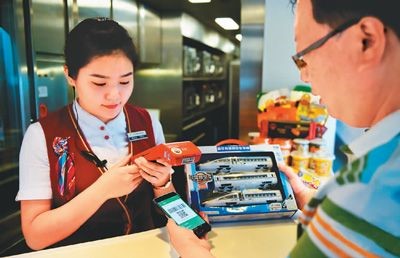
Person buying a high-speed rail ticket via mobile devices. (Photo by People’s Daily Online)
Today, competition plays an important role in Chinese society and, because of its enormous size and variety, there are significant differences between policies in different provinces. Also, at the local level, special economic zones and approved pilot projects make it possible to try out new ideas, privatise state-owned companies, incentivise private companies, or allow international investment in more sectors.
China’s industrial policy has been especially effective in the IT, internet and communications sectors, by allowing its companies to break into the top international tier. For example, Huawei now has 170,000 employees in more than 120 countries, and is one of the world's largest smartphone manufacturers, alongside Apple and Samsung.
Other success stories include Alibaba, Baidu (a Google rival) and the internet company Tencent.
But International competition doesn't just exist between companies. In the global economy of the 21st century, it also exists between political and regulatory systems and, while German and European policymakers need to adapt to this competition between political systems, they also need to learn from the success of the Chinese model.
The answer to this cannot be found in isolation and national protectionism. The only way to secure long-term competitiveness is through successful cooperation between government bodies, universities and companies.

 Award-winning photos show poverty reduction achievements in NE China's Jilin province
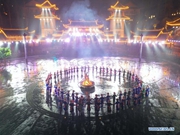 People dance to greet advent of New Year in Ameiqituo Town, Guizhou
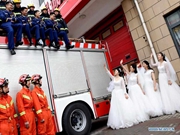 Fire brigade in Shanghai holds group wedding
 Tourists enjoy ice sculptures in Datan Town, north China
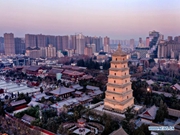 Sunset scenery of Dayan Pagoda in Xi'an
 Tourists have fun at scenic spot in Nanlong Town, NW China
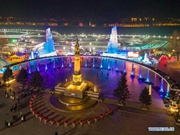 Harbin attracts tourists by making best use of ice in winter
 In pics: FIS Alpine Ski Women's World Cup Slalom
 Black-necked cranes rest at reservoir in Lhunzhub County, Lhasa
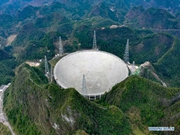 China's FAST telescope will be available to foreign scientists in April