


Lei Lei brings her friend Steven, from the UK, to experience the tea culture. [Photo by Liu Xuan/provided to China Daily]
The popularity of the internet also made its presence felt, changing and expanding the type and scale of content people could enjoy.
Sports, films and TV shows came to China from around the world via the internet, giving people countless choices. In comparison, classical culture appeared somewhat old-fashioned.
The time span involved also lured potential audiences away, since the stories behind most of the classics took place in an age far removed from present-day life. And when the lines were spoken in classical Chinese, they were even harder to understand.
So, teahouses have had to adapt to save their business amid these cultural shifts.
Yin and her team turned to senior artists and experts to help find and preserve the traditional art forms and folklore. As a result, customers can now choose from Peking Opera, crosstalk (a traditional Chinese comedic performing art), storytelling, acrobatics, magic and other Chinese traditional performances.
 |  |
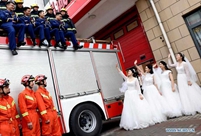 Fire brigade in Shanghai holds group wedding
 Tourists enjoy ice sculptures in Datan Town, north China
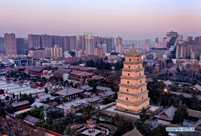 Sunset scenery of Dayan Pagoda in Xi'an
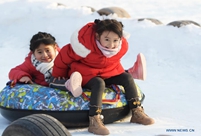 Tourists have fun at scenic spot in Nanlong Town, NW China
 Harbin attracts tourists by making best use of ice in winter
 In pics: FIS Alpine Ski Women's World Cup Slalom
 Black-necked cranes rest at reservoir in Lhunzhub County, Lhasa
 China's FAST telescope will be available to foreign scientists in April
 "She power" plays indispensable role in poverty alleviation
 Top 10 world news events of People's Daily in 2020
 Top 10 China news events of People's Daily in 2020
 Top 10 media buzzwords of 2020
 Year-ender:10 major tourism stories of 2020
 No interference in Venezuelan issues
 Biz prepares for trade spat
 Broadcasting Continent
 Australia wins Chinese CEOs as US loses