

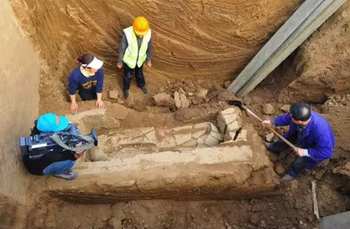
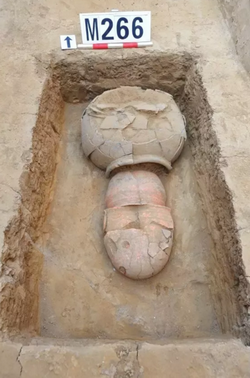
Chinese archaeologists have discovered 62 sets of human remains buried in household clay containers dating back two millennia. The remains were found in Tongzhou, a sub-center of Beijing.
Urn burial customs dictated that corpses be housed in two to three large clay containers, such as urns, pots and bowls. The custom was previously thought to have been only for children, but the new discovery included the remains of 23 adults, which is the largest-scale such discovery in China to date.
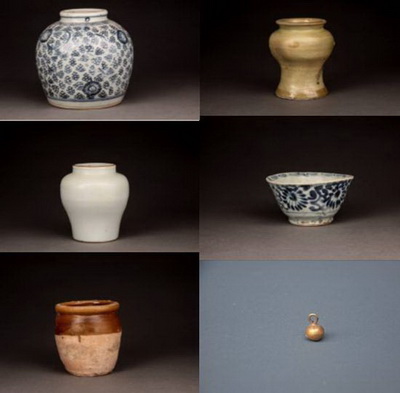
The revelation is significant in helping archaeologists understand the burial customs of people living in Tongzhou during the late Warring States Period (475BC-221BC) and the Han Dynasty (202BC-220AD).
Pieces of pottery, tiles and animal bones were also unearthed, according to reports.
 |
 Fire brigade in Shanghai holds group wedding
 Tourists enjoy ice sculptures in Datan Town, north China
 Sunset scenery of Dayan Pagoda in Xi'an
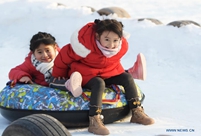 Tourists have fun at scenic spot in Nanlong Town, NW China
 Harbin attracts tourists by making best use of ice in winter
 In pics: FIS Alpine Ski Women's World Cup Slalom
 Black-necked cranes rest at reservoir in Lhunzhub County, Lhasa
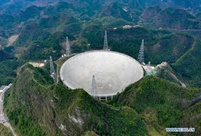 China's FAST telescope will be available to foreign scientists in April
 "She power" plays indispensable role in poverty alleviation
 Top 10 world news events of People's Daily in 2020
 Top 10 China news events of People's Daily in 2020
 Top 10 media buzzwords of 2020
 Year-ender:10 major tourism stories of 2020
 No interference in Venezuelan issues
 Biz prepares for trade spat
 Broadcasting Continent
 Australia wins Chinese CEOs as US loses