



Xiong'an: A city of the future that is being built
Last week, I visited the Xiong'an New Area in north China's Hebei Province with fellow foreign journalists, as part of a tour organized by the State Council Information Office to show how China's people-centered policies shape daily life. Xiong'an is an ambitious project: a city of the future, designed to be both people-centered and environmentally sustainable. Established in 2017, it encompasses Xiongxian, Rongcheng and Anxin counties in Baoding city, and has been gradually built up around the needs of the people who live there.
Xiong'an sits about 100 kilometers southwest of Beijing, capital of China. It was established to take on the non-capital functions that Beijing no longer needs to host, and in doing so, to ease the congestion, overcrowding and soaring costs that have long weighed on the capital.
Yet Xiong'an has drawn a strange amount of pushback in the West. News outlets and social media platforms alike decry it as a "ghost city". Tales of endless rows of empty apartment blocks, of an entire business district bereft of any businesses, surface in English-language searches about the area.
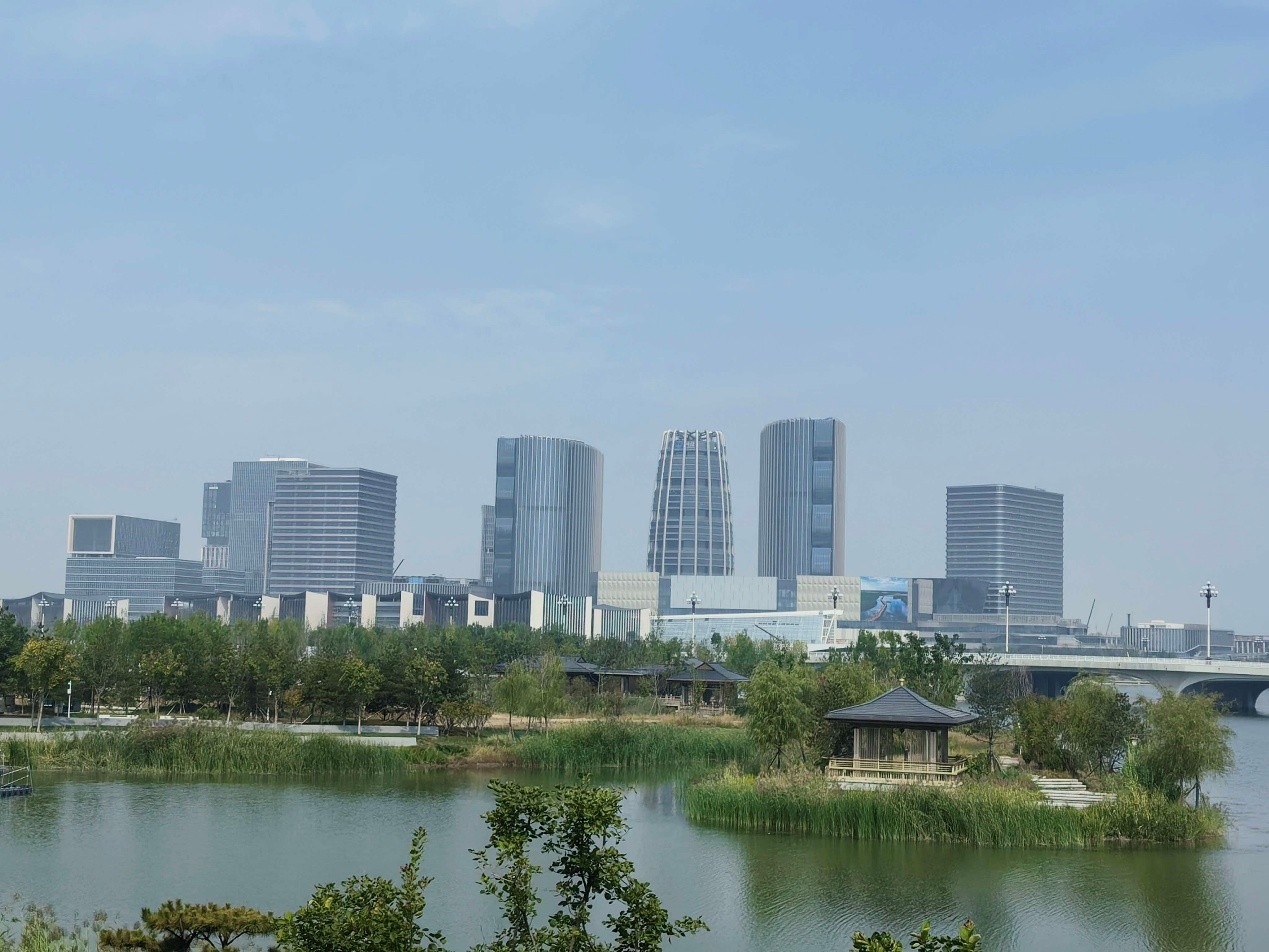
The skyline of Xiong'an New Area in north China's Hebei Province. (People's Daily Online/Andrew Smith)
When I visited Xiong'an, I saw a different story. Lights were on in the apartment blocks, showing that people are moving in. Taxis rolled through the streets. Pedestrians strolled. Bank branches were open, conducting business as usual. The hotel where I stayed was among the best I've encountered in China.
Our team toured the Xiong'an Library, a sleek, voluminous "library of the future," where a good number of people were studying and browsing the stacks. At the Yannandi Embankment nature park, locals lounged by the water, taking in the early autumn breeze. On my last evening, I bought snacks at a chain convenience store — well-stocked, with local customers in the aisles.
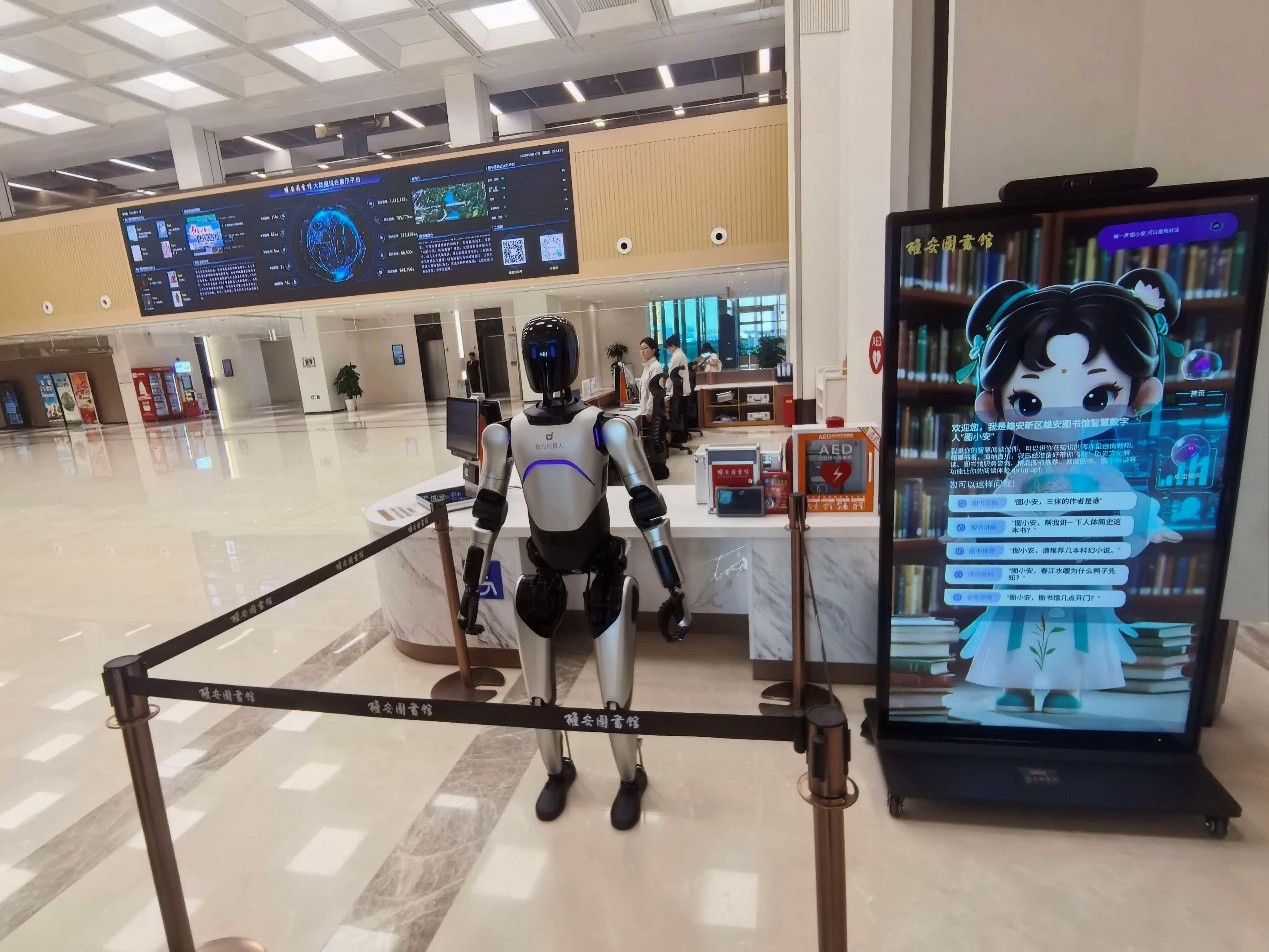
The front desk of the Xiong'an Library, showcasing modern services for patrons in Xiong'an New Area, north China's Hebei Province. (People's Daily Online/Andrew Smith)
As I moved around the city, I noticed further signs of life. A school with students inside. A hospital with a full parking lot. A convention center advertising upcoming conferences and trade shows. Xiong'an is not a finished city — no one ever said it was. But it is not an empty one. It is a city being built, and people are already living in it.
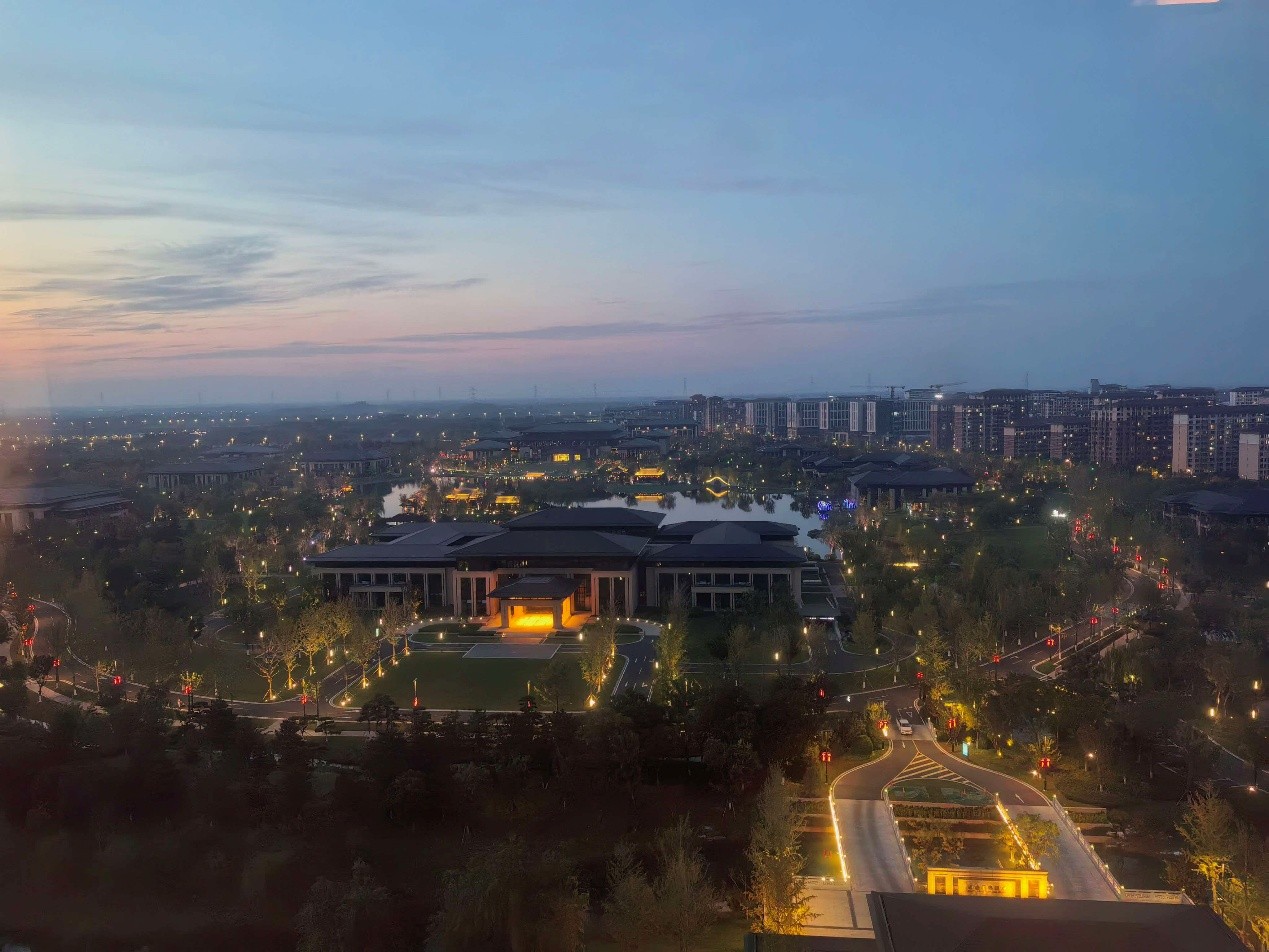
A nighttime view from the Sofitel Hotel in Xiong'an New Area, in north China's Hebei Province (People's Daily Online/Andrew Smith)
So where does the misunderstanding — deliberate or otherwise — in the Western media come from?
Much of it, I think, comes down to a failure to grasp how Xiong'an is being built. A city held to the highest standards of urban planning and people-centered living is not going to fill up overnight. Rome wasn't built in a day, and neither is Xiong'an.
Its population growth is planned. The population in Xiong'an has reached approximately 1.4 million as of the end of 2025, a significant growth compared to previous years. Residents of the three counties that make up the New Area are given priority to move in, as are Beijing residents employed by some state-owned enterprises, students from the four Beijing universities planning campuses in Xiong'an, and highly skilled workers in finance and technology. This is deliberate: Xiong'an is being populated in phases rather than left to fill on its own. That means the city will take time to reach its intended scale — but that is a design choice, not a failure.
Unfortunately, the planning behind Xiong'an's development is often lost — or ignored — in Western commentary. The absence of immediate urban buildup gets read as waste, and innovative approaches to city planning get treated as evidence of ulterior motives. But the plan is right there to read: a city built in phases, populated by design, held to standards most cities are never asked to meet. The Western media seems more interested in chasing ghosts than in learning the very real lessons Xiong'an has to offer.
Xiong'an New Area certainly has a long way to go. No one is disputing that. But there is a difference between a city that is unfinished and a city that is fake — and the gap between how Xiong'an is described abroad and how it looks on the ground is not a small one.
To anyone who has already written Xiong'an off: the invitation is open. Come and look. Buy something at the convenience store. Sit in the library. Count the lights on at dusk. If it is the ghost city you say it is, you will have no trouble proving it. And if it isn't, you may find a story worth telling.
Photos


Related Stories
- Xiong'an builds full-cycle ecosystem for aerospace information and satellite internet industries
- Foreign envoys tour Hebei in north China, seek business ties, urban innovation insights
- Xiong'an New Area attracts growing number of enterprises, talent
- In Numbers: High-Quality Development of Xiong'an New Area
- 'City of the future' seen through four sets of data
- World's first nanoscale micro-vibration lab commences operations in Xiong'an New Area, to support high-end manufacturing
- Before-and-after images reveal remarkable transformation in Xiong'an
- Digital infrastructure powers Xiong'an, China's 'city of future'
- Xiong'an: building a city around green space
- Track-laying operation of Xiong'an-Xinzhou high-speed railway kicks off
Copyright © 2026 People's Daily Online. All Rights Reserved.
