



Rice-aquaculture farming injects vitality into agriculture in NE China's Jilin
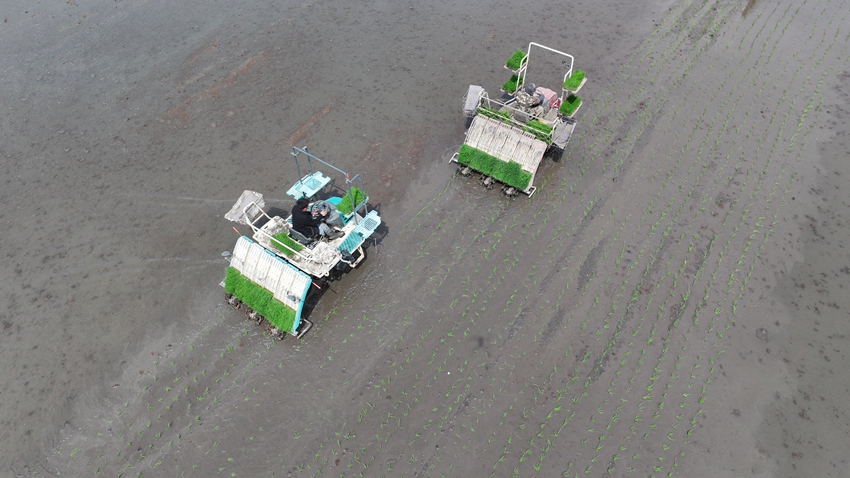
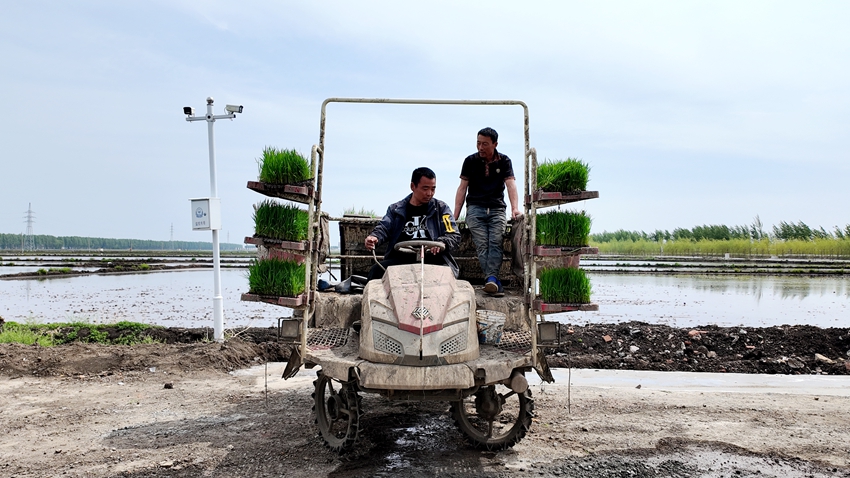
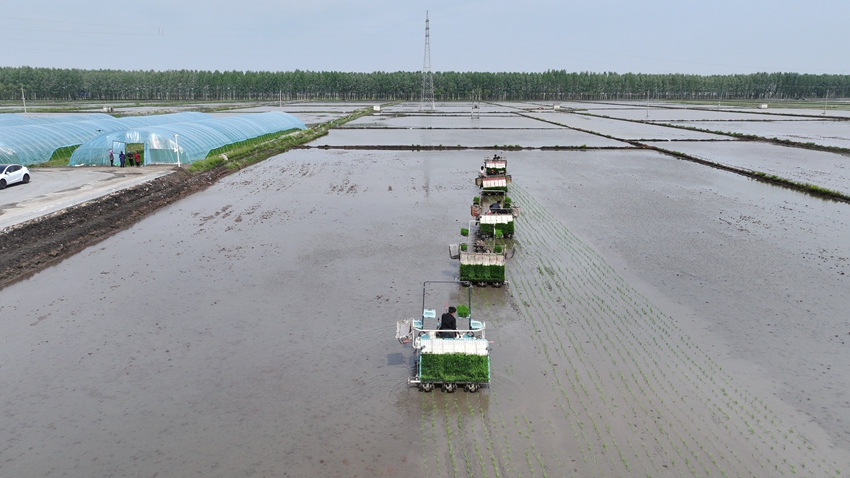
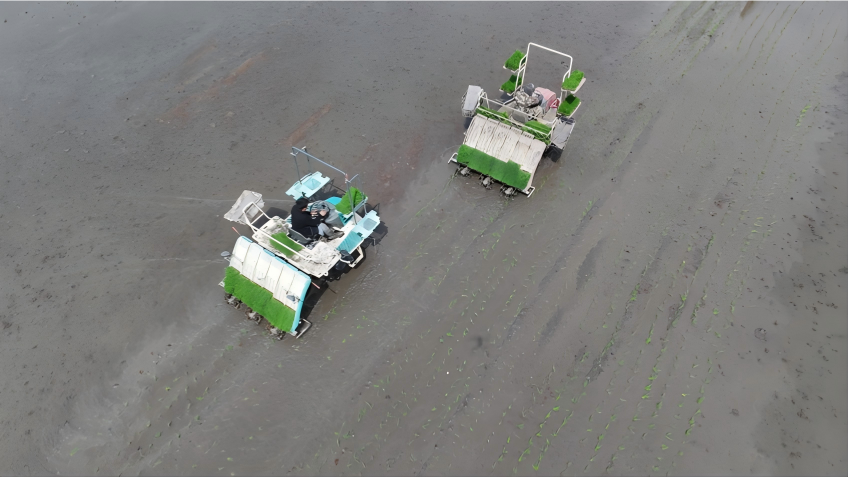
On May 22, the fields of Chalukou town in Dehui city, northeast China's Jilin Province, were alive with activity. Across the neatly leveled paddies, rice transplanters moved back and forth as rows of tender green seedlings were planted with precision amid the roar of machinery.
(Photo/People's Daily Online)
This year, Dehui plans to plant 710,000 mu (about 47,333 hectares) of rice, said Ma Fudong, deputy director of the agricultural technology promotion center in Dehui. So far, roughly all of the city's rice transplanting work has been completed.
In recent years, the rice industry has become a major pillar supporting farmers' incomes and rural industrial development. "Dehui Rice" has been granted a national geographical indication trademark and now carries a brand value of 1.8 billion yuan (about $265 million).
(Photo/People's Daily Online)
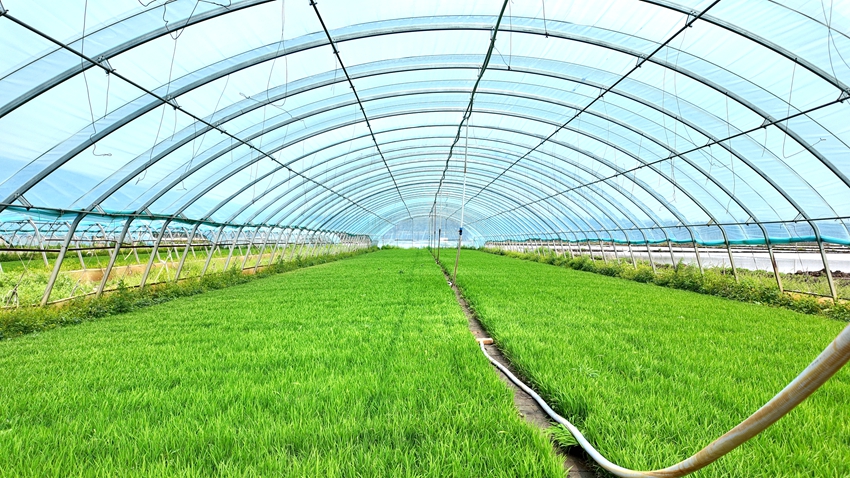
Dehui has also been exploring integrated rice-aquaculture farming to shift traditional rice cultivation toward greener and more efficient agriculture. Since introducing the model in 2015, the city has expanded from an initial 200 mu to citywide promotion. By 2025, integrated rice-aquaculture farming covered 103,000 mu across Dehui.
"Currently, integrated rice-aquaculture farming models include rice-fish, rice-crab, rice-shrimp, as well as mixed fish-crab and fish-shrimp farming," said Yang Xiaosong, deputy director of the fisheries technology extension center in Dehui.
(Photo/People's Daily Online)
The model has reduced pesticide use by more than 30 percent and fertilizer use by over 20 percent, lowering the risk of agricultural pollution while offering new solutions for soil conservation and more efficient water use.
Chu Jiannan, head of the rice-aquaculture project at Jilin Hepan Agricultural Development Co., Ltd., said integrated rice-aquaculture fields generate about 6,000 yuan more income per hectare than traditional rice paddies. As the scale of integrated rice-aquaculture farming continues to expand, a number of specialty brands have emerged.
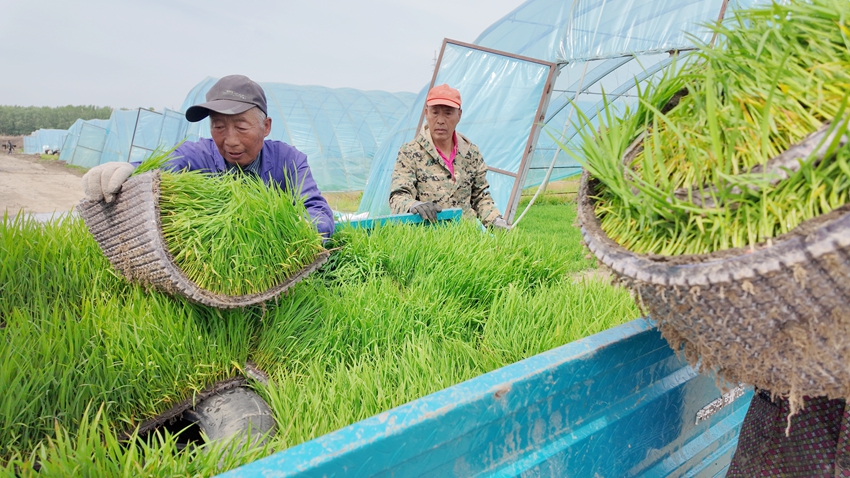
"At present, the town has developed 32,000 mu of integrated rice-aquaculture farmland and fostered 36 rice-processing enterprises," said Liu Zhe, head of Chalukou town.
(Photo/People's Daily Online)
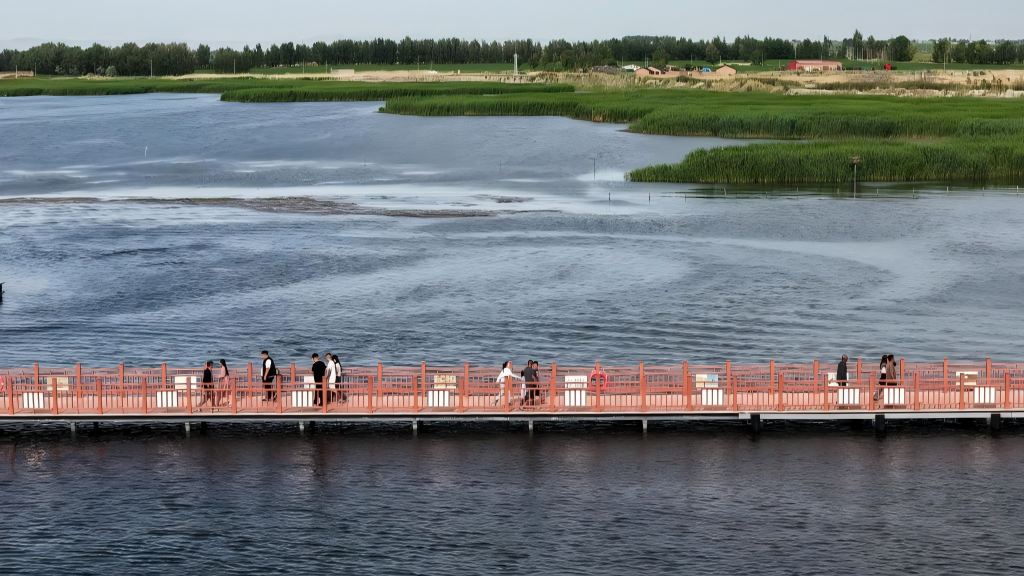
"At the same time, we are promoting the integration of agriculture, culture, and tourism by building rural tourism complexes that combine sightseeing, educational activities, and recreational fishing," Liu said.
(Photo/People's Daily Online)
Photos
Related Stories
- In pics: Rice fields taking on vibrant hues in Xiamen, SE China's Fujian
- Raising fish in rice paddies in SW China's Guizhou
- Famers harvest ratoon rice in Pengze, E China's Jiangxi
- Farmers begin rice transplanting after dike breaches sealed in C China
- Farmers in NE China's Heilongjiang cultivate thriving rice business
- Netizens pay tribute to father of hybrid rice three years after; 'every grain of rice was not spared’
- Hybrid rice market expands in Asia
- China's rice technology nourishing Africa's needs
- Rice harvest in N China's Inner Mongolia
- Abandoned quarry turned rice field harvests in Guangxi
Copyright © 2026 People's Daily Online. All Rights Reserved.
