



How a time-honored chicken recipe became a thriving restaurant brand in C China's Hunan
Xiao Liang, a fourth-generation representative inheritor of the intangible cultural heritage item of the Hetang free-range chicken cooking craft, was preparing the dish in his restaurant in Yuetang district, Xiangtan city, central China's Hunan Province.
In 1897, the first-generation inheritor, Dai Yunshan, made a name for himself through his mastery of free-range chicken cuisine. Across four generations, this has evolved into a distinctive culinary system in its own right.
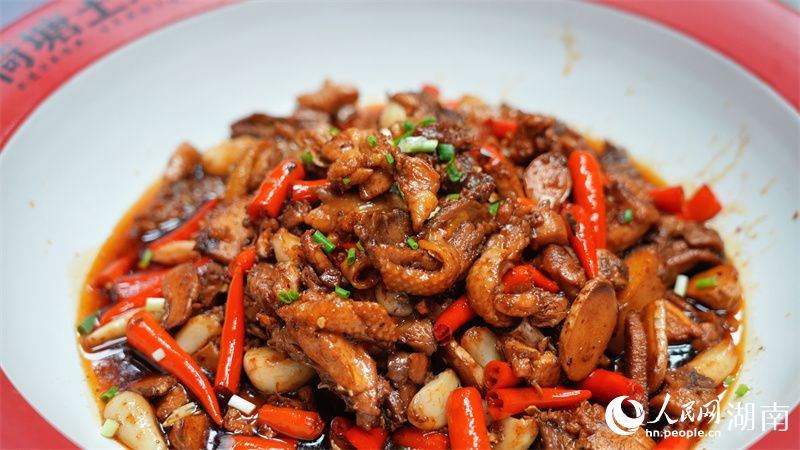
Photo shows a dish of Hetang free-range chicken in Xiao Liang's restaurant in Yuetang district, Xiangtan city, central China's Hunan Province. (People's Daily Online/Wu Xiwei)
Xiao entered the trade at 15. He later apprenticed under two masters of Hunan cuisine — Yan Hong and Xu Juyun — drawing on their guidance to refine his family's techniques.
In 2012, Xiao and his wife opened their first "Xiao Liang Hetang Free-Range Chicken" restaurant, a 200-square-meter venue that quickly earned a loyal following in Xiangtan's competitive dining scene. Today, they operate four restaurants welcoming more than 500,000 customer visits a year, cementing the restaurants' status as culinary landmarks in the city.
In 2020, the Hetang free-range chicken cooking craft was recognized as a representative intangible cultural heritage item of Xiangtan, and the brand was honored as a time-honored brand in Hunan.
"Every chicken served across all our restaurants is free-range and raised locally in Hetang, Xiangtan, for at least 240 days. Each bird is kept at around 1.75 kilograms to ensure the meat stays tender," Xiao said. To preserve the chicken's natural flavors as much as possible, his restaurants use locally pressed camellia oil, paired with Xiangtan red chili and aged ginger. The chickens are simmered in an iron wok to ensure a delicate flavor — nothing more is added.
While staying true to his ingredients and cooking methods, Xiao has continued to innovate. Responding to the evolving tastes of today's diners, he has developed a range of spin-off dishes, including stir-fried free-range chicken.
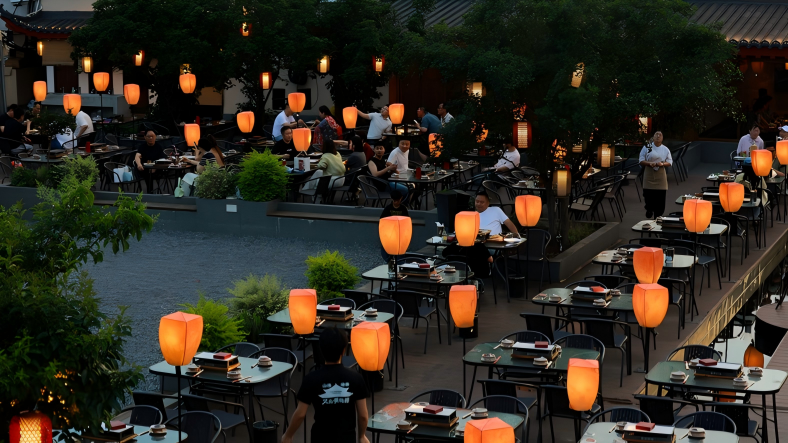
This blend of preserving tradition while embracing innovation has driven the brand's transformation over more than a decade, from a mom-and-pop restaurant into a benchmark in Xiangtan's dining scene. The brand has also helped pioneer what locals call "courtyard dining" in the city.
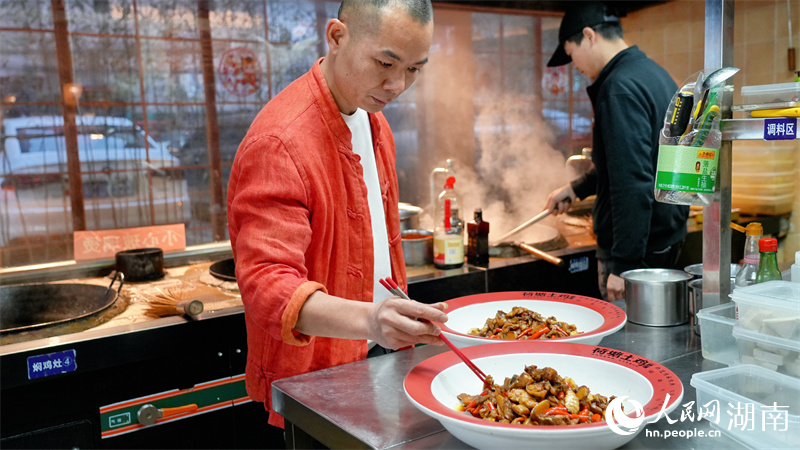
Photo shows Xiao Liang in the kitchen of his restaurant in Yuetang district, Xiangtan city, central China's Hunan Province. (People's Daily Online/Wu Xiwei)
In 2019, seizing on Xiangtan's growing appetite for quality dining experiences, Xiao opened the Jinxia Mountain branch of Hetang Free-Range Chicken, built around a courtyard-style concept that integrates natural surroundings into the dining experience. The branch has since welcomed more than 200,000 customer visits and is widely regarded as a defining example of Xiangtan's courtyard dining scene, further lifting the brand's profile across the city.
The breakout popularity of the 2025 Hunan Football League, popularly known as the "Xiangchao", gave the brand an unexpected boost. Xiao led his team to fully leverage the opportunity, creating a new model combining match-watching with dining. His restaurants offered free tastings of the signature chicken, set up dedicated viewing areas, and brought signature dishes to match venues to cheer on the Xiangtan team. The campaign's local pride resonated far beyond the city, and the brand quickly went viral nationwide.
During the tournament, customers from outside Xiangtan accounted for more than 60 percent of diners across the brand's restaurants. On the first day after the final match, the brand's four restaurants generated a combined single-day revenue of 300,000 yuan (about $43,700) — the highest since their opening. The brand also earned a place on Xiangtan's inaugural list of notable independent restaurants.
This year, the brand has accelerated its expansion by entering Zhuzhou city in the province to open a 2,000-square-meter immersive dining venue in a prime commercial district.
The brand's journey mirrors a larger story unfolding across Xiangtan. In recent years, the city has doubled down on cultivating its local restaurant brands, offering policy support, setting industry standards, and encouraging dining businesses to grow in clusters. By tapping into local intangible cultural heritage food traditions and leveraging platforms such as the "Xiangchao" and various cultural tourism events, Xiangtan has promoted the deep integration of food, sport and tourism.
Photos
Related Stories
- City view of Changde, China's Hunan
- People affected by typhoon adapt to new lives at resettlement site in China's Hunan
- A glimpse of Wayaoping historic and cultural district in China's Hunan
- In pics: Hengshan Mountain scenic spot in Hengyang, C China's Hunan
- Cultural block in central China's Hunan fuels night economy with diverse business formats
Copyright © 2026 People's Daily Online. All Rights Reserved.
