Trend Tracker: Foodie Frenzy for Spring Festival
Hello, everyone! I'm Kuku, a total foodie! The Chinese traditional festival food challenge continues with today's main event: the Spring Festival, commonly known as Chinese New Year. Let's unlock the festive charm of the Spring Festival reunion in just one minute.
According to the traditional Chinese lunar calendar, Spring Festival falls on the first day of the year — the first day of the first month — marking the beginning of a new year. Around the Spring Festival, people celebrate with a series of activities to bid farewell to the old and welcome the new, pray for good fortune and peace, and celebrate family reunion and harmony. This whole period is known as "Guonian" (crossing the year).
The Spring Festival originated from prayer sacrifices at the beginning of the year in ancient times. Following the agricultural seasons, ancient people made offerings to heaven, earth and ancestors at the turn of the year, praying for a smooth and prosperous year ahead. Later, legends of the "Nian" beast merged with these rituals, gradually forming customs such as pasting red decorations to ward off evil spirits and staying up late to pray for blessings. These traditions have been passed down for thousands of years, making Spring Festival the most cherished festival for Chinese people.
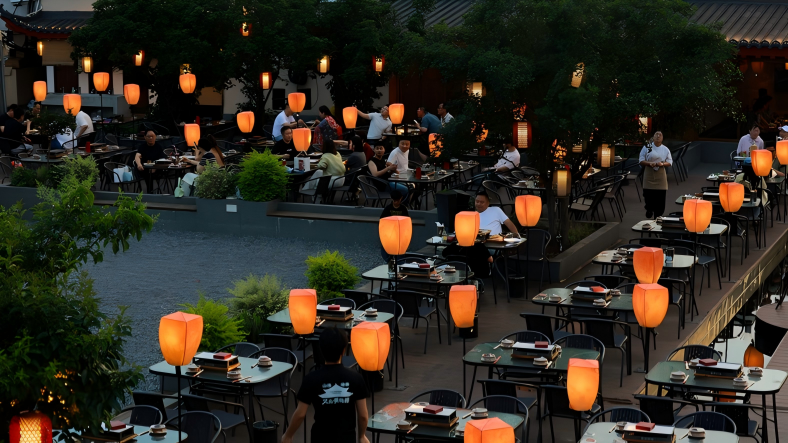
The festive charm of the Spring Festival begins with a reunion dinner! Though customs differ between northern and southern China, the core of the meal is always dishes laden with auspicious meanings — dumplings in the north, cured meats in the south, and the must-have fish, symbolizing abundance year after year. Every dish embodies the sweetness of togetherness and expectations for the new year. Beyond the food, Spring Festival customs are deeply embedded in Chinese DNA. These include pasting Spring Festival couplets, hanging lanterns, staying up all night, the younger generation extending greetings to receive "hongbao" (red envelopes), and visiting temple fairs to appreciate intangible cultural heritage.
Today, Spring Festival celebrations are evolving with new trends. Young people take their families on holiday trips, with many opting for "reverse travel" to rural areas to rediscover authentic festive flavors and local vibes. Temple fairs have evolved beyond being places to simply eat and stroll, with intangible cultural heritage experiences and virtual reality interactions stealing the spotlight, blending fun with cultural immersion. Reunion dinner formats are also innovating, with hotel packages and private chefs at home, all freeing families from kitchen chores.
Since the Spring Festival was listed as part of the first batch of China's national intangible cultural heritage in 2006, this New Year vibe has increasingly crossed borders. Many visitors from abroad travel to China specifically to immerse themselves in authentic customs, making the Spring Festival a globally shared cultural feast.
In countries like Singapore and Malaysia, the Spring Festival is also a public holiday, with streets glowing in festive decorations. The Chinese New Year parade in New York City is exceptionally lively, while London's Chinatown is hung with red lanterns. Many schools around the world even offer Spring Festival culture classes, teaching children to write the character "Fu," which means good fortune in Chinese, and make paper cuttings to feel the charm of the Chinese New Year.
Tonight, on this Spring Festival, families gather round and the festive atmosphere spreads across the globe. I wish everyone great luck in the Year of the Horse and every success! May your path ahead be smooth and open, and may your family be filled with health and joy!
Yu Yiran, as an intern, also contributed to this video.
(Web editor: Wang Xiaoping, Wu Chengliang)