



How global rankings reflect China's innovation momentum
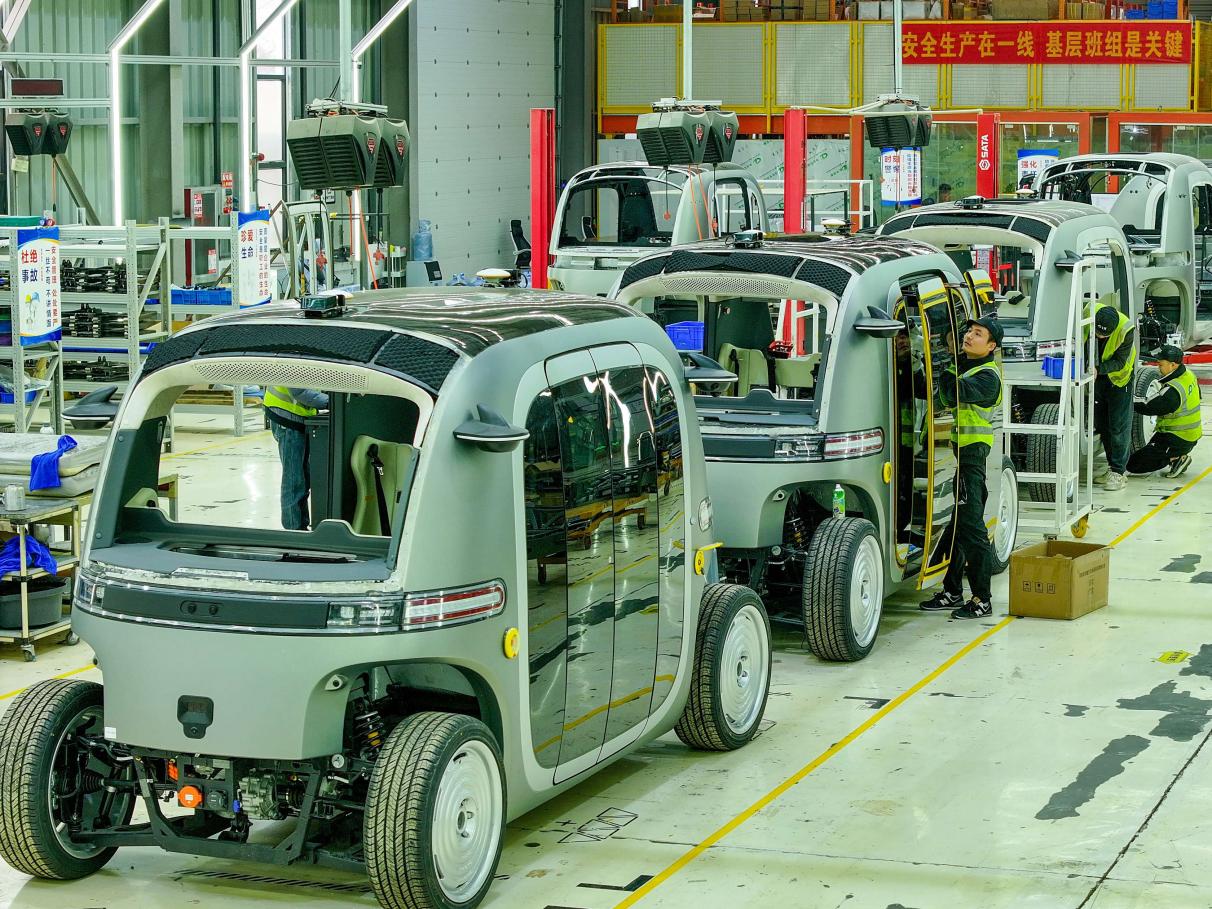
Automated mini-buses for export roll off the production line at a tech firm in Guiyang, southwest China's Guizhou province. (Photo/Yuan Hongfu)
China is rapidly evolving into a global engine of scientific and technological advancement, marked by surging research output, breakthroughs in fundamental and frontier fields, and deepening commitments to open collaboration. This trajectory reflects an increasingly confident and innovative China, infusing new dynamism into worldwide development.
Among the world's top 10 cities in the "Nature Index 2025 Science Cities" supplement, six are from China. Of the 2025 Highly Cited Researchers list from Clarivate, one fifth are from the Chinese mainland, with the Chinese Academy of Sciences ranking first globally with 258 entries.
According to the Proceedings of the National Academy of Sciences of the United States, Chinese scientists are rapidly increasing their leadership roles in international collaboration. The World Intellectual Property Organization's Global Innovation Index 2025 recognized China as one of the world's 10 most innovative economies.
The Jiangmen Underground Neutrino Observatory (JUNO) in south China's Guangdong province, recently released its first physics results, setting new world records in the precision of measurements for two neutrino oscillation parameters. The achievement highlights China's steadily growing role in global science and technology.
As the world's first neutrino-specific facility of ultra-large scale and ultra-high precision, this project, led by China and built in China, brings together more than 700 researchers from 75 scientific institutions across 17 countries and regions.
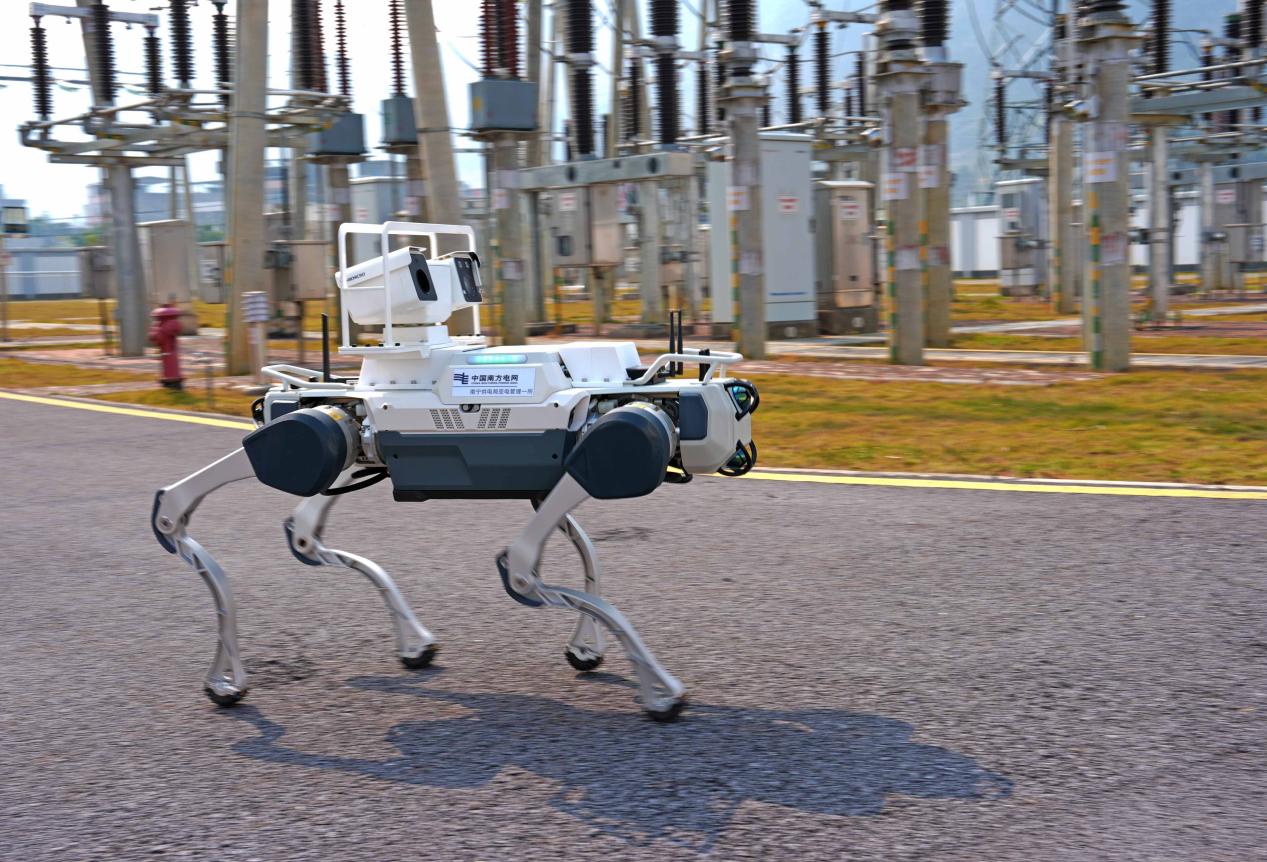
A quadruped robot is on an inspection mission at a transformer station in Nanning, south China's Guangxi Zhuang autonomous region. (Photo/Ma Huabin)
Magdalena Skipper, editor-in-chief at Nature, said that China's increasingly mature and impactful contributions to global research have been recognized not only in the Nature Index, but also in other major rankings and evaluation systems for scientific output.
In 2024, China's total research and development (R&D) spending exceeded 3.6 trillion yuan ($516.58 billion), an increase of 48 percent compared with 2020, and the country's total expenditure on R&D accounted for 2.68 percent of its GDP, with the total number of R&D personnel ranking first in the world.
Sustained investment has yielded original breakthroughs in quantum technology, life sciences, physical sciences, and space exploration. For five consecutive years, China has led globally in high-impact journal publications and international patent applications.
"By pivoting on its core talent, China is steadily strengthening its long-term competitiveness in the global research landscape," said Yi Jiming, a professor at Peking University Law School. He noted that, amid increasingly multipolar global scientific competition, China's ability to sustain both the scale and stability of its high-caliber talent reflects an innovation ecosystem supported by mature research frameworks, sustained investment, and well-structured talent pipelines -- demonstrating notable resilience and long-term potential.
China has strengthened top-level planning and improved its national innovation system. Through a series of practical measures and long-term policies, it has accelerated the formation of institutional mechanisms that support comprehensive innovation.
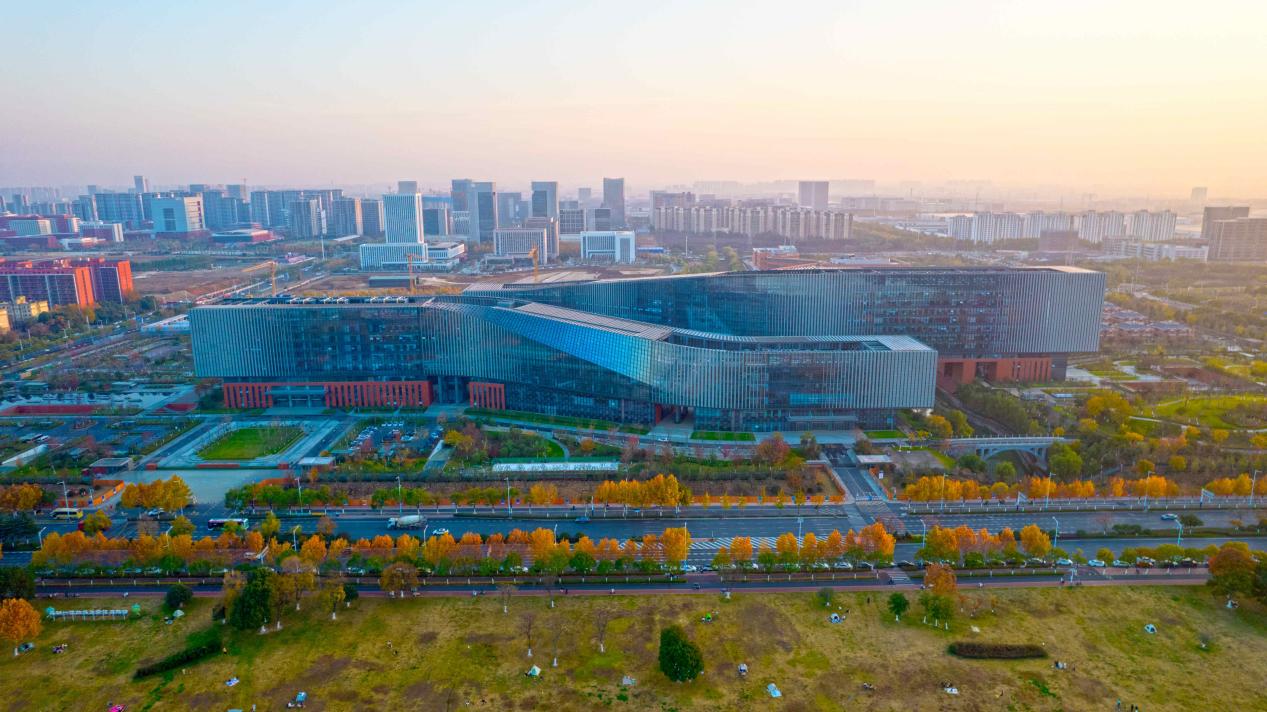
Photo shows the Quantum Information and Quantum Technology Innovation Institute, Chinese Academy of Sciences in Hefei, east China's Anhui province. (Photo/Ma Erhu)
Carsten Fink, chief economist of the World Intellectual Property Organization, observed that China has been performing particularly well in innovation in recent years, thanks in large part to the Chinese government's planning, sustained focus and support for the innovation system.
At the same time, an increasing number of Chinese technologies are going global, empowering development worldwide.
In farmland on the outskirts of Abuja, Nigeria's capital, golden waves of rice sway in the wind. By integrating the high-yield traits of Chinese rice with resilient local varieties, Chinese experts have successfully cultivated more than 80 varieties of green "super rice" that are both high-yielding and highly adaptable.
In Abu Dhabi, the United Arab Emirates, autonomous driving technologies of Chinese mobility company Didi have been employed by the local smart and autonomous vehicle industry, and will be gradually promoted across a broader Middle Eastern market.
By consistently promoting scientific and technological progress through open cooperation, China's new products and technologies are reaching the world in more accessible, people-centered ways, making innovation tangible, inclusive and sustainable.
At the 2026 Consumer Electronics Show, often regarded as a "barometer" of global technology trends, innovative products from Chinese companies attracted worldwide attention.
Chinese smartphone manufacturer Honor unveiled the world's first "smartphone robot," which comes with a movable mechanical gimbal design, an AI-powered smartphone brain, and high-definition imaging capabilities.
Lenovo introduced a personal super intelligent agent that enables seamless switching among smartphones, computers, tablets and wearable devices.
Chinese household appliance manufacturer Dreame Technology, drawing on its self-developed multimodal perception system and bionic robotic arm control algorithms, showcased a robotic vacuum cleaner equipped with a mechanical arm that can autonomously perform "grasping, sorting and storage" through AI visual recognition.
China's massive market scale and diverse application scenarios propel new technologies onto the global stage and reinforce its position as a critical hub for worldwide R&D. As one BMW Group executive noted, "BMW has established its largest R&D network outside Germany in China, including four innovation hubs and three software centers."
With clear goals and strong momentum, China continues to prioritize innovation-driven growth, fostering new sources of economic expansion. The country is poised to deliver further globally significant scientific and technological breakthroughs in the years ahead.
Photos



Related Stories
- Tax data shows faster integration of sci-tech and industrial innovation in China in 2025
- Senior Chinese official urges steady, sustained sci-tech progress
- Tech innovation reshapes NW China's agriculture landscape
- China to expand sci-tech innovation hubs into regional clusters for global influence: minister
- China committed to bringing benefit of science, technology to whole humanity: FM spokesperson
- From lab to market, China accelerates frontier tech deployment
- Chinese vice premier stresses promoting industrial innovation, strengthening product quality supervision
- AI-powered medical innovation spurs smart healthcare for Chinese patients
- Chinese premier calls for consolidation of strengths in innovation-driven growth
- China unveils national venture capital guidance fund to boost innovation
Copyright © 2026 People's Daily Online. All Rights Reserved.
