



In memory of 'Go Master' Nie Weiping
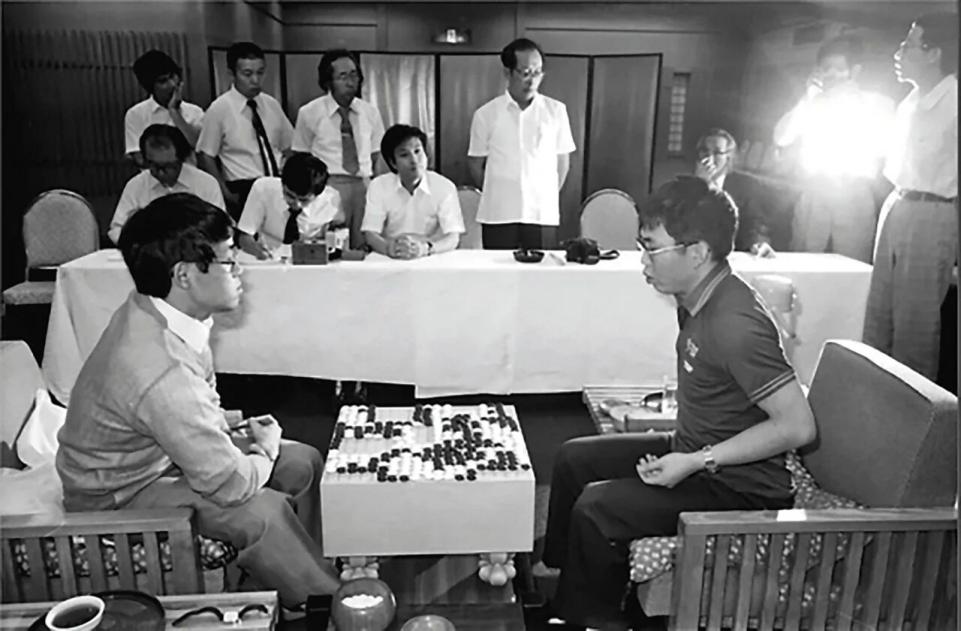
Nie Weiping (right) competes against a Japanese player in the China-Japan Go Challenge Series, August 1985. (File photo)
At 10:55 p.m. on Jan. 14, Nie Weiping, honorary president of the Chinese Weiqi (Go) Association, former head coach of the Chinese national weiqi team, and widely known as the "Go Master," passed away in Beijing at the age of 74. His departure has left the Go community in deep mourning.
A representative figure in China's Go development, Nie devoted his entire life to the game. His legacy includes achieving the historic 11 consecutive victories in the first four editions of China-Japan Go Challenge Series to his unwavering efforts in promoting the sport well into his seventies. Nie remained committed to his passion and steadfast in his pursuit of excellence.
Born in 1952, Nie learned Go in his childhood through family influence before studying under masters Lei Puhua and Guo Tisheng. After joining the national training team in 1973, he rapidly ascended to domestic dominance, winning multiple major titles.
During the 1970s-1980s when Japanese players dominated international Go, Nie emerged as China's standard-bearer. His 1976 tour of Japan saw consecutive victories against top professionals, earning him the nickname "Nie Whirlwind."
The 1984 inaugural China-Japan Go Challenge Series became Nie's defining moment. With China trailing significantly after six straight losses, Nie faced elimination as the last Chinese contender. Against overwhelming odds, he defeated Koichi Kobayashi and Masao Kato before overcoming anchor player Hideyuki Fujisawa on November 20, 1985 -- clinching a landmark victory for Chinese Go.
This first Chinese triumph ignited unprecedented nationwide jubilation, transforming Go into a national sensation. Veteran Wang Runan recalled how "every match became must-watch drama across Chinese society."
During the second Supermatch, Japan led 8-4 before Nie achieved five consecutive victories to defend China's title. In the third edition, with teams tied 8-8, he defeated Kato again to secure China's third consecutive championship.
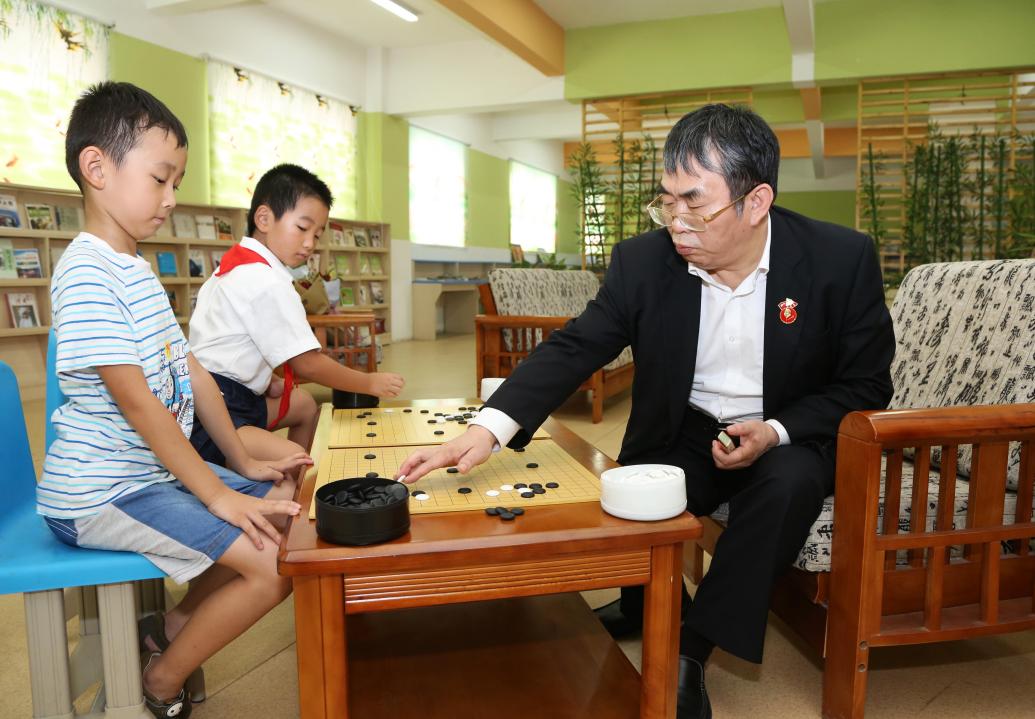
Nie Weiping plays a match against two young players in Tongling, east China's Anhui province, Aug. 25, 2017. (Photo/Gao Lingjun)
At that time, the Supermatch's cultural impact in China transcended sports. Through three successful championship defenses, Nie forged an enduring legacy with masterful play, indomitable spirit, and deep patriotism. The "Nie Whirlwind" became a national hero.
Inspired by Nie, a nationwide craze for Go swept across China, encouraging many young people to take up the game. In 1988, Nie was awarded the title of "Go Master" by the then-State Physical Culture and Sports Commission of China and the Chinese Weiqi Association, an honor unique in China's weiqi community to this day. "This is something I have both taken pride in and felt uneasy about for decades," Nie once said candidly.
As the years passed and age inevitably affected his competitive strength, Nie took on the role of a mentor and an educator. He devoted himself to nurturing younger generations, guiding top players such as Chang Hao and Gu Li with his expertise. The Nie Weiping Go Academy, founded in 1999, has produced numerous world and national champions over the past two decades, including Ke Jie, Gu Zihao, and Zhou Ruiyang, and nearly 300 other professional players.
With the China-Japan Go Challenge Series as a turning point, a series of international tournaments were subsequently established, and the world Go scene evolved into a tripartite landscape involving China, Japan and the Republic of Korea.
Since 2013, when China claimed six world titles in a single year, a new generation of players born in the 1990s and 2000s has risen to the forefront of the global stage, a development that gave Nie great satisfaction, as he witnessed the sport's continued growth and dominance.
After decades of deep engagement with weiqi, Nie devoted all his energy to the inheritance and development of the game. Even after undergoing major surgery in 2013 due to serious illness, he remained active in various tournaments and activities, tirelessly promoting the sport by explaining matches, offering guidance, interacting with young players, and expanding the game's social influence.
Accompanying Go throughout his life, Nie always maintained a calm and open-minded attitude, both on and off the board. Whether in success or adversity, he approached the game with optimism and composure, always adhering to the principles that guide life, study, and work. As he once remarked, "The wisdom of the board applies to all aspects of life. Even in the age of AI, human beings still need Go."
A player's career is finite, but the "record of moves" of skill and spirit can transcend time. Nie's exemplary influence will continue to inspire generations of young players and keep this ancient intellectual sport vibrant and alive.
Photos

Related Stories
- Chinese Go master Nie passes away at 73
- Trending in China | Mother-of-pearl chess pieces
- 19th Asian Games: Men's Individual Preliminary Round of Go Chess
- Chess Preview: China's world champion Ding seeking first Asian Games gold
- Chinese chess competition held in Lebanon
- China's Ding Liren competes at Grand Chess Tour 2023 in Romania
- Ding Liren beats Nepomniachtchi to become China's first male world chess champion
- Mind sports games held in east China
- China wins Men's World Team Chess Championship
- China into semifinals at Men's World Team Chess Championship
Copyright © 2026 People's Daily Online. All Rights Reserved.
