



Hainan's commercial space industry gathers momentum
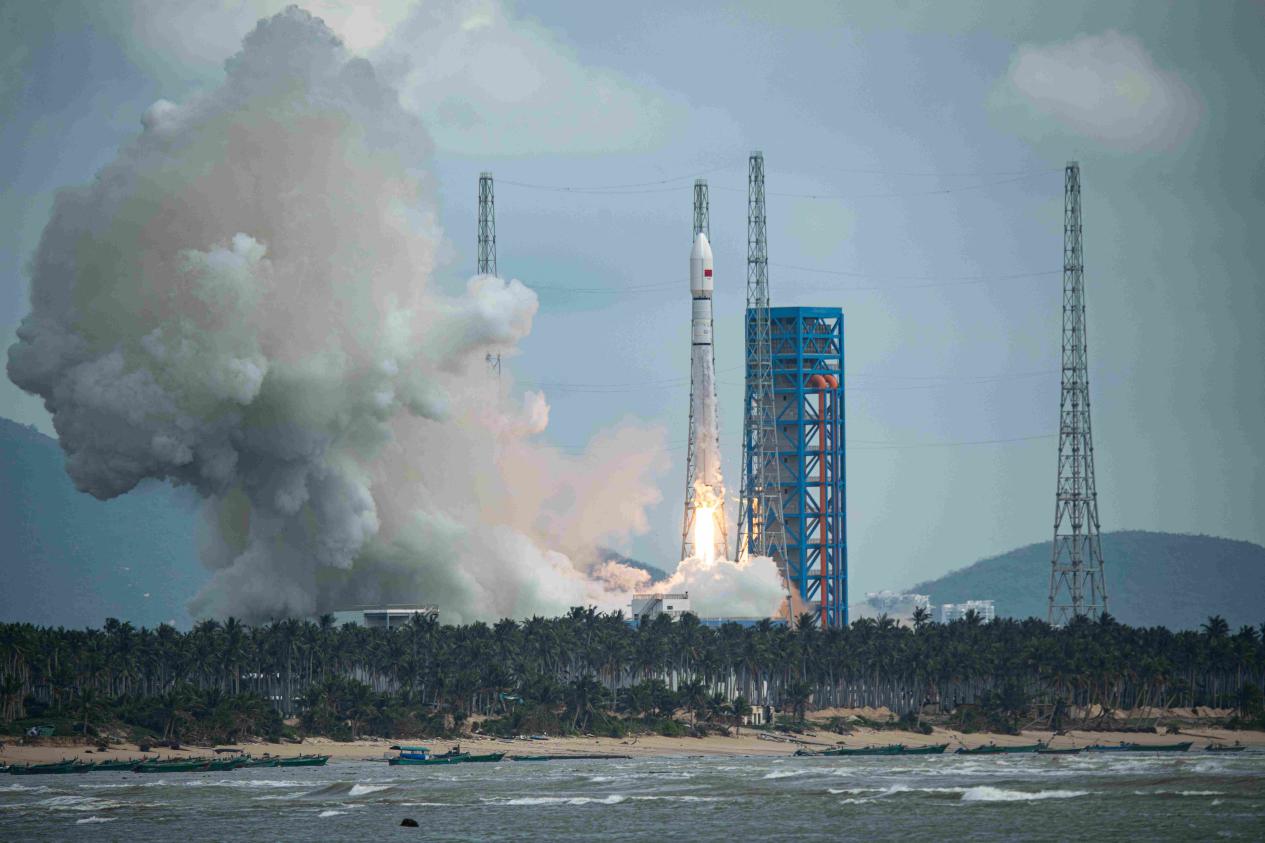
A Long March-12 carrier rocket blasts off from the Hainan commercial spacecraft launch site, sending the 13th group of internet satellites into the preset orbit, Nov. 10, 2025. (Photo/Meng Zhongde)
At 10:41 a.m. on Nov. 10, 2025, a Long March-12 carrier rocket blasted off from Dongjiao township of Wenchang, south China's Hainan province, sending the 13th group of internet satellites into the preset orbit.
This marked the seventh successful launch since the Hainan commercial spacecraft launch site began operations. From groundbreaking in 2022, to the first launch last November, and now entering a new stage marked by high-frequency, regular missions, this young "mother port" of China's commercial space sector is accelerating its pace.
At the launch site, two launch towers stand tall. Launch pad No. 1 is tailor-made for the Long March-8 series and supports a seven-day launch and seven-day reset cycle. 2 is China's first multi-type launch pad designed for medium-lift liquid-fuel rockets.
"Commercial space industry must prioritize cost and efficiency. Traditionally, each rocket required a dedicated launch pad. But the pad No. 2 adopts a universal interface like a 'universal charger' and can currently support more than 10 rocket companies and over 20 rocket types," said Yang Tianliang, chairman of the Hainan International Commercial Aerospace Launch Center.
Pad No. 2 has also adopted an innovative "three-horizontal" system—horizontal assembly, horizontal testing, and horizontal transfer. Rockets are assembled and tested lying down, transported horizontally to the pad, and then erected and fueled for launch. This streamlined process reduces the pre-launch preparation period from about 20 days to 10 days or even less.
Construction has also begun on the phase II of the launch site, which will add two more pads -- pads No. 3 and No. 4 scheduled to become operational by the end of 2026. Once completed, the site's annual launch capacity is expected to exceed 60 missions.
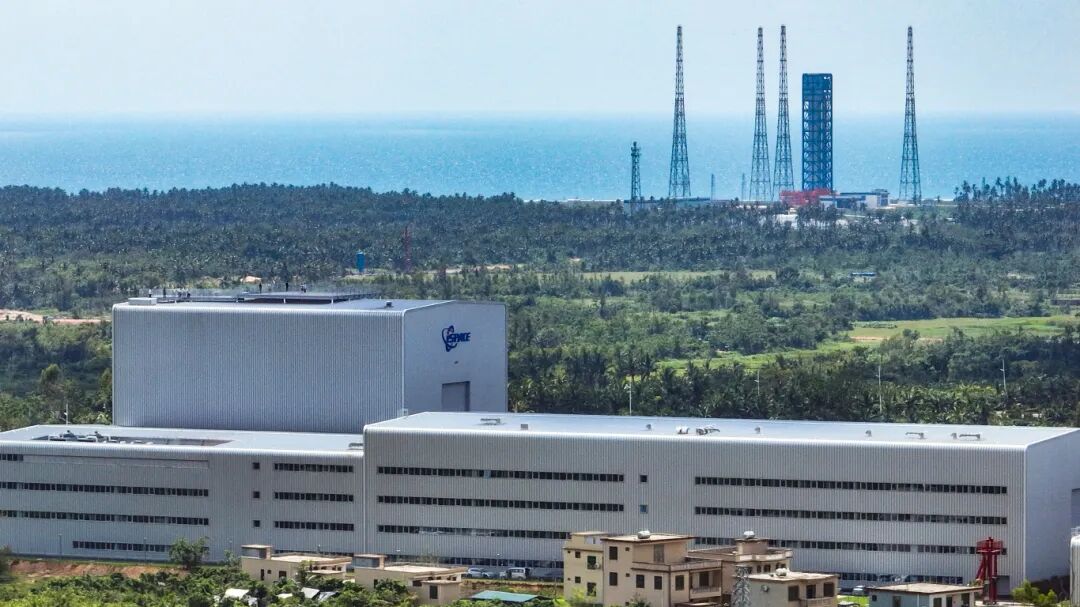
Photo shows the phase I project of China's first integrated factory dedicated to the assembly, testing, and reuse of carrier rockets, built by Interstellar Glory Space Technology Co., Ltd. (Photo provided by Wenchang International Aerospace City)
"The launch site is like a port. Rockets are the vessels, and satellites are the cargo. Once the port is built, vessels and cargo will naturally come," said Peng Xiaobo, chairman of Interstellar Glory Space Technology Co., Ltd. (iSpace), offering a vivid analogy that captures Hainan's development strategy of using the launch site to drive the growth of the broader industrial chain.
Just a few kilometers from the towers, an aerospace industrial park is taking shape, forming a comprehensive industrial ecosystem for Wenchang International Aerospace City.
In October 2025, iSpace completed the phase I of China's first integrated factory dedicated to the assembly, testing, and reuse of carrier rockets.
"The first stage accounts for more than 70 percent of a rocket's cost. If we can recover and reuse it, the launch cost could fall to 1/5 that of traditional expendable rockets. Sea-based recovery is safer and reduces performance loss, and Wenchang's three-sided access to the sea and open launch corridors make it ideal for recovery," Peng explained.
In August, the company's first rocket recovery ship was launched, marking steady progress in building a full-chain closed-loop covering launch, recovery, inspection, and reuse.
As leading enterprises in the rocket sector flock to Wenchang, the "satellite chain" is also expanding rapidly. The main structure of what will be Asia's largest "satellite super factory" has already been topped out and is expected to begin operations by the end of the year. Once satellites roll off the production line, they can be launched just a few kilometers away.
Meanwhile, new "aerospace+" applications are emerging along the data chain. The Wenchang Aerospace Supercomputing Center, already in operation, provides computing power for hundreds of domestic and international users and is moving toward a model where satellites become operational upon launch and data is delivered as an on-demand service.
With the rocket chain, satellite chain, and data chain taking shape, more upstream and downstream enterprises are gathering in Wenchang. More than 700 aerospace-related companies have now settled in Wenchang International Aerospace City.
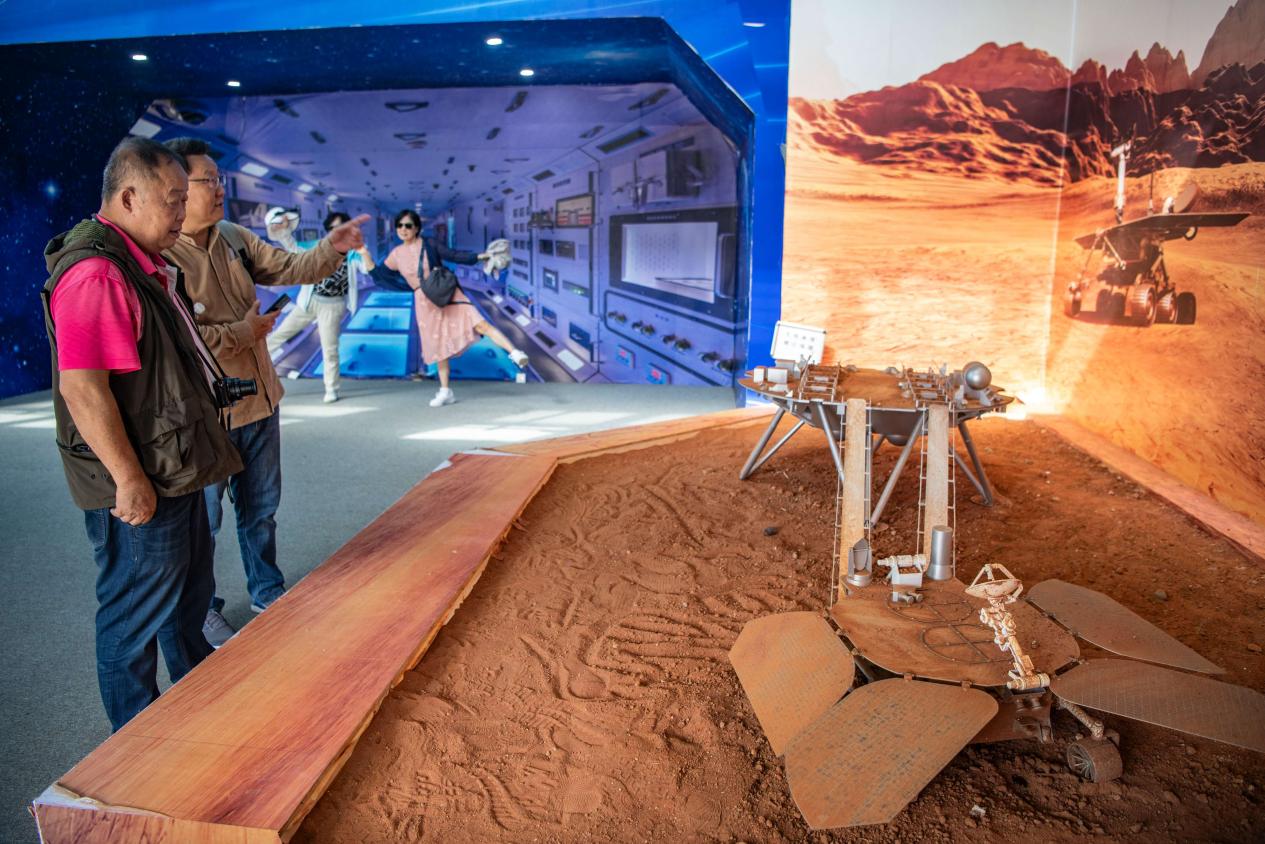
Tourists visit the Wenchang Aerospace Science and Education Center in Wenchang, south China's Hainan province. (Photo/Meng Zhongde)
What explains the rapid rise of Hainan's commercial space sector?
"We have three clear advantages -- location, policy, and industrial ecosystem," said Yuan Shiying, deputy mayor of Wenchang. Located at 19 degrees north latitude, Wenchang's low-latitude position boosts a rocket's payload capacity by 10 to 15 percent compared with launches from higher-latitude sites. The policies featuring zero tariffs, low tax rates and simplified taxation offer strong incentives for capital-intensive aerospace enterprises. In addition, special market-access measures issued by the National Development and Reform Commission and the Ministry of Commerce provide strong support for building a world-class commercial launch site.
The growing popularity of "aerospace + tourism" is also boosting local accommodation and catering businesses. Aerospace technologies are enabling new applications across industries: in Sanya, seeds that have traveled to space are being cultivated at the Nanfan breeding base; in Haikou, drones powered by BeiDou data are flying cross-sea logistics routes.
From a single launch site to an integrated industrial cluster and now to an open, innovation-driven ecosystem, a high-efficiency, low-cost, and fully integrated development path for commercial space is in the making along the shores of the South China Sea.
Photos




Related Stories
- Hainan FTP launches phased zero-carbon industrial park initiative
- Hainan FTP logs smooth cargo flows on first day of special customs operations
- Russian spokesperson lauds new progress in China's Hainan Free Trade Port
- China launches island-wide special customs operations in Hainan FTP
- 1st batch of goods undergoes special customs clearance in China's Hainan
- China's opening up policy boosts opportunities for global enterprises: Serbian scholar
- China turns Hainan Island into special customs supervision zone in opening-up drive
- Hainan starts special customs operations across entire island
- China turns Hainan Island into special customs supervision zone
- Hainan FTP starts island-wide special customs operations: A new chapter in openness
Copyright © 2026 People's Daily Online. All Rights Reserved.
