



Village in E China's Anhui emerges as a hub for creative and cultural industries

Xiaotao village in Liulang town, Wanzhi district, Wuhu, east China's Anhui Province, is a centuries-old riverside settlement. Today, it has reinvented itself as a well-known internet-famous village. It has drawn young creators and is now home to 18 cultural and creative studios.
Huang Qinru, a lecturer at the School of Textile and Garment at Anhui Polytechnic University and a municipal-level inheritor of the Wuhu pulp dyeing technique, visited Xiaotao village in 2023. That visit inspired her to establish a research and learning base right there in the village.
Xiaotao village is a natural village in Beitao village. It is about 20 kilometers from downtown Wuhu. Fewer than 100 residents live there year-round, most of them elderly.
"Many villagers have moved to the cities, leaving a lot of houses sitting empty," said Tao Xu, Party chief of Beitao village. To make better use of these idle properties, the village began collecting and leasing out vacant homes in 2021. In 2023, Huang moved into the village.
"Art majors often want to start their own businesses, but the cost of doing that in cities is simply too high. Setting up research-based creative programs in a rural setting is a great alternative," Huang said. Her vision fit perfectly with Liulang town's plan to build a distinctive and livable countryside, and together they decided to create an intangible cultural heritage village for young artisans. The town offered discounted rent and renovation subsidies, giving young entrepreneurs the space to experiment and pursue their ideas.
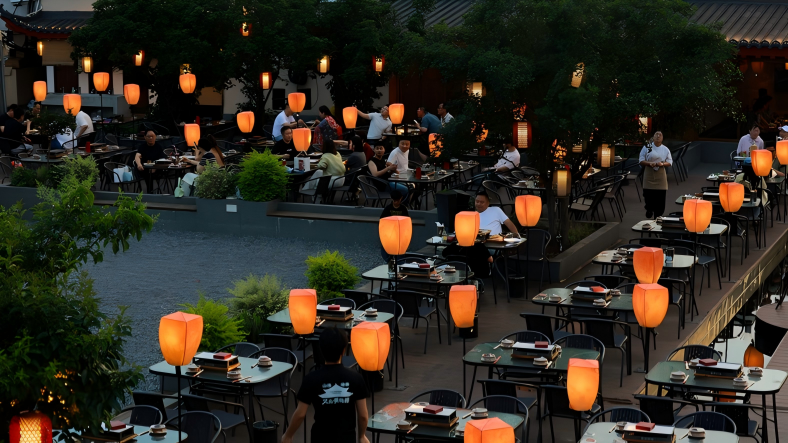
As vacant houses were renovated and brought back to life, studios for intangible cultural heritage, shops selling creative cultural products, and youth-friendly social spaces began to take shape. Since then, more than 50 young talents have made Xiaotao village their home.
As Xiaotao village has grown livelier, Tao Xiaojun, who once left the village, has felt the pull to return. Seeing real potential in his hometown, he decided to open a B&B.
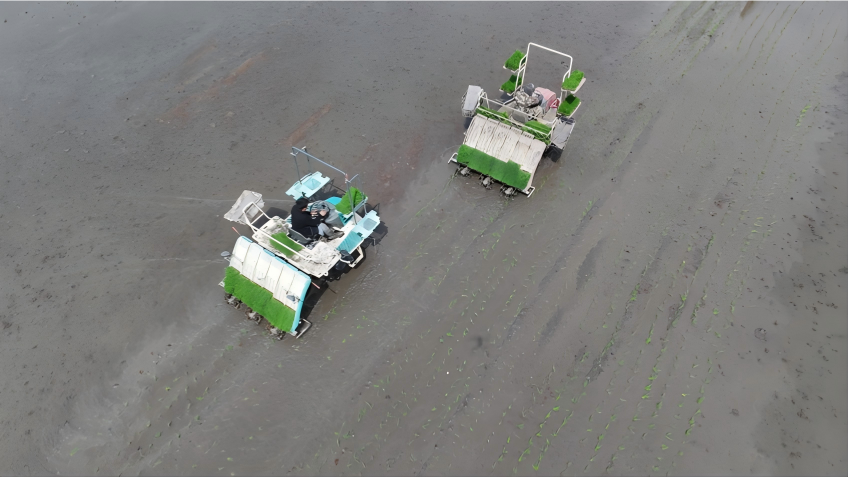
"There are six rooms across two floors. I'll live in two of them and use the other four for guests. I expect to open around the May Day holiday next year. Visitors will be able to look out over the rice fields from their windows, and at night fall asleep to the sound of frogs and insects," Tao Xiaojun said.
Young entrepreneurs in the village now have a clearer vision for the future. This year, they set up an operating company to take on the village's rural development and management projects, giving them a deeper role in the village's planning, construction, and daily operations.
"The village plans to plant more than 80 trees this year, and we hope to encourage residents to grow fruit trees, such as persimmon and orange trees, in their own courtyards to further enhance the landscape. We'll also continue operating the Xiaotao village market, concerts, art exhibitions, and a range of study tours," said Wu Jian, head of the operating company.
Since 2024, Xiaotao village has hosted seven cultural fairs. Visitor numbers have climbed to over 10,000, driving more than 20 million yuan (about $2.83 million) in spending. More than 50 people hailing from the village have returned to take part in its network of rural businesses.
Photos


Related Stories
- Trending in China | Stilt walking
- Why ‘Cool China’ is winning global fans
- Shenzhen Bay Culture Square in Guangdong begins trial operation
- New cultural landmark starts trial operation in Shenzhen
- Trending in China | Xuan paper embroidery
- Cultural heritage Nanyin connects past and present in China and Singapore
- Technology breathes new life into intangible cultural heritage
- Global dignitaries to discuss integrated development of culture, sci-tech in Beijing
- Rosanna Binacchi: Culture is key ingredient for building cooperation
- Spanish athlete influencer chopstick hair bun challenge
Copyright © 2026 People's Daily Online. All Rights Reserved.
