

2019 has been a year of progress, especially for the Chinese gaming industry.
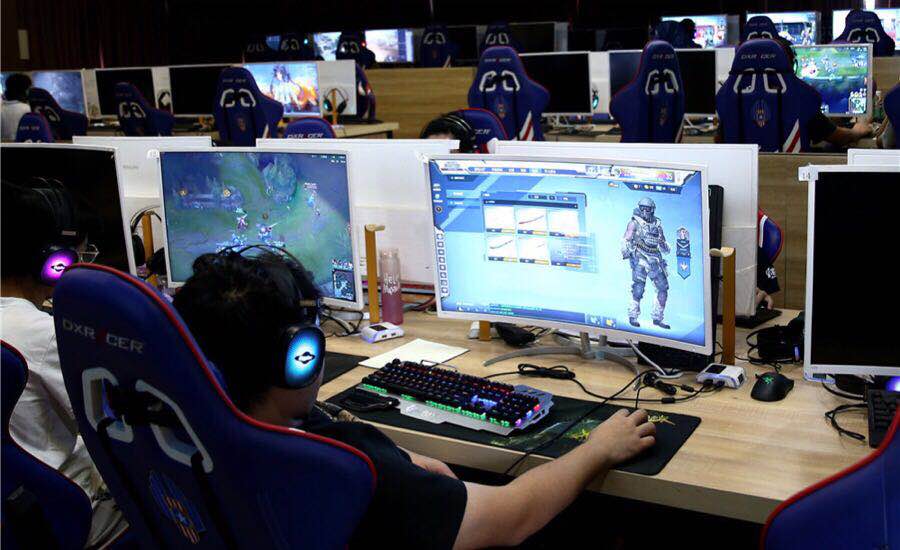
A student learns about gaming designs at the school. [ZOU HONG/CHINA DAILY]
As China resumed license approvals for digital games this year, the industry has been gradually maturing and picking up, turning from an addiction-related and time-wasting sector to one that features healthy competition.
In recent years, public opinion on e-sports has become increasingly positive, and keywords related to the sector also have taken on more positive meaning, such as “healthy”, “educational”, “industrial development” and “internationalization”.
In addition, 2 of the 13 new professions released by the country's Ministry of Human Resources and Social Security (MHRSS) at the beginning of this year are related to the gaming industry, marking the first time the country has endorsed the sector on a national level.
According to Newzoo, a gaming, e-sports and mobile markets analysis company, the global market for e-sports will expand from $490 million in 2016 to $1.5 billion in 2020.
In China, the gaming population is expected to grow from 94 million in 2016 to 170 million in 2021, accounting for 30 percent of the world’s total, while the industry revenue will increase from 500 million yuan ($71.42 million) to 2.2 billion yuan, or 19 percent of the global share in the same period, making the country the largest gaming market in the world.
Currently, China has already become the country with the highest revenue and growth in the industry, and the country’s game developers are making strides to go global. Statistics indicated that in the first half of 2018, overseas game players spent over $16 billion on Chinese mobile games.
“2019 was a year of both challenges and opportunities, and I made many accomplishments,” said Ye Wei, a game designer told Beijing Youth Daily.
According to him, his family opposed his decision to work for a gaming corporation in Beijing three years ago, but now they finally understand him and sometimes encourage him to persevere.
“The country’s recognition of the profession has very much eased my tensions with my family, freeing them from the prejudice that I was just playing games for nothing and helping them understand my career,” Ye said.
Indeed, many of the practitioners in the industry started their career because of their love for games. “Isn’t it a good thing to do something you like for a career?" Zheng noted.
As the industry continues to develop, many Chinese cities have included the gaming industry in their top-level plans, further expanding the space for the sector.
In December, Beijing’s publicity department vowed to build Beijing into a world-leading center for gaming development, application of new info-technologies, social application of games, and research into gaming theories, saying the city will bring its gaming industry revenue to 150 billion yuan by 2025.
In addition, southern China’s Hainan province also rolled out six policies regarding the gaming industry which will gradually perfect its practices and offer support in terms of capital, human resources, taxation, visa exemption, gaming events approval and broadcasting, becoming another region in China to embrace e-sports after Shanghai, which has issued 20 guidelines on making it a global hub for e-sports.
CNG, a third-party platform in the gaming sector, predicts that the US mobile game market will grow 11.8 percent and hit $13.4 billion in the next year. In such a potentially huge market, Chinese games are the most popular only after local US games. Exports of Chinese games are expected to reach $11 billion this year, making China the world’s second largest exporter of games.
 Fire brigade in Shanghai holds group wedding
 Tourists enjoy ice sculptures in Datan Town, north China
 Sunset scenery of Dayan Pagoda in Xi'an
 Tourists have fun at scenic spot in Nanlong Town, NW China
 Harbin attracts tourists by making best use of ice in winter
 In pics: FIS Alpine Ski Women's World Cup Slalom
 Black-necked cranes rest at reservoir in Lhunzhub County, Lhasa
 China's FAST telescope will be available to foreign scientists in April
 "She power" plays indispensable role in poverty alleviation
 Top 10 world news events of People's Daily in 2020
 Top 10 China news events of People's Daily in 2020
 Top 10 media buzzwords of 2020
 Year-ender:10 major tourism stories of 2020
 No interference in Venezuelan issues
 Biz prepares for trade spat
 Broadcasting Continent
 Australia wins Chinese CEOs as US loses