

Video: A part of the base land is planted with isatis root.
With the help of experts from various institutions, including the Chinese Academy of Sciences and China Agricultural University, after a long period of research and tackling key scientific and technological bottlenecks, the company has mastered the necessary cultivation, purification and extraction technology.
After more than two years, the first experimental batch of plants has been successful. Li said that the old idea that Qumulai was too high for planting had been disproven.
In fact, Maduo township's high altitude has proven to be an advantage for herbal plantations as it offers a large area of available uncultivated land, and excellent water quality and soil. Herbs grown here will be pollution-free.
Related:
Ecology is the first priority (Ⅰ)
Linking ecology and development (Ⅱ)
From 'blood transfusion' to 'hematopoiesis' (Ⅳ)
 |
 Clued-in | Beyond finance: Strategic logic behind Pakistan'…
 World Snooker Shanghai Masters 2026: Ronnie O'Sullivan vs. …
China's 'next new three' create open platform for global in…
 China's humanoid robots face their real test on the factory…
 Xi urges pooling strength of overseas Chinese to build stro…

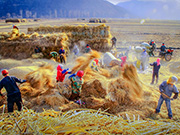 Award-winning photos show poverty reduction achievements in NE China's Jilin province
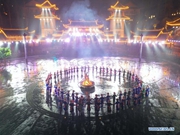 People dance to greet advent of New Year in Ameiqituo Town, Guizhou
 Fire brigade in Shanghai holds group wedding
 Tourists enjoy ice sculptures in Datan Town, north China
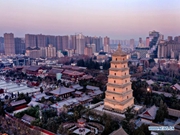 Sunset scenery of Dayan Pagoda in Xi'an
 Tourists have fun at scenic spot in Nanlong Town, NW China
 Harbin attracts tourists by making best use of ice in winter
 In pics: FIS Alpine Ski Women's World Cup Slalom
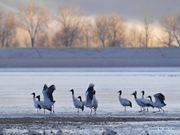 Black-necked cranes rest at reservoir in Lhunzhub County, Lhasa
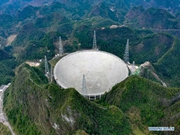 China's FAST telescope will be available to foreign scientists in April


