(Photo.Chinanews.com)
Myopia, otherwise known as nearsightedness, has become severe among Chinese children and teenagers in recent years, with more people being affected at a younger age. Last year, about 53.6 percent of children and teenagers had myopia.
The prevalence of severe eyesight problems is alarming, with 21.9 percent of high school students wearing glasses stronger than six diopters.
Excessive homework, insufficient outdoor exercise, and abuse or improper use of electronic devices are thought to be the major causes of myopia among Chinese children and teenagers.
The country has intensified efforts to prevent and combat nearsightedness among teenagers. It plans to reduce the overall myopia rate among teenagers by more than 0.5 percentage points per year from 2019 to 2030, according to a recently released health guideline.
The guideline requires schools to guarantee that students exercise for at least an hour a day at school, perform eye exercises regularly and read and write for no more than 40 minutes without a break both in the classroom and at home.
The Ministry of Education calls on parents to reduce the time their children spend using electronic devices to within one hour per day.
 Fire brigade in Shanghai holds group wedding
 Tourists enjoy ice sculptures in Datan Town, north China
 Sunset scenery of Dayan Pagoda in Xi'an
 Tourists have fun at scenic spot in Nanlong Town, NW China
 Harbin attracts tourists by making best use of ice in winter
 In pics: FIS Alpine Ski Women's World Cup Slalom
 Black-necked cranes rest at reservoir in Lhunzhub County, Lhasa
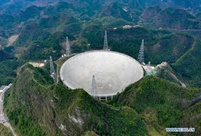 China's FAST telescope will be available to foreign scientists in April
 "She power" plays indispensable role in poverty alleviation
 Top 10 world news events of People's Daily in 2020
 Top 10 China news events of People's Daily in 2020
 Top 10 media buzzwords of 2020
 Year-ender:10 major tourism stories of 2020
 No interference in Venezuelan issues
 Biz prepares for trade spat
 Broadcasting Continent
 Australia wins Chinese CEOs as US loses