

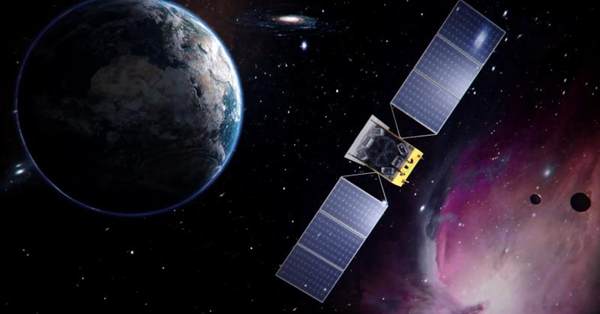
Starting from Jan. 30, Huiyan, or Insight, China’s first space satellite will officially start studying black holes and neutron stars, People’s Daily reported Tuesday, citing the national space administration.
The Hard X-ray Modulation Telescope (HXMT) Huiyan was placed into orbit on June 15, 2017, from the Jiuquan Satellite Launch Center in northwestern China. It is ready for service after completing a half year of in-orbit tests, including ground system, satellite platform, and payload system tests.
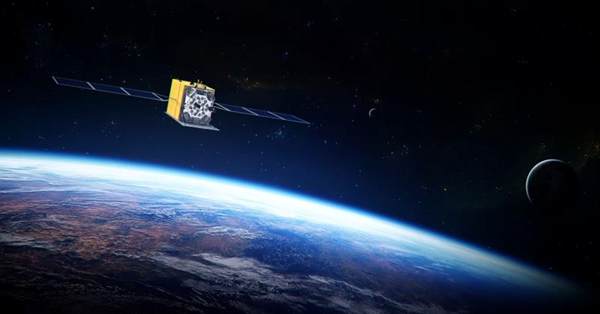
Early October 2017, Huiyan cooperated with other observatories and located the source of gravitational waves created by the collision of two neutron stars, during which Huiyan detected the upper limits on gamma-ray bursts.
The China National Space Administration (CNSA) is rolling out regulations on satellite data management, and an international committee on Huiyan satellite was jointly launched by the CNSA and Chinese Academy of Sciences to seek international cooperation and integrate talents and technological resources from home and abroad.
 Fire brigade in Shanghai holds group wedding
 Tourists enjoy ice sculptures in Datan Town, north China
 Sunset scenery of Dayan Pagoda in Xi'an
 Tourists have fun at scenic spot in Nanlong Town, NW China
 Harbin attracts tourists by making best use of ice in winter
 In pics: FIS Alpine Ski Women's World Cup Slalom
 Black-necked cranes rest at reservoir in Lhunzhub County, Lhasa
 China's FAST telescope will be available to foreign scientists in April
 "She power" plays indispensable role in poverty alleviation
 Top 10 world news events of People's Daily in 2020
 Top 10 China news events of People's Daily in 2020
 Top 10 media buzzwords of 2020
 Year-ender:10 major tourism stories of 2020
 No interference in Venezuelan issues
 Biz prepares for trade spat
 Broadcasting Continent
 Australia wins Chinese CEOs as US loses