[File photo]
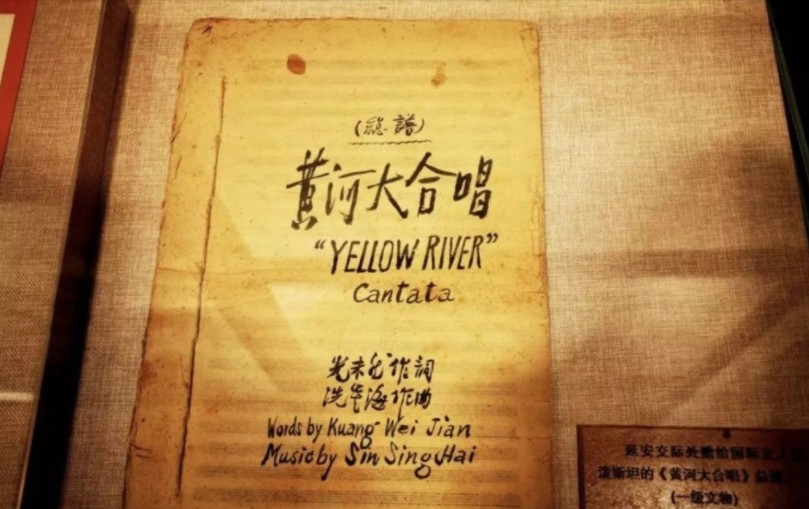
A travesty of a renowned Chinese patriotic cantata has received mixed reactions from the Chinese public after it was posted online in January, with opponents calling it a “mockery that spoofs history” and supporters backing up the burlesque for its “dark humor and creativity.”
The parody, which was reportedly performed by several employees at a Chinese company’s New Year gala in January, has spoofed the lyrics of Yellow River, one of China’s most famous patriotic cantata, as well as adding exaggerated choreography. Instead of using the original lines of “The wind howls, horses neigh, the Yellow River roars,” the performers sarcastically made up lyrics such as “year-end bonus is what we growl for.”
The performance quickly caught the attention of the public and media outlets. As of press time, the parody video has garnered over 9.6 million views on TecentVideo, one of China’s largest video platforms. Other parodies of the cantata, including one with kittens dancing to background music of the Yellow River, have also attracted public attention.
In response to the controversy, Xian Nina, daughter of the cantata’s composer, Xian Xinghai, has publicly criticized the parody, calling for bans on such “degrading mimics.”
“Those who spoofed the cantata lack basic moral integrity. I think it is necessary to ban such parodies and deter such unhealthy tendencies,” Xian told CNR on Sunday.
Echoing Xian, major media outlets in China have also criticized the adaptation. People’s Daily released a commentary on Monday accusing the parody of being “vulgar and frivolous” and calling for punishment.
“We must say no to parodies of the classics. Such adaptations will only weaken their value. In addition to criticizing the vulgar adaptation, [the authorities] should also establish a punishment mechanism and legally deal with such violators,” read the comment.
Chinese netizens, on the other hand, have expressed different opinions on the issue. The majority of net users agree that the parody is a “humiliation to the heroes and history” and are calling for a ban on such content.

Video of the controversial parody.
“The song was made to remember the pain and humiliation that was imposed on China by enemies and wars. I don’t think such a serious artwork should be ridiculed, let along in such a vulgar way,” wrote a netizen on Sina Weibo.

[File photo]
Others held a different opinion, comparing the public outcry to “making a mountain out of a molehill.”
“The old generation has their way to remember history, while the young generation has their own way to express their love for the country. If the parodies are truly dregs, they will be despised by the people. We don’t want moral abduction,” wrote another netizen.
Firstly composed in early 1939 during the second Sino-Japanese War, the work soon spread to all parts of China, inspiring the listeners to fight against invaders, as well as becoming the icon of modern China’s musical creation.
 Fire brigade in Shanghai holds group wedding
 Tourists enjoy ice sculptures in Datan Town, north China
 Sunset scenery of Dayan Pagoda in Xi'an
 Tourists have fun at scenic spot in Nanlong Town, NW China
 Harbin attracts tourists by making best use of ice in winter
 In pics: FIS Alpine Ski Women's World Cup Slalom
 Black-necked cranes rest at reservoir in Lhunzhub County, Lhasa
 China's FAST telescope will be available to foreign scientists in April
 "She power" plays indispensable role in poverty alleviation
 Top 10 world news events of People's Daily in 2020
 Top 10 China news events of People's Daily in 2020
 Top 10 media buzzwords of 2020
 Year-ender:10 major tourism stories of 2020
 No interference in Venezuelan issues
 Biz prepares for trade spat
 Broadcasting Continent
 Australia wins Chinese CEOs as US loses