


The Chinese Embassy in India on Tuesday denounced India’s accusation that contamination of the Brahmaputra River was caused by Chinese construction projects, adding that the Chinese side will stay in touch with its Indian counterparts concerning trans-border rivers through existing channels.
“According to the analysis of satellite imagery and environmental and hydrological data, there have been no large-scale human activities around relevant sections of the Yarlung Zangbo River. The change of water color in the lower reaches of the river was likely caused by natural factors including earthquakes, rather than man-made incidents,” said Xie Liyan, spokesperson of Chinese Embassy in India on Tuesday.
Xie explained that due to a 6.9-magnitude earthquake that struck Milin County of Nyingchi City in the Tibet Autonomous Region of China on November 18, 2017, the Yarlung Tsangpo Grand Bend Region was seriously affected, resulting in massive landslides and mountainside collapses occurred along the Yarlung Zangbo River range, which affected water quality.
The remarks are Chinese authorities’ latest response to Indian media outlets’ groundless accusation that Chinese dam building projects are polluting the Brahmaputra River. According to The Times of India, the Assam government in December 2017 raised its finger at China, saying that dam building activities across the Indian border could be a reason for the pollution of the Siang River in Arunachal Pradesh, which has now contaminated the Brahmaputra River as well.
As one of the most important rivers in Asia, the Brahmaputra, originates in Tibet and flows down to India before entering Bangladesh where it joins the Ganges and empties into the Bay of Bengal. The river is known by various names in the region. The upper stream, which lies in Tibet, is known as Yarlung Zangbo. After reaching Assam, the river is known as Brahmaputra.
Finger-pointing between India and China regarding the major waterway has escalated in recent years. In August, India accused China of not sharing the hydrological data of the Brahmaputra River, while the latter explained that the failure of information sharing was caused by upgrades of the data collection station in Tibet.
 Fire brigade in Shanghai holds group wedding
 Tourists enjoy ice sculptures in Datan Town, north China
 Sunset scenery of Dayan Pagoda in Xi'an
 Tourists have fun at scenic spot in Nanlong Town, NW China
 Harbin attracts tourists by making best use of ice in winter
 In pics: FIS Alpine Ski Women's World Cup Slalom
 Black-necked cranes rest at reservoir in Lhunzhub County, Lhasa
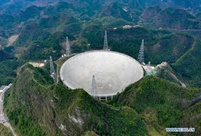 China's FAST telescope will be available to foreign scientists in April
 "She power" plays indispensable role in poverty alleviation
 Top 10 world news events of People's Daily in 2020
 Top 10 China news events of People's Daily in 2020
 Top 10 media buzzwords of 2020
 Year-ender:10 major tourism stories of 2020
 No interference in Venezuelan issues
 Biz prepares for trade spat
 Broadcasting Continent
 Australia wins Chinese CEOs as US loses