

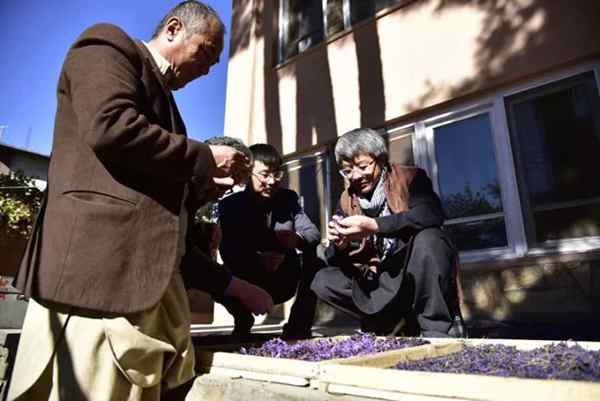
A Chinese businessman has introduced a new way to plant, produce, process, and export high-quality saffron to people in Afghanistan, a country hoping to replace the production of opium poppy with saffron production, Xinhua reported.
Farmers from parts of western Herat province have already begun replacing poppies with saffron. The practice has been gradually extended to other locations of the country, including Bamiyan and Kabul.
During a business trip to Afghanistan in November 2016, Xiang Weijie, a businessman from China’s Inner Mongolia Autonomous Region, met Faiz, a saffron grower, in Herat province through a mutual friend.
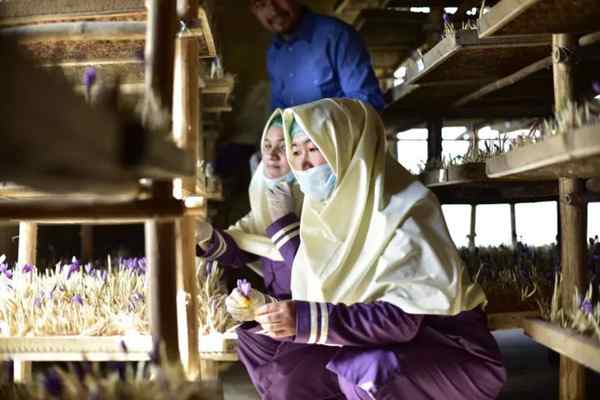
The technology used to make saffron blossom indoors will help produce higher yields, but it is new to the Afghan farmers.
Xiang had visited many places in Afghanistan where the saffron industry could benefit from the new Chinese technology, so he decided to stay and teach them how to use it.
Since then, Xiang has been working with local farmers to cultivate and produce high-quality saffron and introduce it to international markets. He added that saffron is a highly-valued plant with a good market in China.
Saffron is a precious traditional Chinese medicine.
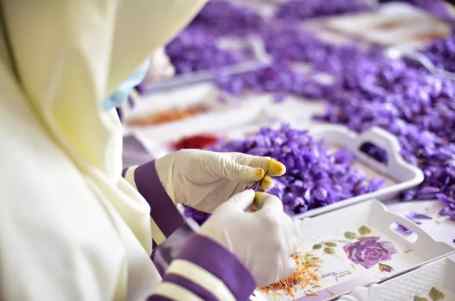
The Chinese businessman and local farmers spent a lot of time at a plantation in a suburb of Kabul. The plantation has an indoor area for cultivating flowers and an outdoor area for growing bulbs.
Now the bulbs have entered their flowering period, and this year the plantation is expected to produce six kilograms of filaments.
Indoor flowering has attracted great attention in Afghanistan. “Thank you our Chinese friends, I’m really delighted by this achievement,” said an official with the Afghan Ministry of Agriculture, Irrigation, and Livestock.
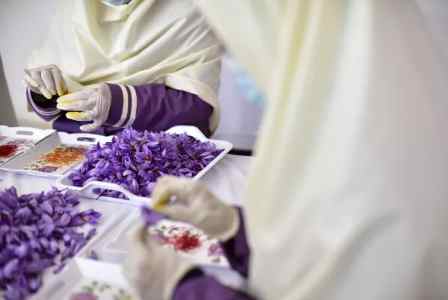
Saffron, according to the Afghan ministry, is cultivated in 30 out of 34 provinces on a total area of around 2,800 hectares involving approximately 18,000 farmers.
“We’ve hired 15 workers, including 12 females. We’ll employ more people in the future,” Faiz said, adding that growing saffron will make local farmers feel safer than planting poppies.
Xiang said he plans to promote the technology to 200 Afghan families to help them get rich.
 Fire brigade in Shanghai holds group wedding
 Tourists enjoy ice sculptures in Datan Town, north China
 Sunset scenery of Dayan Pagoda in Xi'an
 Tourists have fun at scenic spot in Nanlong Town, NW China
 Harbin attracts tourists by making best use of ice in winter
 In pics: FIS Alpine Ski Women's World Cup Slalom
 Black-necked cranes rest at reservoir in Lhunzhub County, Lhasa
 China's FAST telescope will be available to foreign scientists in April
 "She power" plays indispensable role in poverty alleviation
 Top 10 world news events of People's Daily in 2020
 Top 10 China news events of People's Daily in 2020
 Top 10 media buzzwords of 2020
 Year-ender:10 major tourism stories of 2020
 No interference in Venezuelan issues
 Biz prepares for trade spat
 Broadcasting Continent
 Australia wins Chinese CEOs as US loses