


China’s Engel's coefficient has been declining in the past five years, with the number standing at 30.1 percent in 2016, which is close to the wealthy life standard set by the UN.
According to statistics from the National Bureau of Statistics (NBS), the country’s Engel’s coefficient in 2016 stood at 30.1%, down by 2.9% over 2012, while the average disposable income of Chinese citizens increased by an annual average of 7.4% since 2012 to 23,821 RMB.
The UN Food and Agriculture Organization uses the coefficient to describe how difficult it is for people to acquire the basic needs of life. A coefficient between 50 to 59 percent indicates that people can barely meet their daily needs, while a number below 30 percent represents a wealthy life.

The decline of the coefficient has been hailed by many experts and media outlets, who believe that more disposable income can lead to the country’s consumption upgrade and diversified economy.
The People’s Daily on Oct. 12 published a commentary in which it noted that China’s Engel coefficient had lingered at 50 percent for a long time, while the current 30.1 percents shows that Chinese can now invest more on traveling, healthcare services, and entertainment. The improvement shows China’s remarkable achievement in income distribution and poverty alleviation.
The proportions of expenses on transportation and communication, education, culture and recreation, and health care and medical services to the consumption expenditure increased by 2.0%, 0.7%, and 1.3%, respectively, as compared with those in 2012, according to NBS.
 Fire brigade in Shanghai holds group wedding
 Tourists enjoy ice sculptures in Datan Town, north China
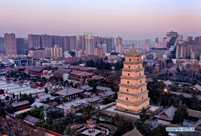 Sunset scenery of Dayan Pagoda in Xi'an
 Tourists have fun at scenic spot in Nanlong Town, NW China
 Harbin attracts tourists by making best use of ice in winter
 In pics: FIS Alpine Ski Women's World Cup Slalom
 Black-necked cranes rest at reservoir in Lhunzhub County, Lhasa
 China's FAST telescope will be available to foreign scientists in April
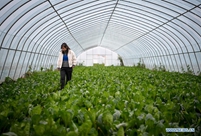 "She power" plays indispensable role in poverty alleviation
 Top 10 world news events of People's Daily in 2020
 Top 10 China news events of People's Daily in 2020
 Top 10 media buzzwords of 2020
 Year-ender:10 major tourism stories of 2020
 No interference in Venezuelan issues
 Biz prepares for trade spat
 Broadcasting Continent
 Australia wins Chinese CEOs as US loses