

A Born Legend
Li Linsi was born in Hangzhou, a beautify city with a long Chinese tradition, in February 1896. He came from a distinguished Chinese literary family. Li's father, Li Liangyu, was a Qing Dynasty (1644-1911) official and renowned artist, who co-founded the Xiling Society of Seal Arts, one of China's most important traditional arts associations. His paternal fourth great-grandfather, Li E, was a notable poet and scholar during the Qing Dynasty, who has been recognized as a leader of the Zhejiang School of poetry. He was the descendant of Jiang Ziya, the Chinese legendary founding prime minister during the Zhou Dynasty (c.11th century-256BC).
Before entering the Tongji University in Shanghai for higher education, Li spent his early years in Hangzhou. After graduating in 1915, he then went to Japan to study literature and education at the Sophia University.
Li went on to further his education in Germany following four years of study at the Sophia University, and earned his master’s degree in law from the University of Jena and doctorate in philosophy from Heidelberg University. He resided in Germany for 10 years.
Travelling extensively around Europe, Li came into contact with a range of Western progressive ideas, and got to know a handful of promising Chinese students, who later became leaders of the Chinese Communist Party. These students included Zhou Enlai and Zhu De. Li also established a deep friendship with German sinologist Richard Wilhelm.
He participated in Germany's first China Institute at the University of Frankfurt, a research institution founded by Richard Wilhelm. The facility was committed to encouraging the West to better understand Chinese cultures. Li helped the institution start multiple journals on Chinese studies, such as China, the China-Germany Yearbook and East Asia Review. He also contributed to organizing various seminars and exhibitions on Chinese studies for the institution.
Being reputed as a human bridge connecting Chinese and European cultures, Li made a great contribution to helping the West comprehend ancient Chinese philosophies, and introduced many Western progressive thoughts to China.
 |  |
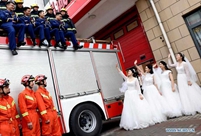 Fire brigade in Shanghai holds group wedding
 Tourists enjoy ice sculptures in Datan Town, north China
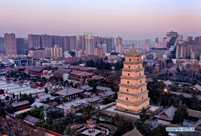 Sunset scenery of Dayan Pagoda in Xi'an
 Tourists have fun at scenic spot in Nanlong Town, NW China
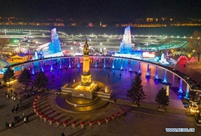 Harbin attracts tourists by making best use of ice in winter
 In pics: FIS Alpine Ski Women's World Cup Slalom
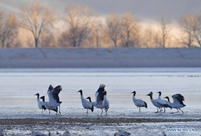 Black-necked cranes rest at reservoir in Lhunzhub County, Lhasa
 China's FAST telescope will be available to foreign scientists in April
 "She power" plays indispensable role in poverty alleviation
 Top 10 world news events of People's Daily in 2020
 Top 10 China news events of People's Daily in 2020
 Top 10 media buzzwords of 2020
 Year-ender:10 major tourism stories of 2020
 No interference in Venezuelan issues
 Biz prepares for trade spat
 Broadcasting Continent
 Australia wins Chinese CEOs as US loses