 |
| File photo |
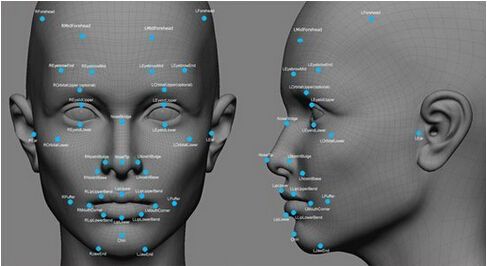
A research team in Shanghai was recently criticized in an essay by scientists from Google and Princeton University over its controversial paper on the capability of artificial intelligence to judge whether a person could become a criminal.
The essay, published on Medium.com on May 6, describes the research by Wu Xiaolin and Zhang Xi as “deeply problematic, both ethically and scientifically.” Wu and Zhang, from Shanghai Jiaotong University, authored a paper titled “Automated Inference on Criminality using Face Image.”
The essay read: “This is especially unfortunate given that the correlation they measure — assuming that it remains significant under more rigorous treatment — may actually be an important addition to the already significant body of research revealing pervasive bias in criminal judgment. Deep learning based on superficial features is decidedly not a tool that should be deployed to ‘accelerate’ criminal justice.”
The essay was jointly written by Google scientists Blaise Aguera y Arcas and Margaret Mitchell, together with Alexander Todorov from the Social Perception Lab at Princeton University.
This is only the latest criticism of the controversial research. Previously, the paper by Wu and Zhang has been attacked both at home and by international scholars. In their paper, the two researchers detailed the results of computer tests that used 1,856 images of real people, which they claimed produced evidence for "the validity of automated face-induced inference on criminality, despite the historical controversy surrounding the topic.”
In response to the latest round of criticism, Wu said that the team has no interest and lacks the social science academic background to offer an explanation of their results or discuss how they were formed. “Nor have we ever implied that we would put [the results] into law enforcement or the judiciary. They were forcing those intentions on us,” Wu told Thepaper.cn.
Wu also pointed out that the writers ignored their original introduction, which stated unambiguously that the intent of their research was not to discuss or debate societal stereotypes. “Rather we want to satisfy our curiosity about the accuracy of fully automated inference on criminality,” the introductory passage read.
“We and the writers have no difference in values. They have distorted our original intention and set up an imaginary enemy,” Wang said.
 Fire brigade in Shanghai holds group wedding
 Tourists enjoy ice sculptures in Datan Town, north China
 Sunset scenery of Dayan Pagoda in Xi'an
 Tourists have fun at scenic spot in Nanlong Town, NW China
 Harbin attracts tourists by making best use of ice in winter
 In pics: FIS Alpine Ski Women's World Cup Slalom
 Black-necked cranes rest at reservoir in Lhunzhub County, Lhasa
 China's FAST telescope will be available to foreign scientists in April
 "She power" plays indispensable role in poverty alleviation
 Top 10 world news events of People's Daily in 2020
 Top 10 China news events of People's Daily in 2020
 Top 10 media buzzwords of 2020
 Year-ender:10 major tourism stories of 2020
 No interference in Venezuelan issues
 Biz prepares for trade spat
 Broadcasting Continent
 Australia wins Chinese CEOs as US loses