

 |
| File photo |
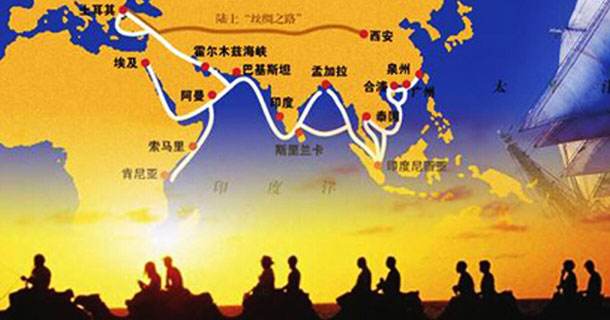
China’s Belt and Road Initiative is drawing on a new type of regional strategy that can lead to “Globalization 2.0,” said a renowned Chinese expert on international relations.
According to Zhang Yunling, director of the academic division of International Studies at the Chinese Academy of Social Sciences (CASS), humanity entered the era of “Globalization 1.0” after World War II, focusing on connecting the world via multilateral and regional cooperation. Prior to 2008, Globalization 1.0 has indeed promoted rapid economic growth, but the anti-globalization trend is always waiting, ready to strike, as imbalanced development between regions and communities is inevitable, Zhang noted.
The Belt and Road Initiative, on the other hand, offers a distinctly Chinese way of looking at global governance and cooperation.
“We try to improve the geographic advantages forged after industrialization in the West, which favors oceanic powers ... By connecting interior land, we are re-constructing these geographic advantages so that inland regions can also profit,” Zhang explained.
“It should be emphasized that the Belt and Road Initiative is not a project. It is an initiative, a method. It is not only about routes drawn on a map, but also about suggesting a direction and covering neighboring regions,” Zhang emphasized.
The remarks were made at a press conference in Beijing on April 12, where CASS unveiled its latest publication with Social Sciences Academic Press (SSAP). Xie Shouguang, director of SSAP, said at the conference that the publication is especially significant since the Belt and Road Forum for International Cooperation is scheduled to be held in May.
The forum will take place in Beijing on May 14 and 15. It will explore ways of addressing regional and global economic issues, generate fresh energy for interconnected development, and help the Belt and Road Initiative deliver greater benefits to all the people and countries involved, Xinhua News Agency reported.
“The versions of globalization led by the East and the West are different. The West tends to be more aggressive, while the East emphasizes inclusiveness. That makes homogeneity one of the key factors in cooperation, but we are trying to show that heterogeneity does not necessarily get in the way of cooperation,” said Ren Jingjing, another expert with CASS.
 Fire brigade in Shanghai holds group wedding
 Tourists enjoy ice sculptures in Datan Town, north China
 Sunset scenery of Dayan Pagoda in Xi'an
 Tourists have fun at scenic spot in Nanlong Town, NW China
 Harbin attracts tourists by making best use of ice in winter
 In pics: FIS Alpine Ski Women's World Cup Slalom
 Black-necked cranes rest at reservoir in Lhunzhub County, Lhasa
 China's FAST telescope will be available to foreign scientists in April
 "She power" plays indispensable role in poverty alleviation
 Top 10 world news events of People's Daily in 2020
 Top 10 China news events of People's Daily in 2020
 Top 10 media buzzwords of 2020
 Year-ender:10 major tourism stories of 2020
 No interference in Venezuelan issues
 Biz prepares for trade spat
 Broadcasting Continent
 Australia wins Chinese CEOs as US loses