


From hotels with segregated swimming pools to jelly made from seaweed instead of pig bones, Buddhist Thailand is chasing halal gold as it welcomes Muslim visitors and touts its wares to the Islamic world. [Photo/Agencies]
But Dr Winai Dahlan, founder of the Halal Science Centre at Bangkok's Chulalongkorn University, says Thailand was well placed to make the change.
Five percent of its population is Muslim and - outside of the insurgency plagued southern border region - is well-integrated within the Buddhist majority.
It was local Thai Muslims who first began asking for the country's halal testing center, a business that scours products for any banned substances and has since boomed.
"Fifteen years ago there was only 500 food plants that had halal certification. Now it's 6,000," Winai told AFP as female lab technicians in headscarves tested food products for traces of pork DNA.
Over the same period the number of halal certified products made in Thailand has gone from 10,000 to 160,000, he added.
It's paid off. The government estimates the halal food industry is already worth $6 billion a year.
As Thailand has quickly learned, there's gold at the end of the halal rainbow.
 |
 Fire brigade in Shanghai holds group wedding
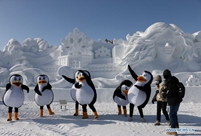 Tourists enjoy ice sculptures in Datan Town, north China
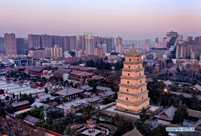 Sunset scenery of Dayan Pagoda in Xi'an
 Tourists have fun at scenic spot in Nanlong Town, NW China
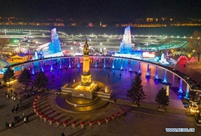 Harbin attracts tourists by making best use of ice in winter
 In pics: FIS Alpine Ski Women's World Cup Slalom
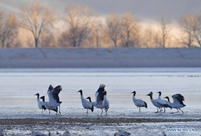 Black-necked cranes rest at reservoir in Lhunzhub County, Lhasa
 China's FAST telescope will be available to foreign scientists in April
 "She power" plays indispensable role in poverty alleviation
 Top 10 world news events of People's Daily in 2020
 Top 10 China news events of People's Daily in 2020
 Top 10 media buzzwords of 2020
 Year-ender:10 major tourism stories of 2020
 No interference in Venezuelan issues
 Biz prepares for trade spat
 Broadcasting Continent
 Australia wins Chinese CEOs as US loses