China has built a field laboratory in the northeastern South China Sea, the focus of which will primarily be deep-sea sediments from 8 million years ago.
An integrated observation system of the dynamic deep-sea sedimentary process has been built to collect important marine data and collect sediment samples from the deep sea. The South China Sea is an ideal place to study deep-sea deposits, given its unique geographical position and complicated pattern of currents, said Liu Zhifei, a professor at the State Key Laboratory of Marine Geology under Tongji University.
Liu noted that his team has already proven the existence of contour currents in the northern basin of the South China Sea, in addition to identifying two typical mid-ocean canyons in the region. He pointed out that the third South China Sea exploration voyage aims to trace the deep sea sedimentary process, adding that the JOIDES Resolution vessel has drilled 600 meters into the South China Sea seabed, discovering sediment samples that serve as a record of evolution over 8 million years.
 Fire brigade in Shanghai holds group wedding
 Tourists enjoy ice sculptures in Datan Town, north China
 Sunset scenery of Dayan Pagoda in Xi'an
 Tourists have fun at scenic spot in Nanlong Town, NW China
 Harbin attracts tourists by making best use of ice in winter
 In pics: FIS Alpine Ski Women's World Cup Slalom
 Black-necked cranes rest at reservoir in Lhunzhub County, Lhasa
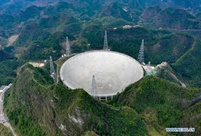 China's FAST telescope will be available to foreign scientists in April
 "She power" plays indispensable role in poverty alleviation
 Top 10 world news events of People's Daily in 2020
 Top 10 China news events of People's Daily in 2020
 Top 10 media buzzwords of 2020
 Year-ender:10 major tourism stories of 2020
 No interference in Venezuelan issues
 Biz prepares for trade spat
 Broadcasting Continent
 Australia wins Chinese CEOs as US loses