

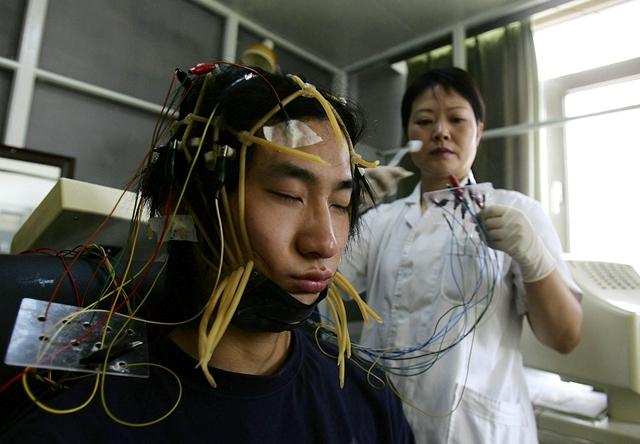
The use of electric shock therapy, beatings, medications, and other abusive methods are to be banned to “treat internet addiction”, according to a new draft law released by Chinese State Council on January 6, 2017.
As of June 2016, China has 710 million Internet users, among them 160 million, or 23 percent, are under 19 years old.
A boot camp-like Internet Addiction Treatment Center was established in east China’s Shandong province in 2006. The founder Yang Yongxin developed an electrocuting therapy and has applied it to thousands of "patients" sent by their parents to the center.
A sixteen-year-old girl who was one of the “patients” sent by their parents to the camp in 2016 went back murdering her own mother after enduring abusive “treatment” at the center. The case drew much media attention to the abusive methods applied to kids who are considered by their parents being “internet-addicted".
According to the State Council Legislative Affairs Office, the new rules are aimed to solve teenagers’ internet addiction and four other major Internet related problems. According to the new draft law, gaming service providers will have to implement technical barriers to keep teenagers away from improper content, set limits to their daily maximum gaming time, and ban teenagers from gaming services from 12 a.m. to 8 a.m.
 Fire brigade in Shanghai holds group wedding
 Tourists enjoy ice sculptures in Datan Town, north China
 Sunset scenery of Dayan Pagoda in Xi'an
 Tourists have fun at scenic spot in Nanlong Town, NW China
 Harbin attracts tourists by making best use of ice in winter
 In pics: FIS Alpine Ski Women's World Cup Slalom
 Black-necked cranes rest at reservoir in Lhunzhub County, Lhasa
 China's FAST telescope will be available to foreign scientists in April
 "She power" plays indispensable role in poverty alleviation
 Top 10 world news events of People's Daily in 2020
 Top 10 China news events of People's Daily in 2020
 Top 10 media buzzwords of 2020
 Year-ender:10 major tourism stories of 2020
 No interference in Venezuelan issues
 Biz prepares for trade spat
 Broadcasting Continent
 Australia wins Chinese CEOs as US loses