

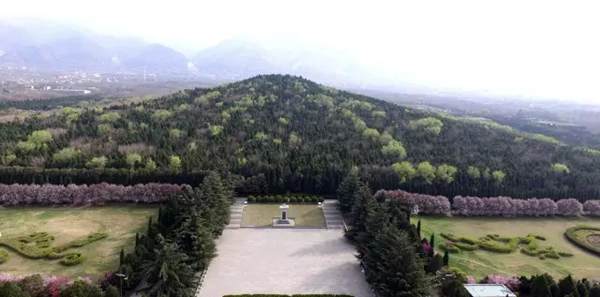
Emperor Qinshihuang mausoleum
Over 400 funeral pits and a massive quantity of other goods were recently excavated from the Emperor Qinshihuang (the first Emperor of Qin) in Shaanxi province. Most of the burial objects were animal remains or animal-shaped pottery and copperware.
Most of the objects were related to horses - either horse remains or horse-shaped goods. In addition, the remains of a number of other species, including deer, muntjac, cranes and swans, were also among the excavated objects. Historians believe that the number of harnessed or domesticated animals in the Qin Dynasty (221-206 BC) was 12, with horses being the most important due to their strategic value.
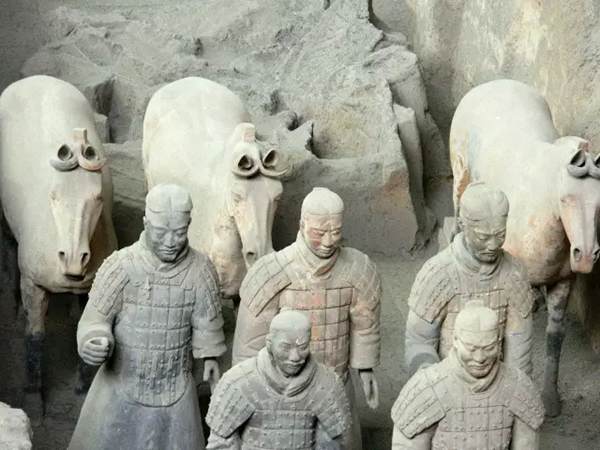
Terrocotta soliders in the Emperor Qinshihuang mausoleum
The discovery also proves that, dating back to 2,000 years ago, animals were not only hunted for meat, but were also used more widely in art and society.
The mausoleum of Emperor Qinshihuang is five kilometers east of Lintong County, 35 kilometers from Xi'an City in Shaanxi Province.
In the spring of I974, when peasants sank a well in a village near the Mausoleum of Emperor Qinshihuang, burial terracotta warriors and horses were found.
 Fire brigade in Shanghai holds group wedding
 Tourists enjoy ice sculptures in Datan Town, north China
 Sunset scenery of Dayan Pagoda in Xi'an
 Tourists have fun at scenic spot in Nanlong Town, NW China
 Harbin attracts tourists by making best use of ice in winter
 In pics: FIS Alpine Ski Women's World Cup Slalom
 Black-necked cranes rest at reservoir in Lhunzhub County, Lhasa
 China's FAST telescope will be available to foreign scientists in April
 "She power" plays indispensable role in poverty alleviation
 Top 10 world news events of People's Daily in 2020
 Top 10 China news events of People's Daily in 2020
 Top 10 media buzzwords of 2020
 Year-ender:10 major tourism stories of 2020
 No interference in Venezuelan issues
 Biz prepares for trade spat
 Broadcasting Continent
 Australia wins Chinese CEOs as US loses