

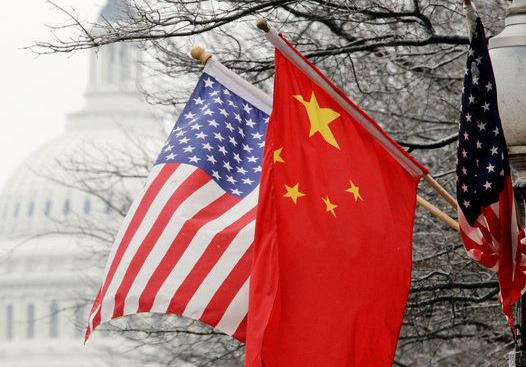
Each year, the U.S.-China Economic and Security Review Commission (USCC) releases a report to Congress with recommendations. The report this year took a critical look at the trade relationship between China and the U.S. The Commission advised Congress to bar Chinese state-owned enterprises from acquiring or otherwise gaining effective control of U.S. companies. The Commission also called for more “freedom of navigation operations” in the South China Sea, disregarding China’s legitimate reasons for defending its nation’s rights. Out of the 10 recommendations considered to be of particular significance, not one advised Congress to build trust with China. Deepening the institutionalization of the China threat places competition over cooperation, making the two sides see each other as rivals. This is the wrong approach.
The bias of the Commission is rooted in its inception. The Commission has viewed China-U.S. relations from a perspective of fear and mistrust since the transmission of its first report on July 15, 2002. Created to monitor, investigate, and report to Congress on the national security implications of the bilateral trade and economic relationship between the two sides, the reports are known to be harsh, but they do not necessarily represent the views or position of the U.S. Government, and many of the recommendations never become policy. By transmitting the reports, the Commission is carrying out its mandate. The important factor to focus on is the central aim of American foreign policy.
The Commission was established on the belief that economic engagement with China could strengthen America and westernize China. In Transmittal Letter to the Congress in the first report, then Chairman C. Richard D’Amato and Vice Chairman Michael Ledeen said that U.S. policy toward China must enhance America’s economic and military strength and should advocate democratic values and principles to transform the beliefs, structure, and governing dynamics of China. While not the principal goal of economic engagement with China, the U.S. has long sought to fundamentally transform the country politically and socially.
This approach to foreign policy, which rests on the belief that a free market economy leads to more political and social openness and even Western-style democracy, remains largely unchanged, but confidence has waned. In the first report, the Commission advised Congress to hope for the best and prepare for the worst. “The Commission…contends that while we may work and hope for the best, our policymakers should prepare for all contingencies,” the report said. The Commission has since abandoned that hope, but continues to hype the China threat. The Commission’s recommendations “reflect the China that is, not the China for which some have hoped,” the report this year said. Based on that logic, the U.S. has no choice but to prepare for the worst.
Fu Ying, Chairperson of Foreign Affairs Committee of the National People’s Congress, has pointed out that China-U.S. relations is often troubled by lack of trust. Trust is a rare commodity in international relations, but the goal should be to move beyond fear and mistrust. From the beginning, the Commission has created an atmosphere of fear and mistrust in China-U.S. relations. It is easy to focus on the negative aspects of the bilateral relationship, but one-sided analysis distorts the big picture. The China-U.S. relationship would be better served if the positive aspects of the bilateral relationship can be teased out.
 Fire brigade in Shanghai holds group wedding
 Tourists enjoy ice sculptures in Datan Town, north China
 Sunset scenery of Dayan Pagoda in Xi'an
 Tourists have fun at scenic spot in Nanlong Town, NW China
 Harbin attracts tourists by making best use of ice in winter
 In pics: FIS Alpine Ski Women's World Cup Slalom
 Black-necked cranes rest at reservoir in Lhunzhub County, Lhasa
 China's FAST telescope will be available to foreign scientists in April
 "She power" plays indispensable role in poverty alleviation
 Top 10 world news events of People's Daily in 2020
 Top 10 China news events of People's Daily in 2020
 Top 10 media buzzwords of 2020
 Year-ender:10 major tourism stories of 2020
 No interference in Venezuelan issues
 Biz prepares for trade spat
 Broadcasting Continent
 Australia wins Chinese CEOs as US loses