

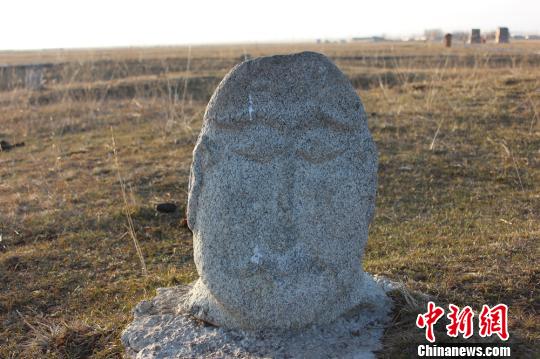
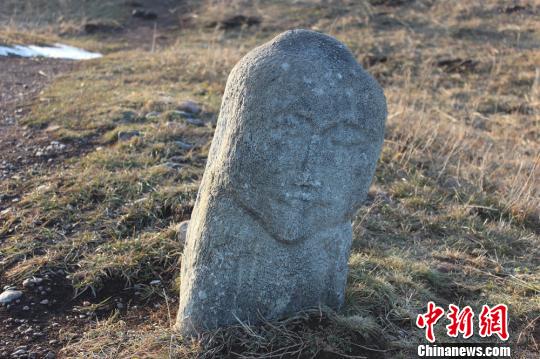
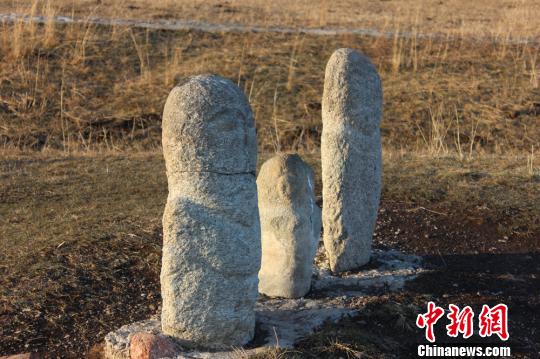
Eleven stone men with a history of over 1,000 years are still standing on the Zhaosu Giant Grassland in Ili, Xinjiang Uyghur Autonomous Region. The heads, faces and bodies of the statues were sculpted in an eye-catchingly vivid manner.
Archaeologists believe that the stone men in Xinjiang, originating from the shamanic religious tradition around 1200 B.C., represent hero worship as well as ancestor worship. The stone sculptures were carved out of solid rocks. Some have hair draped below their waists. They are mostly full-body portrayals, with expressive heads, faces and bodies. Warriors, typical figures among the various stone men, have buckles on their belts and knives on their waists.
 Fire brigade in Shanghai holds group wedding
 Tourists enjoy ice sculptures in Datan Town, north China
 Sunset scenery of Dayan Pagoda in Xi'an
 Tourists have fun at scenic spot in Nanlong Town, NW China
 Harbin attracts tourists by making best use of ice in winter
 In pics: FIS Alpine Ski Women's World Cup Slalom
 Black-necked cranes rest at reservoir in Lhunzhub County, Lhasa
 China's FAST telescope will be available to foreign scientists in April
 "She power" plays indispensable role in poverty alleviation
 Top 10 world news events of People's Daily in 2020
 Top 10 China news events of People's Daily in 2020
 Top 10 media buzzwords of 2020
 Year-ender:10 major tourism stories of 2020
 No interference in Venezuelan issues
 Biz prepares for trade spat
 Broadcasting Continent
 Australia wins Chinese CEOs as US loses