

 |
| (Photo/Qdaily.com) |
To shake off the image of being one of the most “unhealthy” fast food brands, KFC launched its first K Pro in China, pledging the healthy eating concept would attract more white collars.
In addition to cashless services, it is the nation’s first restaurant to use facial recognition technology for payments.
The K Pro restaurant still sells the classic KFC chicken burger, but the main dishes served are salad and panini sandwiches. As a light food restaurant, K Pro boasts using only seasonal ingredients to provide healthy salad and panini choices. But that fresh and healthy diet comes at a cost. The average price for a combo meal is around 50 yuan, while the average per capita consumption is 64 yuan.
Instead of the classic white and red logo, the K Pro logo uses wood, green, and black colors. The restaurant is decorated using many iron and glass arts, giving it a more modern and industrial feel.
K Pro is expected to hit Shanghai in the near future and will mainly serve white collar workers. While K Pro’s revenue in Hangzhou has jumped more than 50 percent, many remain skeptical as to whether the new brand, which is currently attracting the curious, would be able to compete with other light food brands in China.
 |
 Fire brigade in Shanghai holds group wedding
 Tourists enjoy ice sculptures in Datan Town, north China
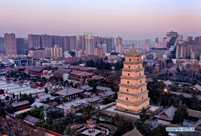 Sunset scenery of Dayan Pagoda in Xi'an
 Tourists have fun at scenic spot in Nanlong Town, NW China
 Harbin attracts tourists by making best use of ice in winter
 In pics: FIS Alpine Ski Women's World Cup Slalom
 Black-necked cranes rest at reservoir in Lhunzhub County, Lhasa
 China's FAST telescope will be available to foreign scientists in April
 "She power" plays indispensable role in poverty alleviation
 Top 10 world news events of People's Daily in 2020
 Top 10 China news events of People's Daily in 2020
 Top 10 media buzzwords of 2020
 Year-ender:10 major tourism stories of 2020
 No interference in Venezuelan issues
 Biz prepares for trade spat
 Broadcasting Continent
 Australia wins Chinese CEOs as US loses