



Firsthand experience offers a clearer picture of China
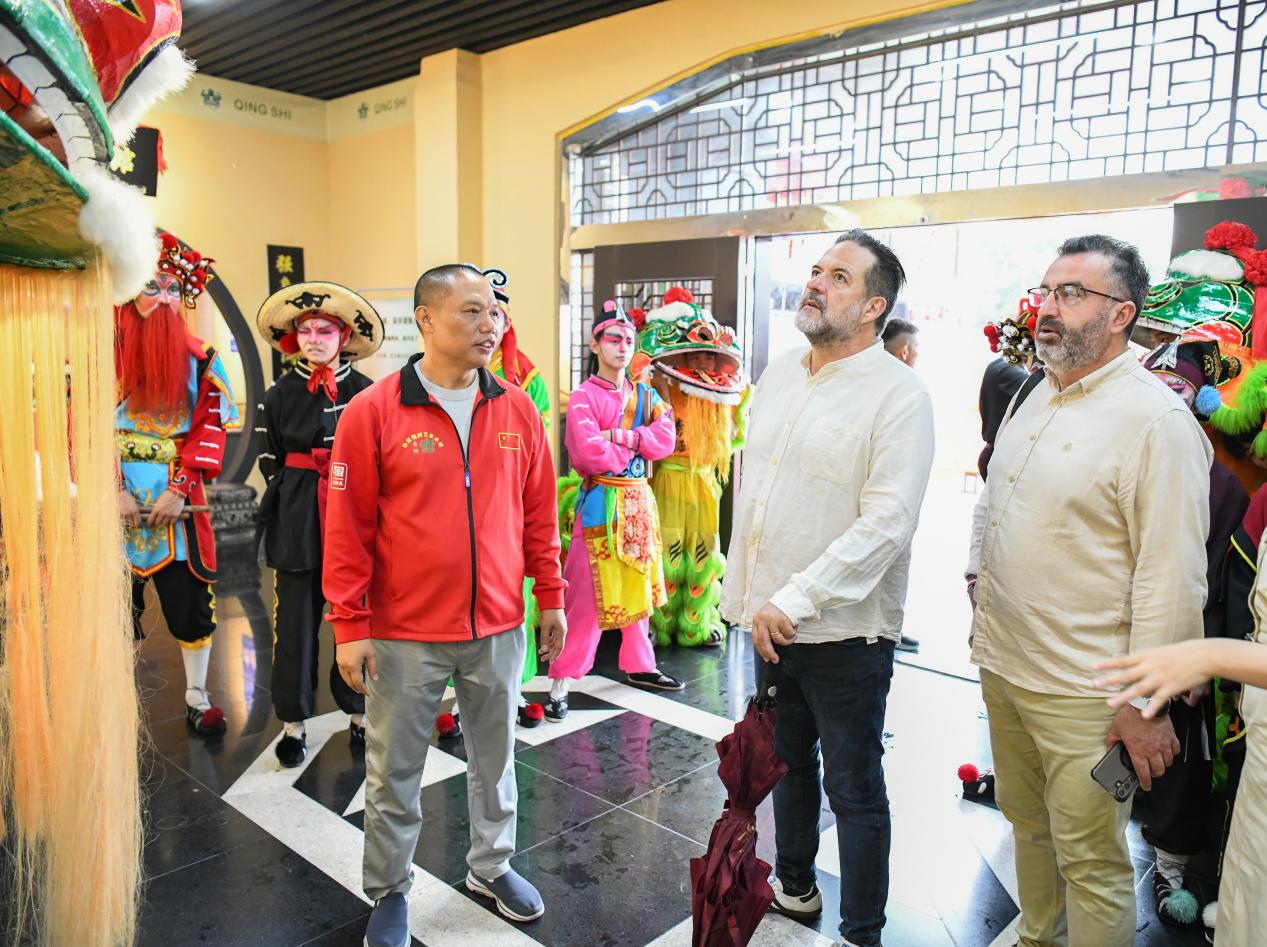
Manuel Pineda (second from right), secretary of International Relations of the Communist Party of Spain, visits a lion dance performance base in Jieyang, south China's Guangdong province, April 24. (Photo/Peng Chencong)
Manuel Pineda, secretary of International Relations of the Communist Party of Spain, spent years studying China before finally visiting in person. His trip proved transformative, replacing abstract knowledge with a far more nuanced understanding of the country's development and fundamentally reshaping his perspective.
Though well-versed in academic literature on Chinese modernization, Pineda found that published research and theoretical frameworks could not fully capture the country's realities. Only through direct observation did he gain a genuinely fresh perspective.
Academic texts and data sets, while valuable, cannot substitute for lived experience. The seamless integration of electric transport in Shenzhen, the preservation of local customs in Jieyang's historic alleys, and the generational rise in living standards within a single Chinese family left a lasting impression on him.
Discussions with Chinese journalists further deepened his insights. He came to understand that "putting the people first" is not merely a rhetorical commitment. It is reflected in the painstaking efforts to address everyday concerns, resolve conflicts appropriately, and bring warmth and care to even the smallest details of people's lives.
Such vivid experiences cannot be found in books or fully captured in statistical tables. Only by seeing things with one's own eyes and talking to people face to face can one gain such a direct and tangible understanding.
In much of Western media and public discourse, China is frequently filtered through preconceived frameworks, reducing a complex society to a set of simplified narratives. This creates a persistent disconnect between lived reality and external portrayals. Pineda's experience suggests a straightforward remedy: direct travel and personal observation remain the most reliable way to bridge this gap.
To grasp China's true scale and diversity, visitors must move beyond isolated impressions and engage with the country across different regions and contexts.
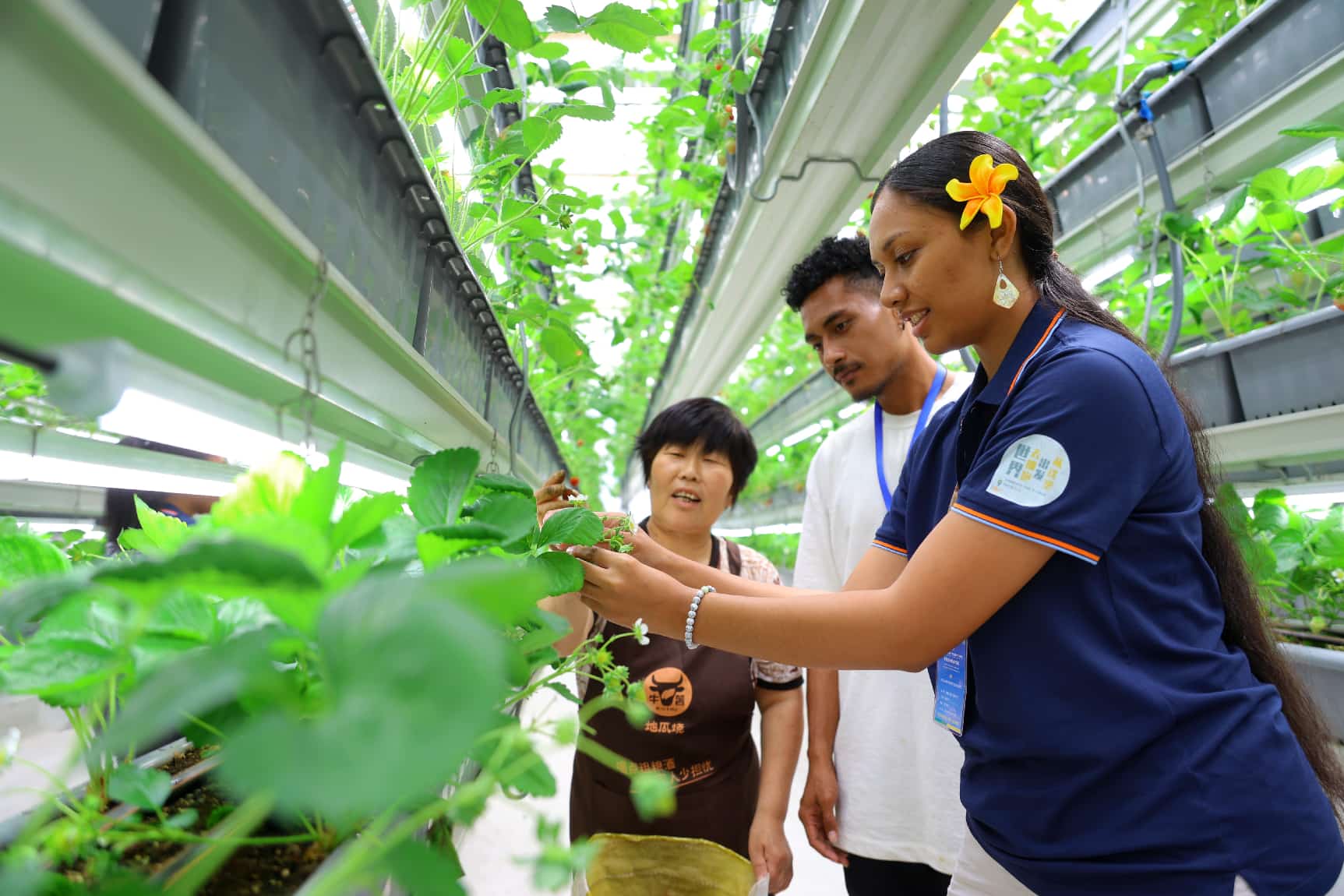
Foreign students visit a modern agricultural park in Liaocheng, east China's Shandong province. (Photo/Ma Hongkun)
This pattern repeats among younger travelers. Hope Eldridge, a University of Iowa student, noted after her initial trip that the China she encountered bore little resemblance to the fragmented portrayals she had previously consumed online.
Scholars have also found value in fieldwork. Robert Walker, a fellow of the Academy of Social Sciences in the UK, who has conducted systematic research on China's poverty alleviation and development experience, has visited Guizhou, Shanxi, Zhejiang, and other parts of the country on multiple occasions.
In response to some Western media outlets questioning China's poverty alleviation achievements by applying their own standards, he pointed out that such criticism was shaped both by preconceived biases and by misleading conflations of different concepts.
China's approach to poverty alleviation was designed around its specific demographic and economic context. Its success, measured by tangible outcomes, has lifted hundreds of millions out of extreme poverty and established a baseline for long-term socioeconomic resilience.
Mozambican President Daniel Chapo made a special visit to rural China to learn firsthand about how remote villages had emerged from poverty. "Hearing is not the same as seeing. Seeing is believing. Here, I have witnessed for myself China's experience in poverty alleviation and the achievements of its campaign against poverty," he said.
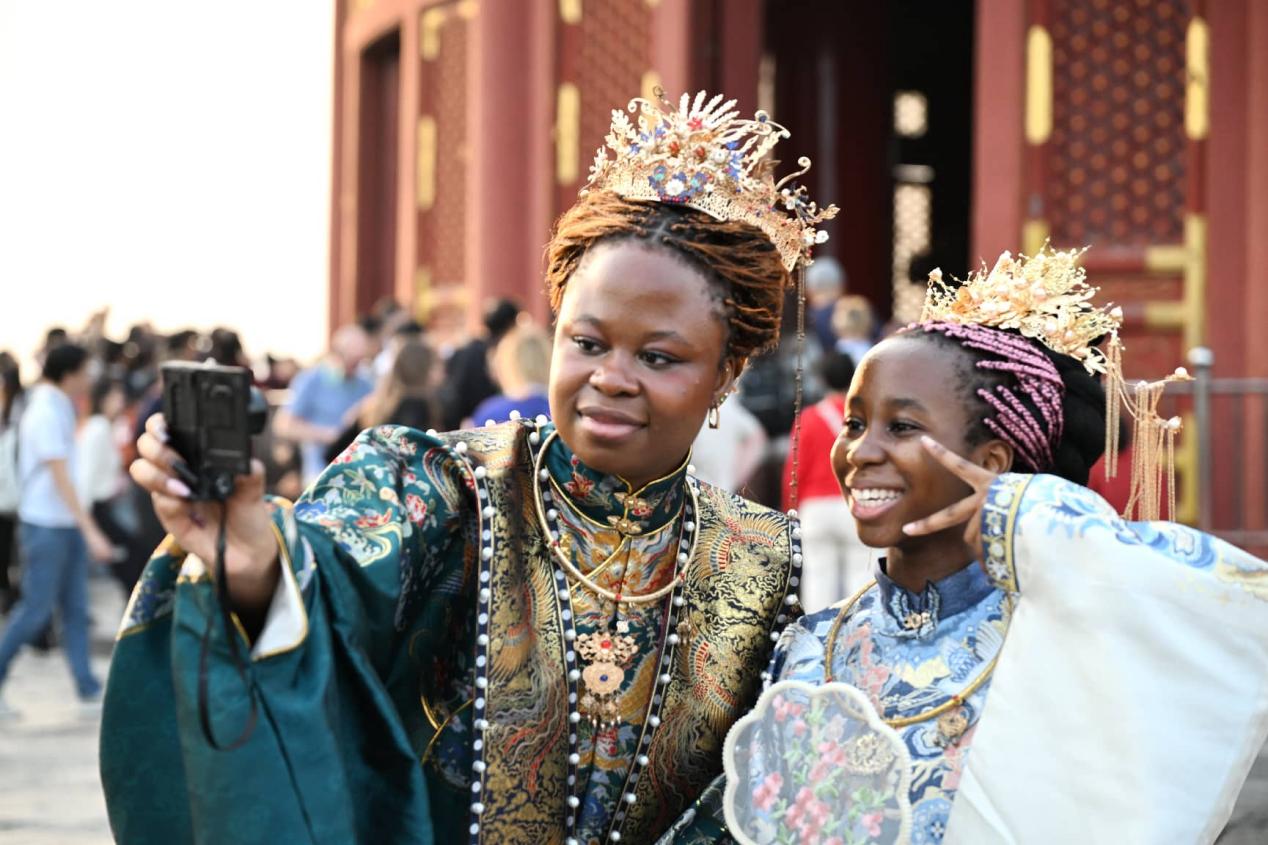
Foreign tourists take selfies at the Temple of Heaven Park in Beijing. (Photo/Hu Qingming)
According to China's National Immigration Administration, 22.91 million foreign nationals entered China in the first half of this year, up 20.4 percent year on year. More and more people from overseas are visiting China and witnessing its technological advances and development vitality firsthand. Many of them have become enthusiastic admirers of the country as a result. Their firsthand experiences are gradually dispelling the distorted impressions deliberately cultivated by certain Western media outlets.
Every additional conversation helps dispel a little more prejudice; every deeper understanding brings countries a step closer to cooperation. Like Pineda, many visitors from abroad come to China eager to gain a better understanding of the country, recognize the opportunities it offers and explore prospects for mutually beneficial cooperation. They observe China's governance practices firsthand and seek out opportunities for development.
Books can provide a framework for understanding, and the media can tell stories, but only firsthand observation and face-to-face exchanges can bring about a fundamental shift in perception. It is hoped that more people will remove the filters, get closer to China and come to understand it, becoming bridges that foster mutual understanding and win-win cooperation between China and other countries.
Photos


Related Stories
- Shopping in China: What's it really like?
- What's in your China haul?
- From 'China Travel' to 'China Haul': New buzzwords offer fresh perspectives on China
- China records 4.9b domestic trips in first three quarters of 2025
- China sees 20.6 percent more domestic trips in H1
- Major south China air hub handles over 40 million passenger trips in H1
- China Buzz: Beijing ports report over 10 million border crossings in H1 2025
- From internet to reality, foreign influencers see a vibrant China
- China enhances policies to improve travel and shopping experiences for international visitors
- Why "China Travel" going viral is causing a Western media meltdown
Copyright © 2026 People's Daily Online. All Rights Reserved.
