



Dongyang woodcarving inheritor dedicated to carrying on the craft
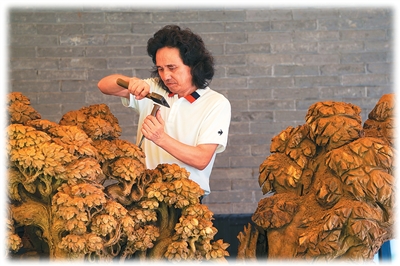
Huang Xiaoming works on a piece of woodcarving. (Photo/Zhang Yongtao)
Dongyang woodcarving has an impressive history, dating as far back as the Tang Dynasty (618-907) and flourishing during the Ming and Qing dynasties (1368-1911). It is one of China's four major woodcarving traditions and has been designated as a national intangible cultural heritage.
Now 62, Huang Xiaoming was born in Dongyang, east China's Zhejiang Province, and is a representative inheritor of Dongyang woodcarving. He has won national and provincial gold medals for more than 100 works, while dozens of his pieces have been permanently collected by several prominent institutions, including the Palace Museum and the National Museum of China.
At 16, Huang became an apprentice of Feng Wentu, a master of Chinese arts and crafts. He later enrolled at Zhejiang Arts and Crafts School, where he systematically studied woodcarving, painting and design. After graduation, he returned to a woodcarving factory and began his career as an artist there.
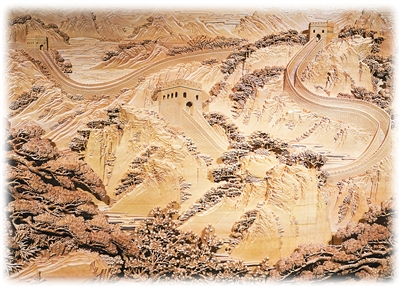
Photo shows a piece of woodcarving by Huang Xiaoming. (Photo/Zhang Yongtao)
Traditional Dongyang woodcarving is primarily decorative, with relief carving as its basic technique. Its compositions are characterized by the scattered perspective or bird's-eye view commonly seen in traditional Chinese painting.
Dongyang woodcarving draws heavily on historical events and folk legends. Its compositions share the freehand line-drawing tradition of Chinese painting and feature a rich variety of motifs ranging from figures to landscapes to animals.
Huang has pushed the boundaries of the tradition by pioneering multilayered carving and combining shallow relief, deep relief, openwork, semi-round and round carving techniques. He also created a new form of sketch-style woodcarving, blending sketching techniques from fine art with Dongyang woodcarving to create fluid, dynamic and highly decorative compositions.
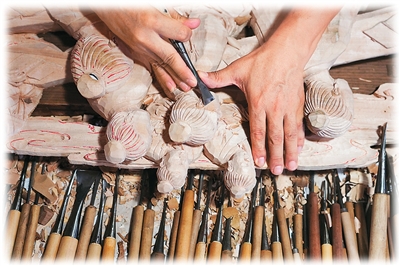
Huang Xiaoming uses a carving knife to meticulously carve a wooden piece. (Photo/Zhang Yongtao)
At the Hangzhou Asian Games, the Victory Ceremony bouquets, Huang's design- "Fruits of Triumph"- drew widespread attention with vases crafted using Dongyang woodcarving.
Huang has even designed a garden using an all-wood structure to showcase the decorative essence of Dongyang woodcarving in traditional residential architecture.
In Huang's opinion, for the time-honored tradition of Dongyang woodcarving to thrive, more young people need to be encouraged to take up the craft. For years, he has trained apprentices in his studio and given lectures at colleges and universities. He has also expanded the use of Dongyang woodcarving from traditional temples, gardens and residences to modern home and interior design, with more than 100 product categories now available on the market.
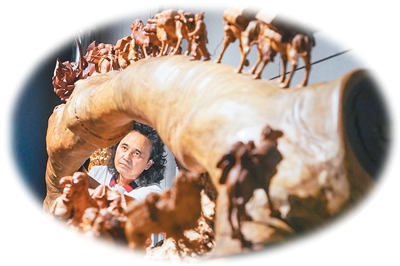
Huang Xiaoming works on a piece of woodcarving. (Photo/Zhang Yongtao)
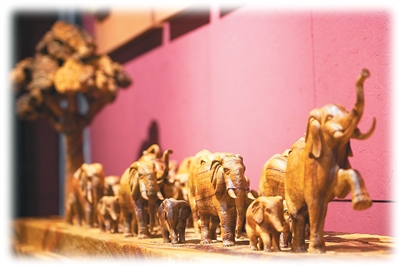
Photo shows a piece of woodcarving by Huang Xiaoming. (Photo/Zhang Yongtao)
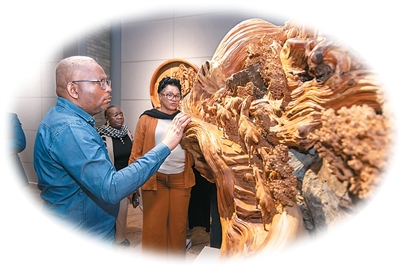
Guests from the Republic of the Congo admire Dongyang woodcarving works. (Photo/Zou Ying)
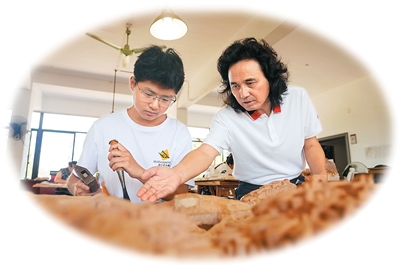
Huang Xiaoming (right) guides an apprentice in woodcarving. (Photo/Zhang Yongtao)
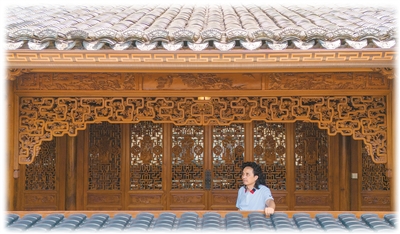
Huang Xiaoming at the garden he built entirely of wood. (Photo/Zhang Yongtao)
Photos



Related Stories
- Fujian artist revives ancient shadow carving craft
- Trending in China | Ode to the sea: Bone horn carving
- Trending in China | Metal mastery: The Chinese art of tin carving
- Inheritor promotes Shidiao woodcarving in SW China's Xizang
- Trending in China | Jingzhou carved preserved fruit
- Trending in China | The rooftop artistry of Cut Porcelain Carving
- Ice sculptor aims to drive innovative inheritance of ice, snow carving
- Artisan dedicated to passing on chrysanthemum stone carving
- Delicate art of eggshell carving
- Trending in China | Plum carving
Copyright © 2026 People's Daily Online. All Rights Reserved.
